Why Is My Semi Truck Vibrating at Highway Speed?
A highway-speed vibration can begin with a tire, wheel, steering, suspension or driveline problem. This checklist helps operators decide what to inspect first.

A semi truck that begins vibrating at highway speed is giving the operator a symptom, not a complete diagnosis. The source may be a tire or wheel, but it can also be steering play, worn suspension hardware, a wheel-end problem or the driveline. What matters first is identifying when the vibration appears, where it is felt and whether another warning sign makes the truck unsafe to continue.
Highway speed, acceleration or braking: describe the difference
Start with the operating condition, not a parts order. Note whether the shake follows road speed, changes under throttle or appears with the service brakes. These are different observations; none alone proves that a tire, driveshaft or brake component must be replaced.
Only within a road-speed range
Record where the shake begins during normal operation and where you feel it. Tire-and-wheel balance and runout are separate checks: a balanced assembly can still have runout. Michelin's truck service manual addresses both. Do not assume that another alignment or new balancing weights will resolve every vibration.
Stronger while accelerating or pulling a load
Tell the shop whether the symptom changes with throttle and load, as well as road speed. Include recent work on tires, wheels, suspension or the driveline. Spicer's driveline guidance identifies universal-joint operating angles as part of vibration analysis; this is a workshop measurement, not a diagnosis a driver can make from the cab.
Appears when applying the brakes
Write down that braking is the trigger and report any change in braking response. Do not classify it automatically as wheel imbalance or keep repeating a hard stop to reproduce it. A braking problem or severe shaking requires a safe stop and professional inspection.
What to hand the technician
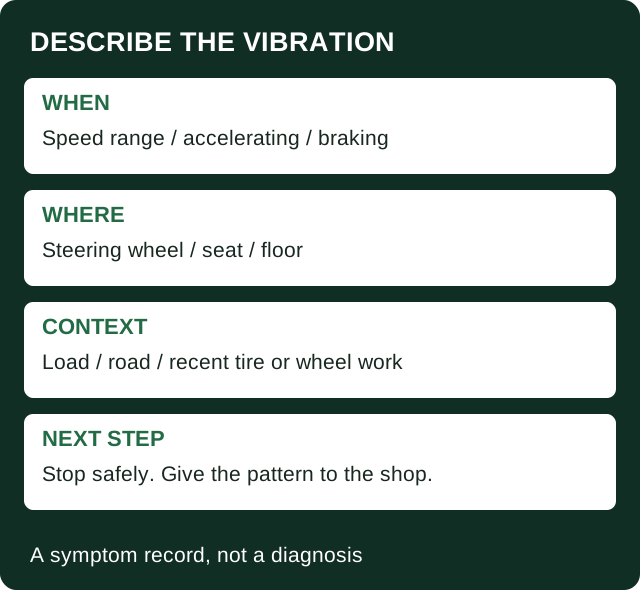
Use one note: vehicle and trailer identification; loaded or empty; approximate road speed and rpm; steering wheel, seat or floor; acceleration, steady travel or braking; recent repairs; and warning signs. Describe what you observed rather than naming a failed part.
For wheel-end warning signs, read seven signs a semi-truck wheel bearing may be failing. When tire work involves a retread quotation, keep the paperwork separate from the diagnosis: track each casing through the supplier's inspection.
Technical references: Michelin Truck Tire Service Manual — balance and runout; Spicer — measuring driveline operating angles. A symptom pattern does not replace the vehicle manufacturer's service procedure.
What the vibration pattern can tell you
A shake that begins within a narrow speed range often points the inspection toward a rotating component, but it does not prove which one. Vibration felt mainly through the steering wheel deserves attention at the steer axle, wheels, tires and steering linkage. A pulse felt through the seat or floor may lead the technician toward drive tires, rear suspension or the driveline. A shake that appears only while braking, accelerating, climbing or pulling a load changes the diagnostic path again.
Do not try to diagnose the problem by deliberately driving faster, taking your hands off the wheel or repeating a hard-braking event. Record the conditions during normal operation, then stop in a safe place. A useful note includes road speed, engine rpm, whether the truck was loaded, whether the road was smooth and whether the vibration changed under throttle, coast or braking.
Start with tires and wheels
Check cold inflation pressure against the vehicle and tire specifications. Look for a low tire, fresh pressure loss, uneven wear, cupping, a bulge, exposed material, tread separation, a cut, an object in the tread or a tire that appears out of round. Mud, ice or packed debris inside a wheel can also create imbalance. Inspect the wheel for visible damage and look for missing hardware, rust trails around fasteners or movement marks that may indicate a loose wheel. Do not tighten commercial wheel fasteners by guesswork; proper procedures and calibrated torque equipment belong in the shop.
Balance is only one possibility. A tire can be balanced and still vibrate because of radial or lateral runout, internal damage, irregular wear or poor mounting. That is why replacing weights without inspecting the complete assembly can waste money and leave the real defect in service.
Steering and suspension need a hands-on inspection
Excessive steering free play, damaged linkage, worn kingpins, loose joints or a steering component that binds can make a highway-speed vibration feel worse and reduce directional control. Suspension items such as shocks, bushings, torque rods, air springs, ride-height hardware and axle-positioning components can also allow movement that shows up through the cab or steering wheel.
Some of these checks require the axle to be safely lifted, unloaded or moved while a qualified technician watches the components. Never crawl under a truck supported only by an air suspension system or a jack. If the steering feels loose, the truck wanders, the wheel jerks or the vibration suddenly becomes violent, stop safely and arrange an inspection before continuing.
Do not overlook the driveline and wheel ends
A worn universal joint, carrier bearing, slip joint, damaged driveshaft or incorrect driveline angle can create a vibration that changes with road speed or torque. A wheel bearing or hub problem may add heat, noise, looseness, seal leakage or an odor. Those symptoms require more than a visual walk-around. A technician may need to check end play, temperature differences, lubrication evidence and driveline condition using the correct service information.
After stopping safely, compare hubs only without touching a surface that may be dangerously hot. Smoke, a burning smell, obvious hub heat, lubricant on the wheel, abnormal noise or wheel movement is a stop-now warning, not a reason to drive to the next shop.
What the road hero should check
- Cold tire pressure and any recent pressure loss.
- Bulges, cuts, exposed material, separation and irregular tread wear.
- Wheel damage, missing fasteners, rust trails or movement marks.
- Steering free play, pulling, wandering or a steering wheel that jerks.
- Shocks, air springs and visible suspension hardware for damage or looseness.
- Hub heat, odor, leakage, growling or other wheel-end warnings.
- Whether the vibration changes with speed, engine rpm, load, throttle or braking.
- Lights, brake response, coolant, fluid levels and visible leaks before returning to the route.
What should an operator do next?
If the vibration is new but mild and there are no stop-now warnings, reduce speed without making an abrupt maneuver, find a safe inspection location and document the pattern. If the truck has rapid pressure loss, visible tire or wheel damage, loose steering, severe shaking, smoke, heat, leakage or a braking problem, stop operating it and obtain professional service. A road test alone cannot clear a safety-critical component.
For a dynamic vibration and safety inspection, operators in Houston or Dallas can use the free road simulator inspection from The Truck Savers™ and choose the nearest location. The objective is diagnosis before parts are replaced, not guessing at alignment, balancing or suspension work.
Clear answers for owner-operators
What changed? A vibration appeared or became stronger under a repeatable road condition. Who is affected? The driver first, but the symptom can also affect tire life, steering control, wheel-end reliability, suspension wear and uptime. When should action be taken? At the first safe opportunity, and immediately when a stop-now warning is present. How can it affect cost? Continued operation can damage additional components and turn a focused inspection into a larger repair. How can it affect safety? The underlying defect may reduce control or progress toward tire, wheel, steering, suspension or wheel-end failure.
The truck warns you. The problem is when nobody listens.