7 Signs a Semi-Truck Wheel Bearing Is Failing
A wheel bearing can warn you with heat, noise, lubricant leaks, or extra play before a larger failure. Here are seven clues owner-operators should never ignore.
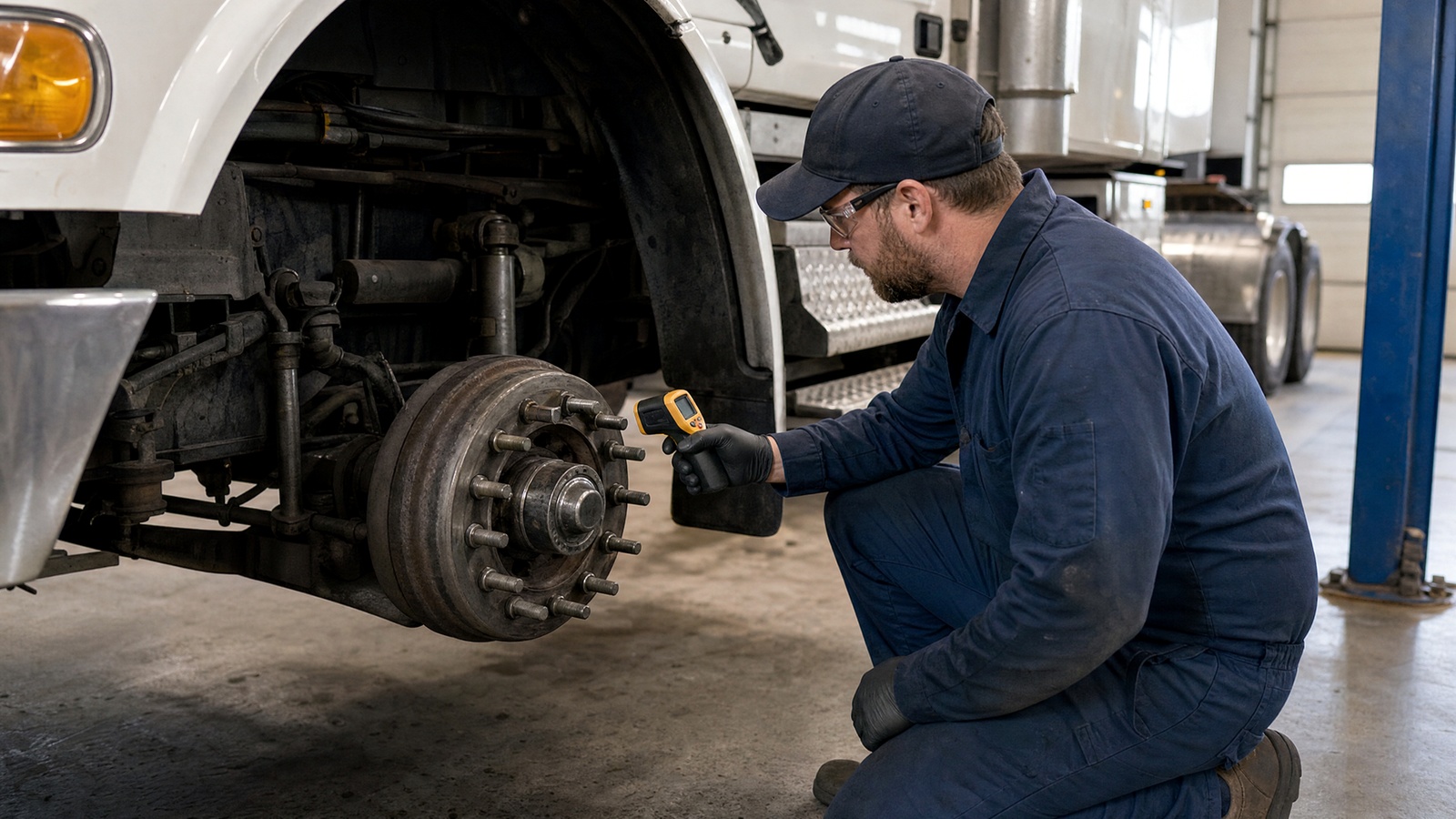
A failing semi-truck wheel bearing can begin as a faint rumble, a warm hub, a lubricant streak, or extra movement at the wheel end. Owner-operators and small fleets need to recognize those clues before they become brake contamination, roadside downtime, or wider wheel-end damage.
Quick answer: seven wheel-bearing warning signs
The most useful warning signs are a visible hub or seal leak, grinding or rumbling, unusual wheel-end heat, rough rotation, excessive end play, lubricant on brake components, and vibration or irregular tire wear that cannot be explained by pressure alone. Not every symptom proves the bearing is bad, but each one deserves a proper wheel-end inspection.
1. Oil or grease appears around the hub
Start with the easiest clue to see. Fresh lubricant on the hub cap, wheel, tire, brake drum area, or inside face of the wheel may mean the seal is no longer keeping lubricant in the wheel end. A small stain should not be diagnosed from a photo alone, but an active drip, a falling lubricant level, or wet brake components requires prompt attention.
The bearing depends on the correct lubricant level and condition. A leak can reduce lubrication while also allowing contamination to enter. That combination can increase friction and heat. During a walk-around, identify the axle and side, photograph the pattern, and compare it with the opposite wheel end instead of simply wiping it clean.
2. The wheel end rumbles, grinds, or clicks
A healthy wheel end should not add a new growl or grinding sound. Noise that changes with road speed, becomes stronger during a turn, or remains after tire and road noise are ruled out can point toward bearing, seal, brake, or hub trouble. A repeated click also deserves inspection.
Do not keep driving just to make the sound easier to identify. Reduce speed, stop in a safe location, and report when the noise began, which side seems louder, and whether braking or steering changes it. Those details help a technician avoid guessing.
3. One hub runs hotter than comparable wheel ends
Abnormal heat can come from insufficient lubrication, incorrect bearing adjustment, a dragging brake, installation problems, or other wheel-end faults. The important clue is often the difference: one hub that is clearly hotter than the same axle's opposite side after similar service conditions needs investigation.
Use an infrared thermometer from a safe position after stopping. Compare similar points on both sides and record the readings and outside temperature. Never put a bare hand on a brake drum or rotor; brake components can remain dangerously hot. Heat alone does not identify the failed part, but it is a strong reason to stop and diagnose the assembly.
4. The hub feels rough when a technician rotates it
In a shop inspection with the axle safely supported, the hub should rotate smoothly. Binding, roughness, scraping, or a gritty feel may indicate damaged bearing surfaces, contamination, poor lubrication, or brake drag. This is not a roadside test for a driver: lifting a heavy truck requires the correct equipment and safety procedure.
A qualified technician can separate tire, brake, hub, spindle, and bearing causes. If the wheel end must be opened, the technician should follow the vehicle and component manufacturer's specifications for cleaning, inspection, lubrication, bearing adjustment, fasteners, and seal installation.
5. There is excessive wheel-end play
Movement at the wheel can come from bearing end play, but steer-axle king pins, bushings, and other suspension parts can create a similar sensation. That is why a quick shake is not a complete diagnosis. The technician should isolate the source and, when needed, measure bearing end play with the proper indicator and compare it with the applicable specification.
Ignoring looseness can allow irregular tire wear, steering complaints, seal damage, and added stress on neighboring parts. Guessing can be expensive too: replacing a bearing will not correct worn king pins or an alignment problem.
6. Lubricant reaches the brakes
Oil or grease on brake shoes, pads, drums, or rotors is a safety problem, not a cosmetic leak. Contaminated friction material may reduce or unbalance braking. If the truck pulls during braking, develops a new stopping complaint, or shows wet brake components, park it safely and have the complete wheel end and brake assembly evaluated before returning to service.
Replacing only the visible seal may not be enough. The repair should address the cause of the leak, the lubricant level, bearing condition, hub and spindle surfaces, and any contaminated brake parts according to the applicable service instructions.
7. Vibration or irregular tire wear keeps returning
A bad bearing can contribute to wheel movement, vibration, and uneven wear, but those symptoms also occur with tire imbalance, incorrect pressure, damaged tires, wheel runout, alignment, suspension, steering, or brake problems. Treat them as a diagnostic starting point, not proof of one failed component.
If a vibration returns after balancing or tire work, ask for a complete wheel-end and front-end inspection. Record the speed range, whether the vibration is felt in the steering wheel or seat, and whether it changes under braking, acceleration, or a loaded trailer.
What the road hero should check
- Look for fresh oil or grease around each hub, seal area, wheel, tire, and brake assembly during pre-trip and post-trip inspections.
- Check the hub's lubricant level only through the designed sight glass or service point and follow the manufacturer's procedure; do not mix lubricants blindly.
- Compare wheel-end temperatures with an infrared thermometer after a stop, using the same location on comparable hubs.
- Listen for a new rumble, grind, scrape, or click and note the axle, side, speed, load, and driving condition.
- Inspect tire pressure, irregular wear, suspension, king pins, brakes, and alignment so a similar symptom is not misdiagnosed.
- Have a qualified shop check rough rotation, excessive movement, bearing adjustment, seal condition, brake contamination, and spindle or hub damage.
Who is affected and when should the truck stop?
This applies to owner-operators, company drivers, maintenance managers, and small fleets running tractors or trailers with serviceable wheel ends. There is no single mileage at which every bearing fails. Duty cycle, load, water intrusion, lubricant, installation, adjustment, and maintenance history all matter.
Stop in a safe place and seek qualified help when there is severe grinding, obvious wheel looseness, an active lubricant leak, abnormal wheel-end heat, smoke, or a brake-performance change. Do not authorize continued travel based only on a phone guess when the safety of the wheel end or brakes is uncertain.
How early diagnosis affects costs and uptime
An early inspection may contain the job to the actual failed parts and planned shop time. Delaying can add contaminated brakes, damaged hub or spindle surfaces, tire wear, towing, missed freight, and unplanned downtime. No honest guide can promise a fixed savings amount, but finding the cause before secondary damage is generally the lower-risk decision.
If parts are needed after a professional diagnosis, review the available heavy-duty wheel-end and maintenance inventory at Truck Savers Store. Confirm application and fitment before ordering; the article does not replace the truck or component manufacturer's service information.
Common questions
What changed? No new rule is being announced. This is a preventive guide to recognizing wheel-end symptoms already relevant to daily operation.
Who is most affected? Trucks with high mileage, demanding loads, frequent brake heat, water exposure, recent wheel-end work, or inconsistent inspection histories deserve close attention, but any wheel end can develop a problem.
Can a driver confirm a failed bearing roadside? Usually not. A driver can identify clues and compare temperatures, sounds, and leaks. Final diagnosis may require safe lifting, measurement, and disassembly by a qualified technician.
How does it affect safety? Loss of lubrication, excessive play, heat, or brake contamination can compromise wheel-end reliability and braking. The safest response is to diagnose the cause before the truck returns to service.
Bottom line
Leaks, heat, noise, looseness, and recurring vibration are not background noise to ignore. Document the clue, stop safely when the symptom is serious, and make the repair decision from a complete wheel-end inspection. The truck warns you. The problem is when nobody listens.
Truck Savers News is the independent editorial publication of The Truck Savers.