Truck wash, trailer washout or tank wash: choose the right service
Compare exterior washing, interior trailer washout and tank cleaning. Questions to ask before a detour and how to use the Houston and Atlanta lists.
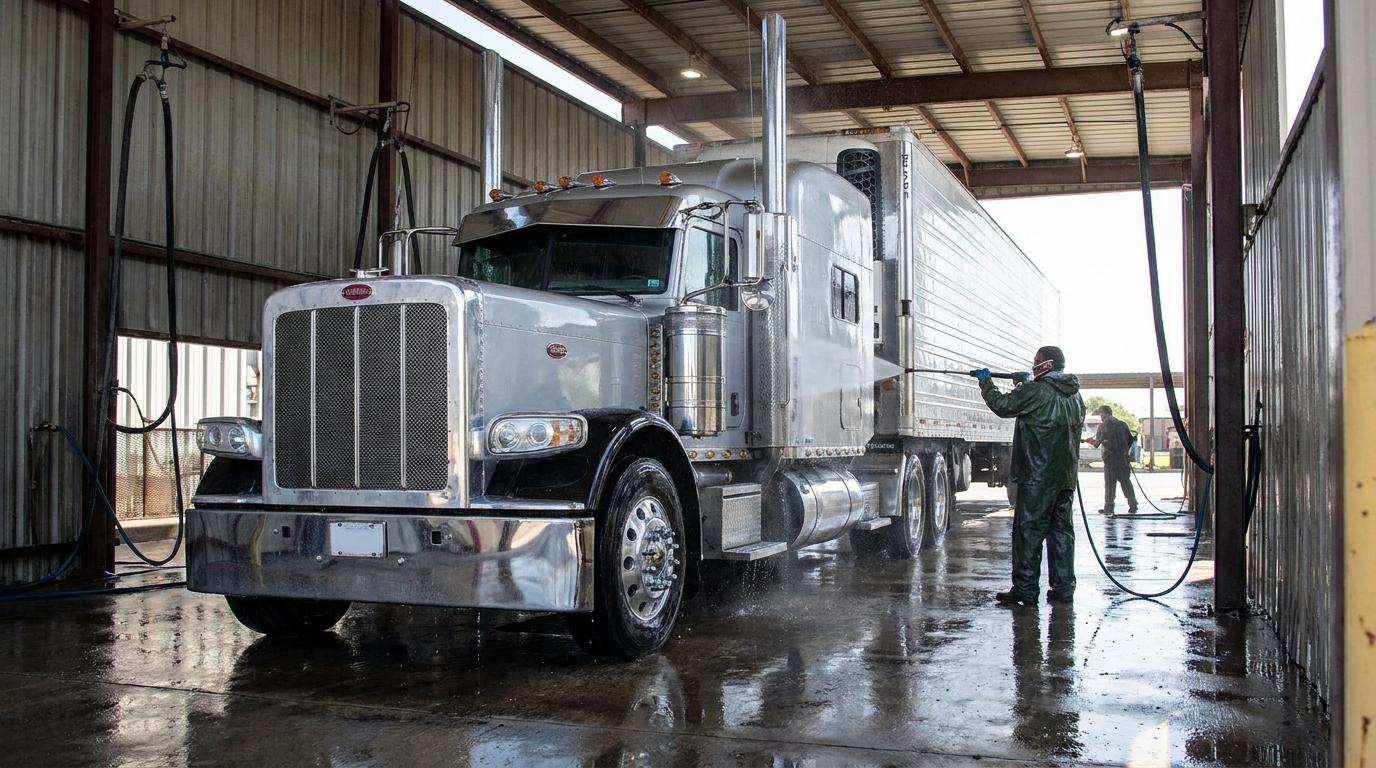
A search for “trailer washout near me” is useful only if the bay can do the job your next load requires. Exterior washing, cleaning the inside of a dry van or reefer, and cleaning a cargo tank are different requests. A location can offer one without offering the others. Start with the equipment and the load instructions, then choose the stop. This guide compares the services; our route guide explains how to confirm the stop before taking a detour.
Three services, three different questions An exterior truck wash addresses the outside of the tractor or trailer. Ask which surfaces are included, whether the operator can handle your equipment, and whether any treatment needs approval from the equipment owner. Exterior trailer washing does not establish that a location can wash the cargo compartment. Do not turn an “exterior trailer wash” listing into an interior-wash booking by assumption.
A trailer washout addresses the inside of a dry van or refrigerated trailer. Tell the provider what equipment you have and what the shipper requires. Ask about floor, walls, debris, drying and documentation separately. A clean-looking floor and a receipt are useful records, but they do not automatically satisfy every customer's acceptance criteria.
Tank cleaning requires a different conversation. Identify the tank, the previous commodity and the proposed next commodity through your carrier's procedures. Ask the facility whether it accepts that combination and what information it needs before quoting. Do not treat a tank-wash label as approval to enter a tank or to perform a cleaning procedure yourself.
A dispatch example: the wrong service costs two stops Imagine a driver with an empty reefer and an appointment later that afternoon. This is an illustrative scenario, not a reported customer incident. The first search result advertises tractor and trailer washing. The driver calls and learns that “trailer” means the outside only. That short call prevents an unnecessary turn into a busy yard and leaves time to contact a provider that accepts interior washouts.
The practical lesson is to repeat the exact job in the confirmation: “Interior reefer washout, empty trailer, before this pickup.” If the shipper has written instructions, use those words instead of asking only whether the facility “does washing.” A dispatcher and a wash employee can both say yes while referring to different work.
Use the directory without overstating its labels The Houston and Atlanta pages now separate the municipality from the broader market. A Baytown listing belongs to the Houston-area comparison, but it is not a Houston-city address. In the same way, a stop in Temple or Jackson should not be mistaken for one inside Atlanta. Check the municipality, the truck entrance and the direction of travel together.
Our interior-washout filter uses the specific service recorded from official location pages. Other service tags describe what is listed and still need confirmation. A missing tag means the directory lacks that information; it does not prove that the business refuses the service. Contact the provider before ruling it in or out.
Confirm hours for the particular bay Opening hours for a facility and hours for a particular service can differ. Blue Beacon's Atlanta West location, for example, distinguishes regular wash bays from dedicated washout bays on its official page. That distinction matters more than a general “24 hours” label when planning an interior washout. Recheck current hours, especially on holidays, rather than copying a timetable from an old screenshot.
Ask whether the last arrival time differs from closing time, whether appointments are accepted, and whether a queue affects your plan. Treat a quoted wait as an estimate from that conversation, not a guaranteed slot. Keep a second suitable option if the appointment window is tight.
A short confirmation script Before moving the truck, have the equipment type, location and required service ready. Ask: Do you accept this trailer and previous load? Is the service exterior washing, interior washout or tank cleaning? What preparation do you require? What document will you provide? What hours apply to this service today? Where should a tractor-trailer enter?
Record the date, the employee's answer and any booking reference in your dispatch notes. Request written instructions when a shipper or carrier requires them. Do not publish a worker's personal contact details in a shared load document. A clear business confirmation is more useful than an untraceable promise that “someone said it was fine.”
Check the result against the loading instructions Review the work before leaving, where the operator permits it and without entering hazardous spaces. Compare the receipt and visible result with your carrier's checklist. If something differs, ask the provider and dispatcher to resolve it before you travel to the shipper. The next facility makes its own acceptance decision; the directory cannot issue a sanitation approval or guarantee acceptance.
Keep wash documentation with the load record when required. Photograph only what your company and the site permit. Never handle residue, mix chemicals or attempt tank entry on the strength of an online article. The useful action here is better coordination between the customer, carrier and qualified provider.
Choose the right bay before the next detour Use our Houston or Atlanta wash list to compare actual towns and recorded services, then call the operator. For the route itself, read “Truck wash locator: confirm the stop before detouring.” If the visit also reveals a trailer repair need, ask The Truck Savers™ about the appropriate repair service separately; a wash appointment is not a mechanical inspection.
Continue with these tools
Related guide: context and next step
Compare truck washes in Houston
Compare truck washes in Atlanta
Ask The Truck Savers™ about the mechanical service appropriate for your equipment. Confirm scope and appointment directly.
Official sources and verification
Practical guide checked November 6, 2026. AI-generated illustrative cover; it does not depict a specific branch or customer.