How Much Fuel Can a Semi-Truck APU Save?
Estimate APU fuel savings from your truck's idle rate, parked hours, and diesel price.
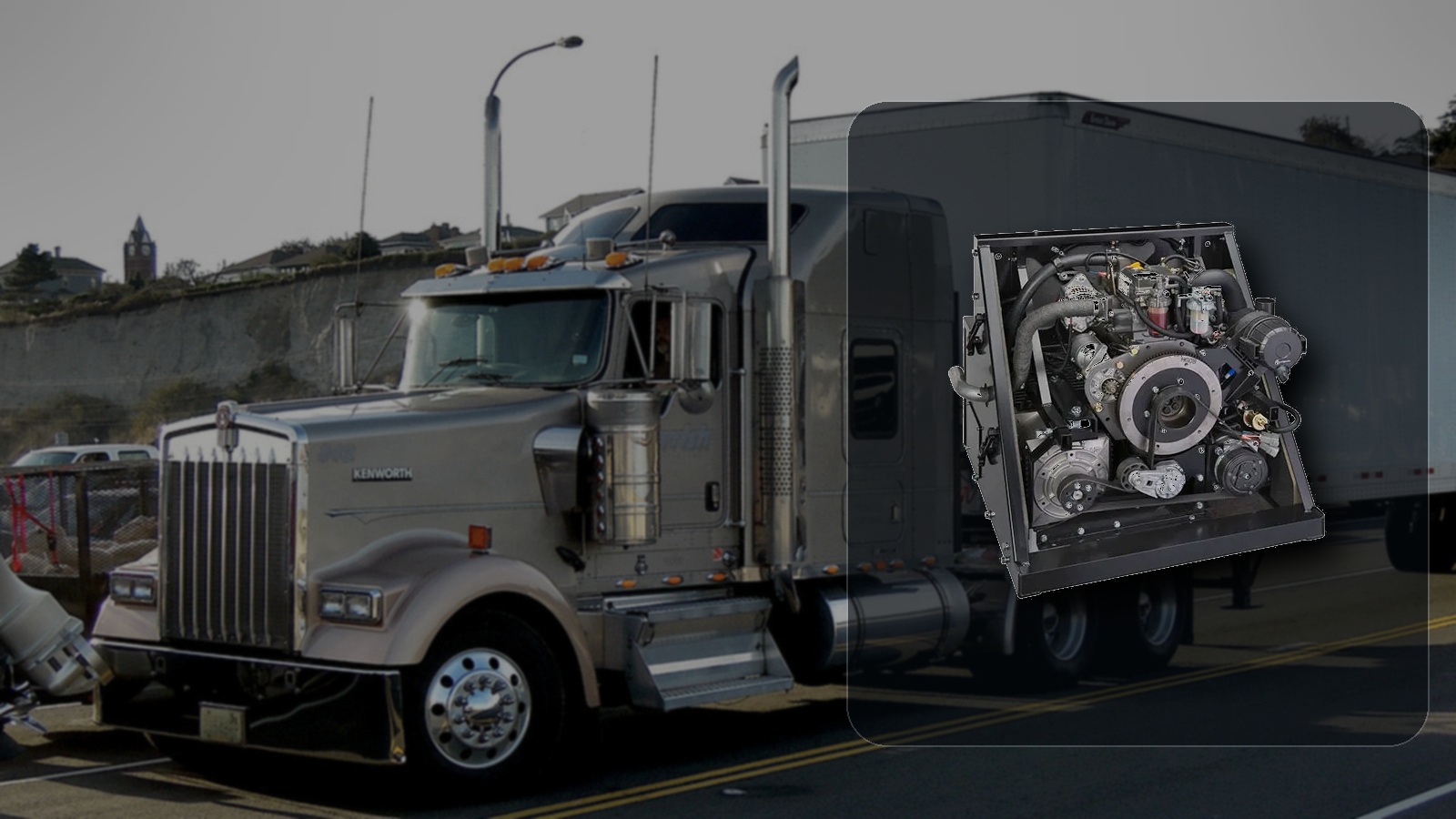
An auxiliary power unit can reduce fuel use during sleeper-berth stops, but there is no honest one-number answer for every semi-truck. Savings depend on the tractor's measured idle burn, the APU's actual consumption under electrical and climate-control load, the number of parked hours, ambient temperature, and diesel price. The most useful estimate therefore starts with your own records rather than a universal sales claim.
Start with the fuel-use difference
Use this worksheet: (main-engine idle gallons per hour − APU gallons per hour) × APU hours = gallons avoided. The federal idle-reduction guidance says long-haul trucks consume more than one billion gallons of fuel each year while idling and identifies onboard auxiliary power as one way to reduce unnecessary engine operation. That establishes the size of the issue, but an owner-operator still needs truck-specific inputs.
Pull the tractor's idle fuel rate from the ECM or telematics report over several comparable rest periods. Obtain the APU burn rate from its documentation, controller, or a measured fuel-use test. Include nights when air-conditioning, cab heat, battery charging, and hotel loads are working normally. A no-load shop test can understate real-world consumption.
A transparent example, not a promise
Suppose an ECM shows 0.80 gallon per hour for the main engine and the APU documentation or measured test shows 0.25 gallon per hour under the operator's normal load. The difference is 0.55 gallon per hour. Running the APU for eight hours over 20 nights would avoid an estimated 88 gallons that month: 0.55 × 8 × 20.
Using the U.S. national on-highway diesel average of $5.348 per gallon reported for the week of August 3, 2026, those 88 gallons equal about $470.62 in gross fuel savings. That national average climbed 16.8% in four weeks, which is exactly why the price belongs in the worksheet instead of in your memory. This is an illustration only. A different idle rate, duty cycle, local fuel price, or APU load changes the result immediately. Replace every assumption with your records before making a purchase decision.
Convert gross savings into net operating value
Fuel is only the first line of the calculation. Subtract APU fuel, oil and filters if they were not already captured in the measured rate; then account for scheduled service, unexpected repairs, installation, financing, and downtime. On the benefit side, record avoided main-engine idle hours because they can affect maintenance intervals, aftertreatment operation, and resale discussions. Do not assign a dollar value unless your maintenance history or provider can support it.
A practical 30-day test is better than an annual guess. Record date, location, outside temperature, parked hours, main-engine idle hours, APU hours, gallons purchased, and unusual electrical loads. Compare similar operating weeks. If the truck runs team service, returns home nightly, or rarely idles, annual savings may be lower. A solo sleeper tractor spending many nights on the road may create more usable hours.
Check fit, service, and compliance before buying
An APU must match the truck's sleeper configuration, climate demand, battery system, frame space, weight plan, and service network. Ask who performs warranty work along your lanes, what maintenance intervals apply, which loads the system can support, and how the installation affects existing warranties. Also confirm local anti-idling rules and any exemptions; an APU does not erase the need to follow posted restrictions. The federal side matters too: the fuel system rules in 49 CFR 393.65 and 393.67 apply to auxiliary equipment installed on the truck, so the tank, the mounting and the lines feeding an APU answer to the same clearances and fittings as the engine tank.
The decision test is simple: use verified hourly savings, multiply by realistic operating hours, subtract ownership costs, and compare the result with the installed price or payment. If you want a system quote built around your truck and duty cycle, request an APU assessment from Go Green APU. This guide is published by The Truck Savers.
Hero image composite: CC0 truck photograph by Juhele_CZ; APU product image courtesy of Go Green APU.