Your Toll Bill Hides the Only Useful Part
The rate is the one number you cannot change. The time, place and lane on each toll charge are a log of how your operation ran.
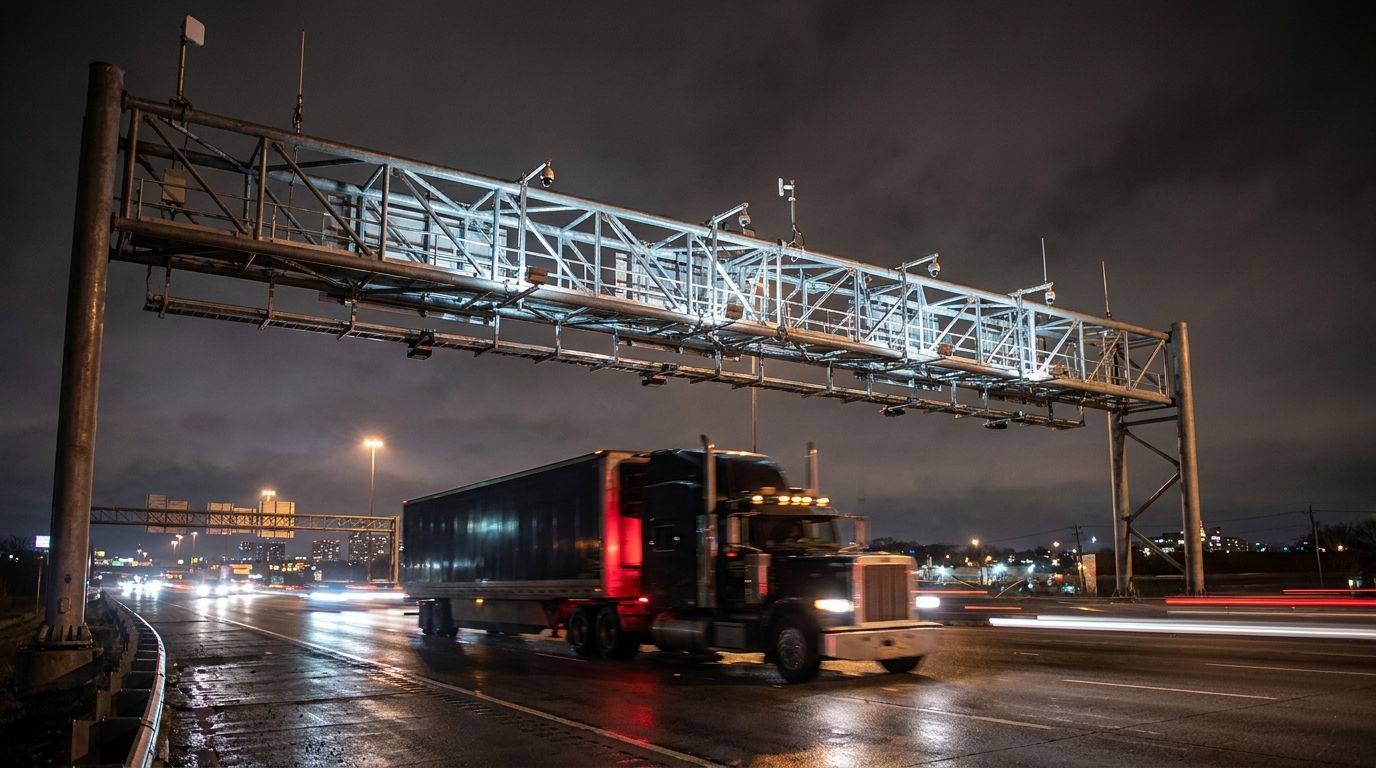
Your toll bill has one number on it that you cannot do anything about, and that is the number everybody looks at.
Toll rates are published in advance. You can budget for them, you can route around them, and once the truck is rolling, the rate is the rate. It is the least interesting thing on the invoice.
Everything else on that record is the part nobody reads.
What a toll transaction actually records
Every time a truck passes under a gantry, the system writes down more than a charge. It records a time. A location. A lane. A vehicle. A plate.
Then all of that arrives at your office compressed into a single line on a monthly statement, with a dollar figure at the end of it.
Look at what you just threw away. Time and location together tell you where the truck actually was and when. Not where the plan said it would be — where it was. Lane tells you something about how it moved through the plaza. Repeat those records across a month and you are holding a log of how the operation really ran.
The questions that log answers
Most fleets already suspect these things and cannot prove them. The toll data proves them.
Is the route you pay for the route you planned? If a lane is supposed to run one corridor and the transactions keep showing another, that is not a driver problem or a dispatch problem until you know which one it is. The record tells you it happened. You go find out why.
What time is the truck really moving? A load that is supposed to clear a metro before rush hour and keeps hitting the gantry at 4:40 p.m. is telling you the schedule does not survive contact with reality.
Are you paying for trips that did not need the toll road? Sometimes the toll is worth it and sometimes it is habit. The invoice will never tell you which; the pattern will.
Is the plate on that charge yours? This is the boring one that matters. Misreads happen, and a charge against a plate you do not run is a charge you can dispute — but only if somebody is looking at the line, not just the total.
Is the same truck paying twice? Duplicate charges from a single pass happen, usually when a transponder reads and the camera reads too. On one truck it is pocket change. Across a fleet, across a year, it stops being pocket change.
Why nobody looks
Because the bill is designed to be paid, not read. It comes formatted as an amount due, it lands in the same pile as fuel and insurance, and the person who approves it is not the person who would recognize that a truck was forty miles from where it should have been.
Most tolling authorities and transponder accounts will give you the itemized detail. It is usually a download away, and usually nobody downloads it.
What to do this month
Pull one month of itemized toll records instead of the summary. Sort them by truck instead of by date. You are not looking for fraud — you are looking for the trips that surprise you.
Group the ones that repeat. A single odd trip is a day. The same odd trip on the same lane every week is a route that is not what you think it is, and that one is worth fixing because it is still costing you next month.
Then take the three that surprised you most and ask the driver what happened that day. Half the time there is a good reason and you learn something about your lanes. The other half is where the money is.
None of this requires software you do not have or a consultant. It requires one afternoon and the willingness to look at a bill you have been paying without reading for years.
The invoice tells you what you spent. The data tells you what your operation did to spend it.
We keep trucks running in Houston, Dallas and Monterrey: thetrucksavers.com.
Original source: Transport Topics, "Your toll invoice shows what you paid. Your toll data shows why"