Your New Tire May Be Three Years Old: Read the DOT Code
The last four digits of the DOT code give the week and year a tire was built. 49 CFR 574.5 sets the format, retreads use a shorter number, and NHTSA sets no maximum age.
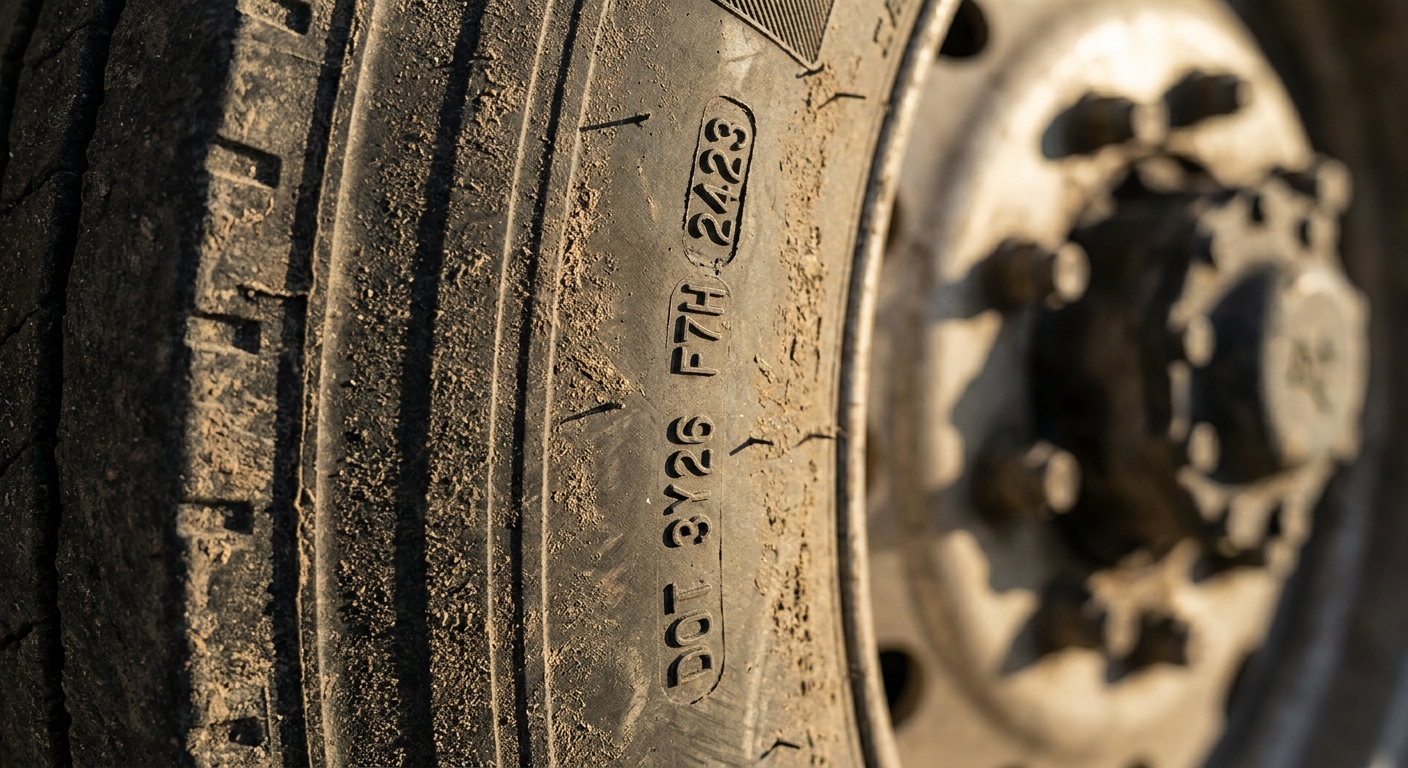
The tire you just mounted may have spent three years sitting in a warehouse, and the tread will not tell you: it looks new because it never rolled. The number that does tell you is molded into the sidewall, in the four digits that close out the DOT code, and it is the only one that says when the tire was actually built.
What those four digits are
The federal rule behind them is 49 CFR 574.5, which requires every tire manufacturer to mold a Tire Identification Number (TIN) of 13 symbols into the sidewall. The last group, and only that one, is the date code: four numerical symbols identifying the week and year of manufacture.
The first two are the week, starting with "01" for the first full calendar week of the year. The last two are the final two digits of the year. The example written into the regulation itself is 0109: the first full calendar week of 2009, running Sunday, January 4 through Saturday, January 10. The calendar week runs Sunday through Saturday.
In shop terms: if the last four digits read 2423, that tire came out of the mold in week 24 of 2023, no matter when you bought it.
Retreads are read differently
This is where a lot of operators get tripped up. The same 574.5 requires a retreader to mark a TIN of seven symbols, not thirteen, and that number refers to the retread, not to the original casing. On top of that, the letter "R" identifies a retreaded tire and is not part of the TIN.
So on a retread, the date you are reading is the date of that tire's second life. The age of the casing underneath is a separate question, and it is not in that number.
One more thing that changed recently: the plant code went from two symbols to three. Manufacturers were allowed to keep using the two-symbol code until April 13, 2025, so both formats are sitting in your yard right now.
Why it matters to the driver
Rubber ages whether or not the tire works. It oxidizes, loses elasticity and starts cracking from the inside, and none of that shows up on a tread depth gauge. A tire can have plenty of tread left and still be old where it counts.
NHTSA does not set a maximum age for taking a tire out of service. The numbers come from the manufacturers instead, and the most common recommendation falls between 6 and 10 years from the date of manufacture. Michelin recommends an annual professional inspection after five years and replacement at ten; Continental advises removing any tire over ten years old, spare included. None of those figures is law, which is exactly why the tire's own literature and your vehicle manual beat yard habit.
The reverse holds too: age alone does not condemn a tire. Pressure, wear, damage and the work it has done matter just as much.
The ten-second check
- Before you pay, ask to see the date code on the tires being mounted, not the ones in the ad. It is the only way to know what age you are buying.
- Write down the week and year for each position at mounting. In a small fleet, that notebook beats memory.
- Inspect the sidewall, not just the tread: fine cracks in the flank or between the lugs point to aged rubber.
- The spare counts. It racks up the most years without rolling and nobody looks at it until they need it.
- On retreads, be clear that the number belongs to the retread. If the casing matters to you, ask for its history.
- If you cannot find the code, check the other side: the rule requires marking on one sidewall, and on many tires the full number lives on a single face.
The preventive close
An old tire gives no warning before it lets go, and at highway speed no amount of steering fixes it. Reading four digits takes ten seconds, and it is the difference between knowing what you are running on and assuming it. Iron never lies: that code was there from day one.
If you would rather have someone else check your tires and the suspension punishing them, The Truck Savers runs the full inspection in Houston, Dallas and Monterrey.
Original source: 49 CFR 574.5 — Tire identification requirements (eCFR)