Wyoming 511: Separate Road Reports from Forecasts
A forecast is only part of a Wyoming route review. Match the road report to the segment, direction and time before dispatch.
A forecast alone cannot answer every question about a Wyoming truck route. Before dispatch treats tomorrow's weather outlook as a trip decision, separate the predicted weather from the road information for the actual segment. A useful review identifies the route, direction, information time and unresolved questions rather than reducing the entire trip to a weather icon.
What Wyoming 511 provides
WYDOT describes 511 as a service covering road-surface conditions, active travel advisories, temporary and seasonal closures, current weather and forecasts up to six hours ahead. Reports draw primarily on first-hand observations from its maintenance crews. Callers can select a route, part of a route and direction. These are different kinds of information, not interchangeable answers about a future trip.
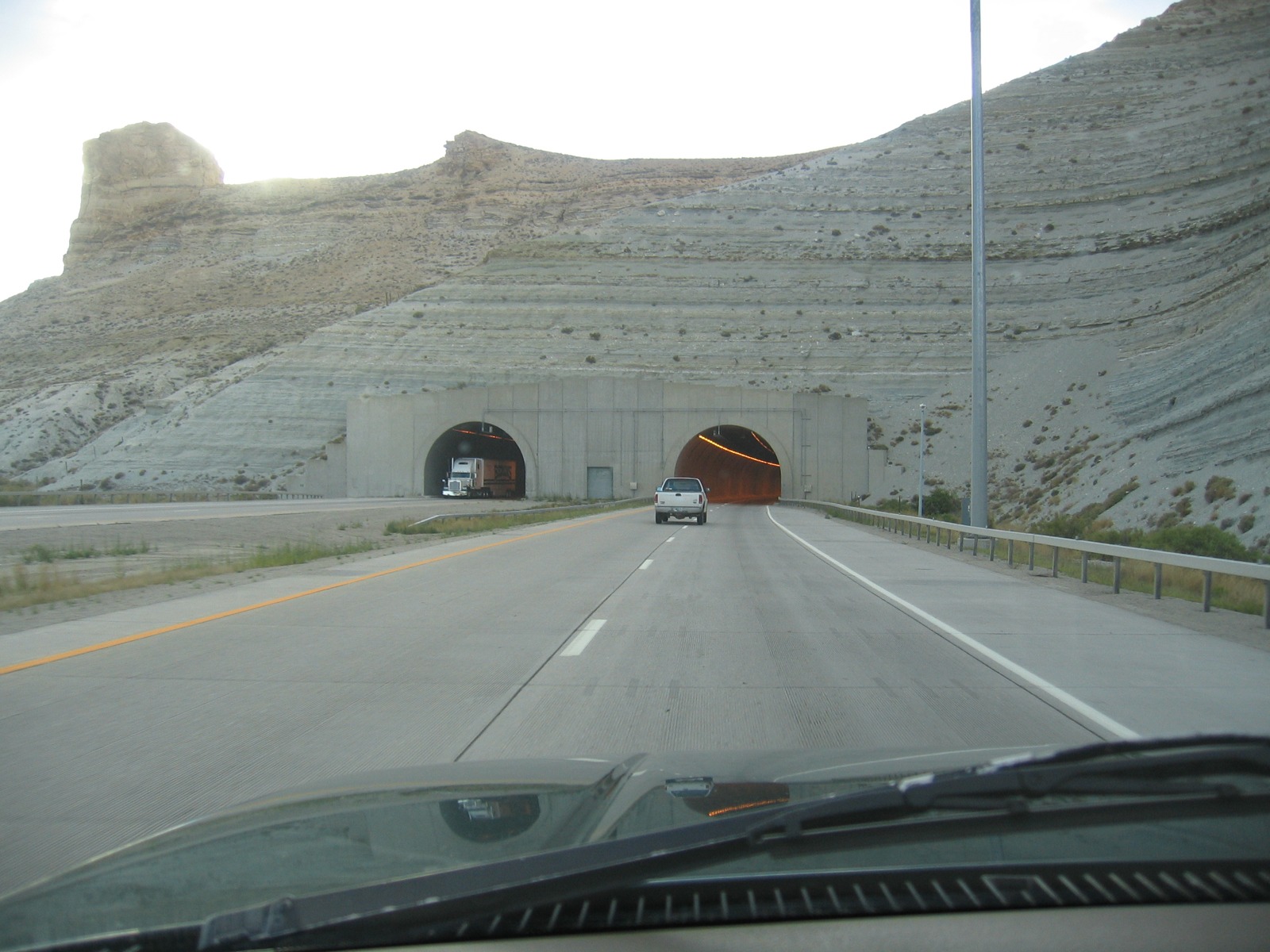
This is a guide to organizing a route review, not a report that Interstate 80 or any other highway is currently open. The photograph is an illustrative archive image. Neither its clear sky nor the traffic pictured establishes today's conditions. Consult the live official service for the route being considered.
Start with the trip you actually intend to make
Write down the proposed highway, direction and relevant portion before opening the information service. A city name may be a convenient meeting point in a conversation, but it does not describe every segment between two terminals. If the trip includes more than one highway, keep those portions separate in the review.
Consider a hypothetical dispatch handoff for a truck expected to cross Wyoming later in the day. The first person has checked the morning forecast, while the second has received a screenshot of a road report. The useful question is which route and time each item covers. Putting both in the same chat does not make them describe the same trip.
Include the planned departure and expected review time with a labeled time zone. This is an editorial planning suggestion, not a WYDOT scheduling requirement. An unlabeled time can create an unnecessary disagreement between colleagues working in different locations. Keep the plan distinct from any prediction about when travel will be possible.
Keep observation and prediction in separate fields
A simple worksheet can use one field for the road information being reviewed and another for the weather outlook. Add the retrieval time, the reported time if provided and the segment to which the information applies. When a time or coverage detail is missing, mark it as unresolved rather than filling the gap from memory.
A forecast describes an expected period. A road report describes the information available for a specified place and time. If the planned journey extends beyond the forecast horizon being consulted, record that limitation. Do not extend a short-range statement to the entire day simply because the trip itself is longer.
For the hypothetical handoff, a helpful note might say that the selected route report was reviewed at a specified time and another review is needed before departure. It should not promise an opening time or say that every part of the crossing has been cleared when the evidence only concerns one portion.
Read applicability before forwarding a conclusion
Preserve the wording and scope of an applicable advisory or restriction for the responsible driver and dispatcher to review. Do not turn a qualified statement into a universal rule for all trucks. Equipment identity and trip details belong in that discussion; this article supplies no stability threshold, vehicle-specific clearance or permission to travel through a closure.
If the official information is unclear for the intended unit, keep the decision open and use the appropriate official or fleet contact to resolve the question. A familiar route or previous successful trip is not a substitute for the information needed for the current review. Avoid passing an assumption to the next shift as though it were a confirmed instruction.
Use a handoff that can be checked again
Keep a link to the official service with the review note. A screenshot can preserve what someone saw, but it needs its retrieval time and location to be useful later. The next person should be able to return to the source and understand which part of the trip was reviewed without reconstructing the conversation.
- Identify highway, direction and segment.
- Label the trip and review times.
- Separate road information from the weather outlook.
- Record source time and retrieval time when available.
- Keep restrictions and unanswered applicability questions visible.
- Assign the next review before the handoff is complete.
This approach does not predict a delay, calculate savings or replace the fleet's operating procedures. Its value is a clearer decision record: the team can see what was checked, what remains uncertain and who will review the information next. That is more useful than a confident message whose route and timing cannot be traced.
Illustrative archive photograph: I-80 tunnels near Green River, Wyoming; Brewdog / Wikimedia Commons, public domain. Image metadata dates the photograph to August 16, 2006. Resized and JPEG re-encoded; it does not show current travel conditions.
Explore more fleet planning guides at Truck Savers News.