Winter Watch or Warning: Read Beyond the Alert Label
A winter watch is not the same as a warning. Read the alert location, timing and hazards before making a dispatch plan.
A weather alert is useful only when someone connects it to the route and the time a truck would be there. A screenshot containing the word warning, without its location or valid period, can leave dispatch and the driver discussing different situations. Before winter operations become busy, a small fleet can establish a simple way to read and hand off that information. This is preparation guidance, not a forecast of a storm today.
Three labels answer different questions
The National Weather Service explains that a watch means the risk of hazardous weather has increased significantly, while the event's occurrence, location or timing remains uncertain. A warning means a hazardous event is occurring, imminent or likely and presents a threat requiring protective action. An advisory concerns less serious conditions than a warning, but those conditions can still cause substantial difficulty and require caution.
Do not translate those distinctions into a universal driving rule. A watch is not a guarantee that a route will remain clear until a warning appears. An advisory is not an assurance that a heavy vehicle can make a trip safely. The label is the beginning of the review. The actual alert, road information, equipment and operating circumstances determine what needs attention.
Read the area and period before the headline
For each relevant alert, identify the issuing office, affected area, start and end times, and the hazard described. Compare those details with the planned trip, including intermediate stops. A destination forecast alone does not describe the route between the terminal and the receiver. Keep the alert's timezone with the time rather than copying a bare number into a dispatch message.
Check when the product was issued or updated. A forwarded image can remain in a conversation after conditions or instructions change. Record the source and retrieval time so the next person knows what was reviewed. If the information cannot be matched to a current official product, treat it as an unresolved reference and obtain the current information before building a plan around it.
Build a route review with useful fields
The following is TSN's suggested handoff format. It is not a weather-agency form, a prediction model or a certification that a trip is safe. Its purpose is to make uncertainty visible and assign the next check to a person rather than assuming that someone else is watching.
- Route segment: the road or area that needs review, and the planned time of travel there.
- Official alert: the product name, issuing office, affected area and valid period.
- Hazard: the conditions actually named in the alert, without substituting a more dramatic label.
- Road status: the relevant road authority's current restriction or closure information, checked separately.
- Decision owner: who will review the trip and communicate any operational change.
- Next check: when information will be reviewed again and what would trigger an earlier review.
Weather alerts and road restrictions serve different purposes. A forecast product describes a meteorological hazard; it does not replace a road authority's closure notice or a carrier's operating procedures. Keep both references in the same trip review without treating one as proof of the other. An absent closure notice is not evidence that conditions suit every truck or driver.
Use a hypothetical handoff to test the process
Imagine that a driver would cross a named area in the evening, while a watch describes possible hazardous conditions later that night. The useful dispatch message includes those times, the area and the remaining uncertainty. It does not simply say there is a watch somewhere in the state. If the appointment changes and the truck would arrive later, the original review must be revisited.
That example supplies no route recommendation. It illustrates why a weather review belongs to a particular plan and can become outdated when that plan changes. A different departure time, stop or receiver appointment changes the context even if the alert text itself has not changed. Keep the updated plan accessible to the driver and anyone taking over dispatch.
Make the communication short enough to use
A concise handoff can state the affected segment, the official product and period, the unresolved question and the next review time. Avoid filling the message with copied forecast paragraphs that hide the decision. Preserve the original source alongside the summary so a colleague can check the wording. Distinguish confirmed restrictions from possible conditions and from your own planning assumptions.
The preventive habit is to review the complete alert before committing to the next movement, then check again when conditions or the plan change. A label alone cannot do that work. For more practical fleet-operation coverage, continue reading Truck Savers News.
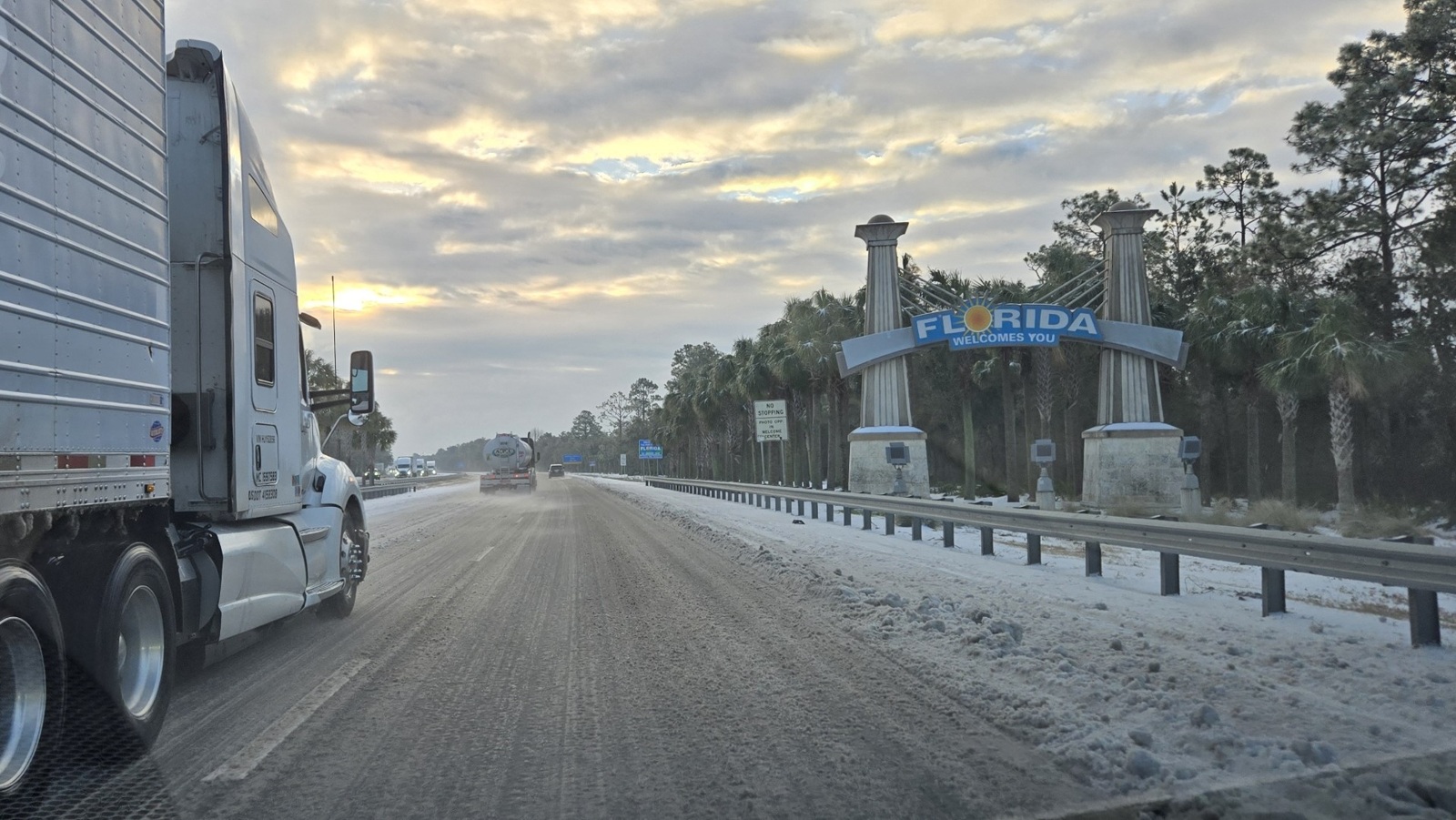
Illustrative archive photograph: Andrew Heneen, Interstate 75 entering Florida during the January 2025 snowfall, Wikimedia Commons, CC BY 4.0; resized. It does not show current road conditions.

Original source: National Weather Service, Watch Warning Advisory Explained, checked October 5, 2026.