Winter Outlook: Keep the Daily Route Check
The winter outlook describes seasonal odds. Use current forecasts and road reports for each dispatch decision.
NOAA released its U.S. Winter Outlook on October 15 for December 2026 through February 2027. The central message for a small fleet is about preparation: the agency favors warmer seasonal conditions across much of the North and wetter conditions across the southern tier and East Coast. Those broad probabilities can support a winter planning discussion, but they do not replace the forecast or road report needed for a particular dispatch.
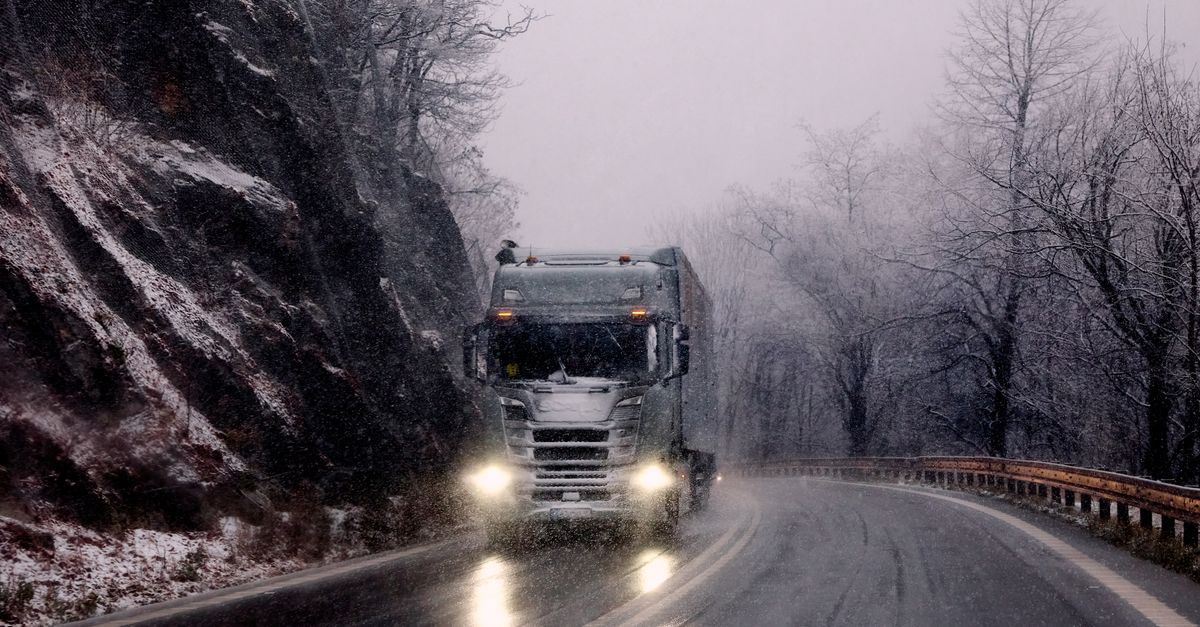
Illustrative archive photograph of a truck in winter conditions; not a forecast or a scene of the coming U.S. winter. Stani Slavus / Pexels. Pexels License.
Put the period beside the map
The outlook describes a three-month season, not the weather on a driver's next shift. Keep that period visible when a map is shared with dispatch or maintenance. A graphic labeled for winter should not be forwarded as evidence that a particular pass, bridge or delivery approach will be clear next Tuesday. The decision must use information matched to the place and time of the trip.
Separate the baseline from individual events. A winter can finish warmer than its historical comparison and still contain periods that require a different operating plan. Similarly, a seasonal precipitation category does not identify the timing, duration or exact route of a particular weather system. A fleet planning sheet needs space for both the seasonal background and the current operational information.
Read temperature and precipitation separately
NOAA favors above-average temperatures in areas including the Pacific Northwest, Midwest and much of the East, while parts of the Southeast, including Florida, have a near-normal signal. It favors wetter conditions across the southern tier and East Coast, with drier signals in parts of the northern Mountain West and Great Lakes. These are regional outlooks; do not turn a shaded area into a guarantee for every town or highway inside it.
For a fleet crossing several regions, a single national headline is especially incomplete. List the major route segments in the planning record, then identify which current information each segment needs. Use the seasonal outlook to prepare questions about the coming months. Use local forecasts and road conditions to answer questions about the actual trip, including any segment that differs from the broad regional pattern.
Equal chances do not mean normal weather is promised
The National Weather Service's La Crosse discussion provides a useful example: the Upper Mississippi River Valley has a warmer temperature outlook, while its seasonal precipitation outlook remains equal chances. The same regional page explains that seasonal information cannot predict the frequency, number or intensity of individual snowstorms. Keep those two limitations together rather than translating uncertainty into a promise of ordinary conditions.
A practical way to record uncertainty is to label an unresolved item plainly. Write that an outlook does not favor a particular precipitation category instead of writing that precipitation will be normal. If a customer asks whether weather will affect a future delivery, distinguish the broad seasonal background from information not yet available for that date. That makes later updates easier to explain.
Give dispatch a short update routine
- Record the route, planned travel period and person responsible for the current weather review.
- Read the issue time and geographic coverage of the forecast or alert; do not rely on a detached map.
- Consult the relevant road authority for current restrictions and road-status information.
- Keep the operational decision separate from the seasonal outlook, with the information used to support it.
- Update the customer when verified conditions change the plan; do not promise an unaffected trip from a seasonal headline.
This is an administrative checklist for keeping information current. It does not prescribe driving techniques, authorize travel through a restriction or replace a carrier's safety procedures. The responsible operator still needs the current requirements and conditions for the vehicle and route. When the available information does not support a decision, preserve that uncertainty instead of filling the gap with an assumption.
Prepare the fleet without predicting a repair
Use the seasonal planning conversation to check that service records, route-information sources and responsibility for updates are organized. A weather outlook does not diagnose a battery, a tire or an air system, and it does not establish a universal maintenance interval. Equipment decisions should follow the applicable manufacturer information and the condition of the actual unit, with any required evaluation performed by qualified personnel.
The useful result is a clear handoff: seasonal information informs preparation, current forecasts inform the trip review and road authorities establish the status of the roads they manage. Save the source and date with each record. Recheck the operational information before departure and as conditions require, rather than treating October's winter headline as a standing dispatch clearance.
More reporting and practical guides for operators.
Original source: NOAA, U.S. Winter Outlook, October 15, 2026; NWS La Crosse regional outlook.