Windshield Cracks: What 393.60 Actually Allows
The 393.60 windshield rule allows a single crack but not two that intersect, and it only measures damage above the top of the steering wheel.
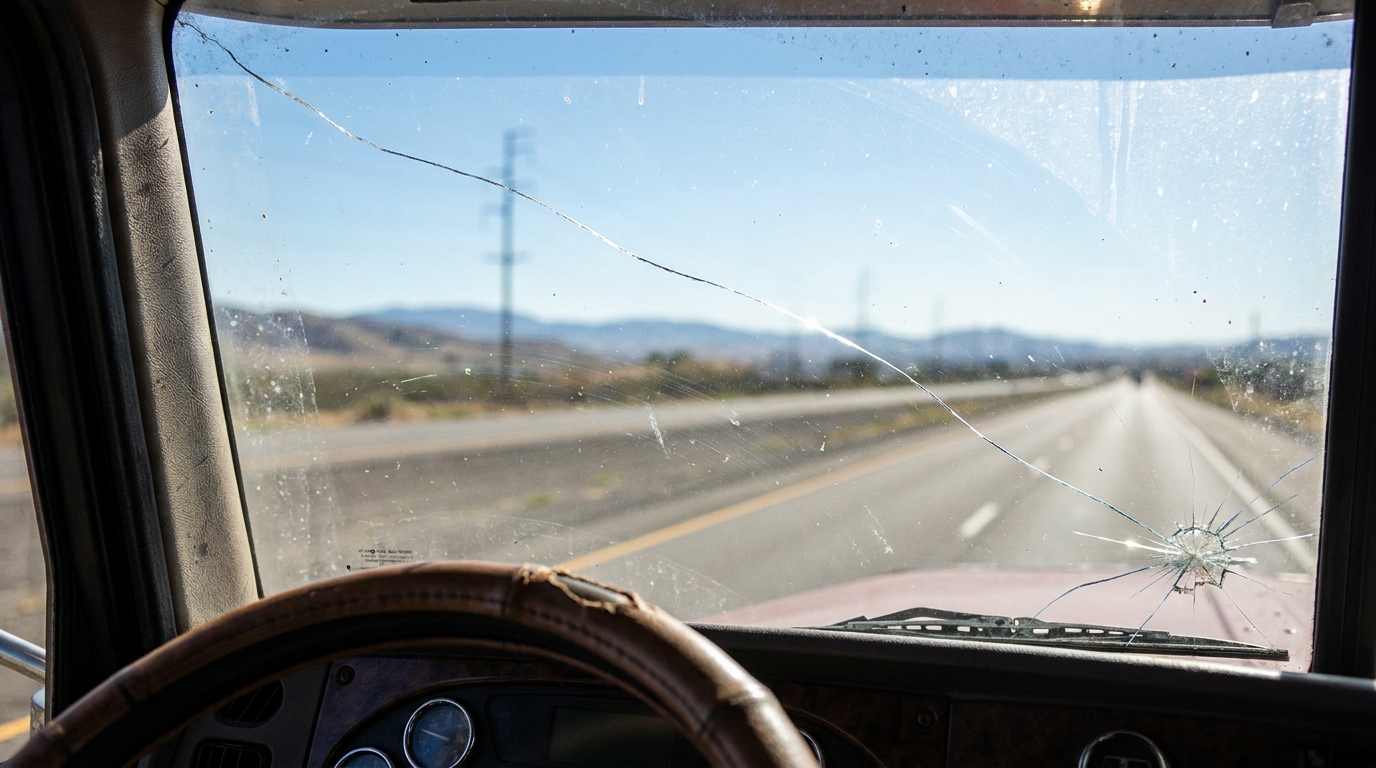
One crack across your windshield is allowed by the federal rule. Two that cross each other are not — and that single sentence decides most roadside arguments about glass.
The section is 49 CFR 393.60, and almost nobody who quotes it has read past the first line. It does not ask whether the glass looks bad. It asks three measurable questions, in a specific area, and everything outside that area is a different conversation.
Check where the damage on your windshield actually sits before you assume you have a problem.
The rule only looks at part of your glass
Paragraph (c) defines a critical area, and it is smaller than most drivers think. It runs upward from the height of the top of the steering wheel, and it excludes a 51 mm (2 inch) border at the top of the windshield and a 25 mm (1 inch) border at each side.
Inside that box, the windshield must be free of discoloration or damage. Below the top of your steering wheel, the paragraph simply is not looking. That is why a long crack low on the glass and a short one at eye level are not the same finding, even if the low one is uglier.
One crack yes, two that meet no
The first exception is short enough to memorize. Paragraph (c)(2) allows any crack that is not intersected by any other crack.
Length is not in the text. Direction is not in the text. What matters is whether another crack touches it. A single line running corner to corner is described by the exception; two shorter cracks that meet anywhere are not, because the moment they intersect neither one is unintersected any more.
This is also why a crack you leave alone can change status without anything hitting the glass. Cracks spread. The day a second one runs into the first, the exception that covered you stops describing your windshield.
The 3/4-inch disc and the 3-inch spacing
The second exception covers chips and star breaks. Paragraph (c)(3) allows any damaged area which can be covered by a disc 19 mm (3/4 inch) in diameter, on one condition: it must not be closer than 76 mm (3 inches) to any other similarly damaged area.
So it is two tests, not one. A chip small enough to hide under a three-quarter-inch disc still falls outside the exception if there is another one within three inches of it. A windshield peppered with small hits in one corner can fail the spacing test while every individual chip passes the size test.
Carry something you can measure with. A quarter is slightly smaller than an inch across; three of them side by side is close enough to tell you whether two chips are in trouble.
The 70 percent that only covers three panes
Paragraph (d) is where the tint myth lives. Coloring or tinting is allowed on the windshield and the windows immediately to the right and left of the driver, as long as the parallel luminous transmittance is not less than 70 percent in the portions marked as such.
The line that gets skipped is the last one: that restriction does not apply to the other windows on the commercial vehicle. Sleeper glass and side windows behind the driver are not what this paragraph governs. Your state may govern them — that is a separate question, and not this rule.
What is allowed to hang on the glass
- Antennas and similar devices: no more than 152 mm (6 inches) below the upper edge of the windshield, outside the area swept by the wipers, and outside your sight lines to the road and to signs and signals.
- Vehicle safety technologies as defined in 393.5: up to 216 mm (8.5 inches) below the upper edge of the swept area, no more than 175 mm (7 inches) above its lower edge, and again outside the sight lines.
- CVSA inspection decals and stickers required by federal or state law: at the bottom or the sides, not extending more than 115 mm (4 1/2 inches) from the bottom of the windshield.
What to do with this before your next inspection
- Sit in the seat and find the line. The top of the steering wheel is the floor of the critical area. Damage below it is measured by a different standard than damage above it.
- Look for intersections, not length. One long crack and two short ones that meet are opposite findings.
- Measure the gaps between chips. Three inches decides whether small damage is counted separately or together.
- Stop a chip before it becomes a second crack. Repair is cheap while the damage is still one spot.
The preventive read
Glass is the one part of the truck that fails slowly and visibly. A chip you can cover with a disc today becomes a crack next month, and the month after that it meets the first crack and the exception is gone. The rule gives you the measurements; the calendar decides whether you used them.
None of this makes the call for the officer at the scale. It tells you what the text permits, which is exactly what you want to know before somebody with a flashlight tells you their reading of it.
Running through Houston or Dallas? The Truck Savers™ inspects trucks bumper to bumper — and the same walk-around that catches your suspension catches the glass.
This is general information, not legal advice. State tint and glass laws are separate from 393.60 and are not covered here.
Original source: 49 CFR 393.60, Glazing in specified openings