Why Vibe-Coding a TMS Can Put Freight Operations at Risk
AI can speed up prototypes, but a production TMS still needs secure integrations, tested workflows and controls that protect every load and invoice.
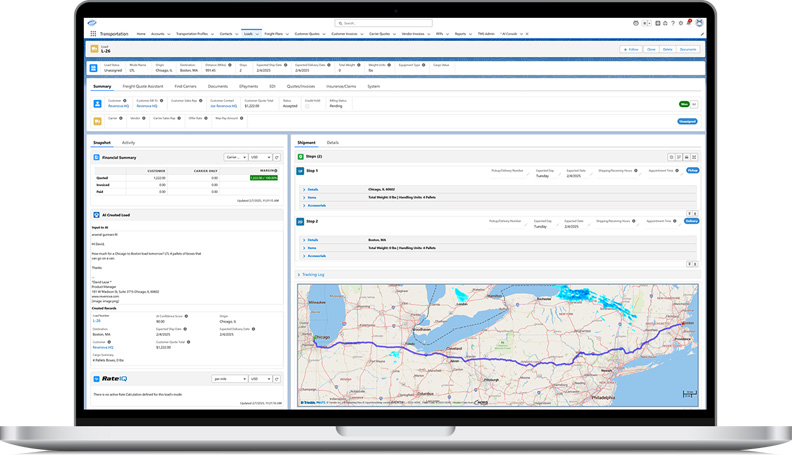
Building a transportation management system by prompting an AI tool until the screens appear to work may look fast and inexpensive. The risk begins when that prototype is trusted with real loads, customer rates, carrier records, driver information and billing. A TMS is not just a set of forms. It is the operating spine that connects sales, dispatch, tracking, documents, accounting and customer communication.
Alyssa Norcross, Group Product Manager at Revenova, recently warned that this style of improvised software development—often called vibe coding—does not provide the depth, integrations, security and scalability required for complex logistics work. Her point is not that fleets and brokers should avoid AI. It is that AI-generated code and AI-assisted workflows need the same engineering discipline, testing and operational ownership as any other production system.
The screen is only the visible part
A load can move through quoting, booking, carrier assignment, pickup, tracking, delivery, document collection, invoicing and payment. Each stage has rules, exceptions and data dependencies. A tool may produce a convincing rate-confirmation screen while failing to enforce permissions, prevent duplicate records, preserve an audit trail or recover cleanly when an integration stops responding.
Those hidden failures can become expensive. A corrupted rate can erase margin. A missed status update can trigger a service complaint. A duplicate tender can confuse carriers. Weak access controls can expose customer or driver data. An accounting mismatch can delay cash for days while dispatch and back-office teams reconstruct what happened. For a small fleet or brokerage, even a short interruption can affect payroll, fuel purchases and the ability to accept the next load.
AI belongs inside controlled workflows
Revenova’s own Artimus product illustrates a more structured use of AI. According to company materials, the agent operates inside Revenova TMS, which is built on Salesforce. It can read inbound emails, create load requests and capacity records, cross-check stored rates, return confidence scores and let users correct results. The important distinction is that the AI works within an established data model and workflow rather than inventing the entire operating system from a prompt.
That does not make any vendor or platform automatically safe. It does show the questions a carrier should ask. Where does the data live? Which records can the agent read or change? What happens when required information is missing? Can a user see why a value was created, correct it and trace the change later? Can the business export its records and continue operating if the AI service or an integration is unavailable?
What the road operator should review
- Map the complete load lifecycle, including exceptions, before approving any automation.
- Test rate calculations, duplicate prevention, document handling, invoicing and user permissions in a sandbox with non-sensitive data.
- Require human approval for high-impact actions such as changing rates, assigning carriers, issuing payments or deleting records.
- Verify encryption, role-based access, audit logs, backups, recovery objectives and incident-response contacts.
- Run failure tests for email ingestion, ELD or tracking feeds, accounting links and customer portals.
- Measure whether the pilot reduces touches and errors without creating new manual cleanup.
A small carrier does not need to become a software company to use AI responsibly. It does need a named owner for the system, written acceptance criteria and a rollback plan. Start with a narrow task such as extracting load details from email, compare the output against human work, and expand only after accuracy and exception handling are proven.
The purchasing decision is bigger than the demo
A polished demonstration usually follows the happy path. The real test is what happens when a pickup number is missing, a customer changes the appointment, a carrier sends an unusual document or an integration returns conflicting data. Ask vendors to demonstrate those failures, not just the ideal workflow. Request references from operations similar in size and mode, and make contract terms clear on data ownership, support response, security notification and exit assistance.
Technology partners such as Truck Savers can help operators think about the broader reliability of the equipment and processes that keep a business moving, but the carrier must still control its own data and operating rules. AI can shorten development and remove repetitive work. It cannot replace architecture, accountability or a tested recovery path. In freight, a system is ready only when it can handle the exception—not when the first screen looks finished.