What Crosses North Now Pays 15, 25 or 50%
Canada's counter-tariffs went live on September 8. Steel and aluminum crossing north now pay 50%; forklifts pay 15%.
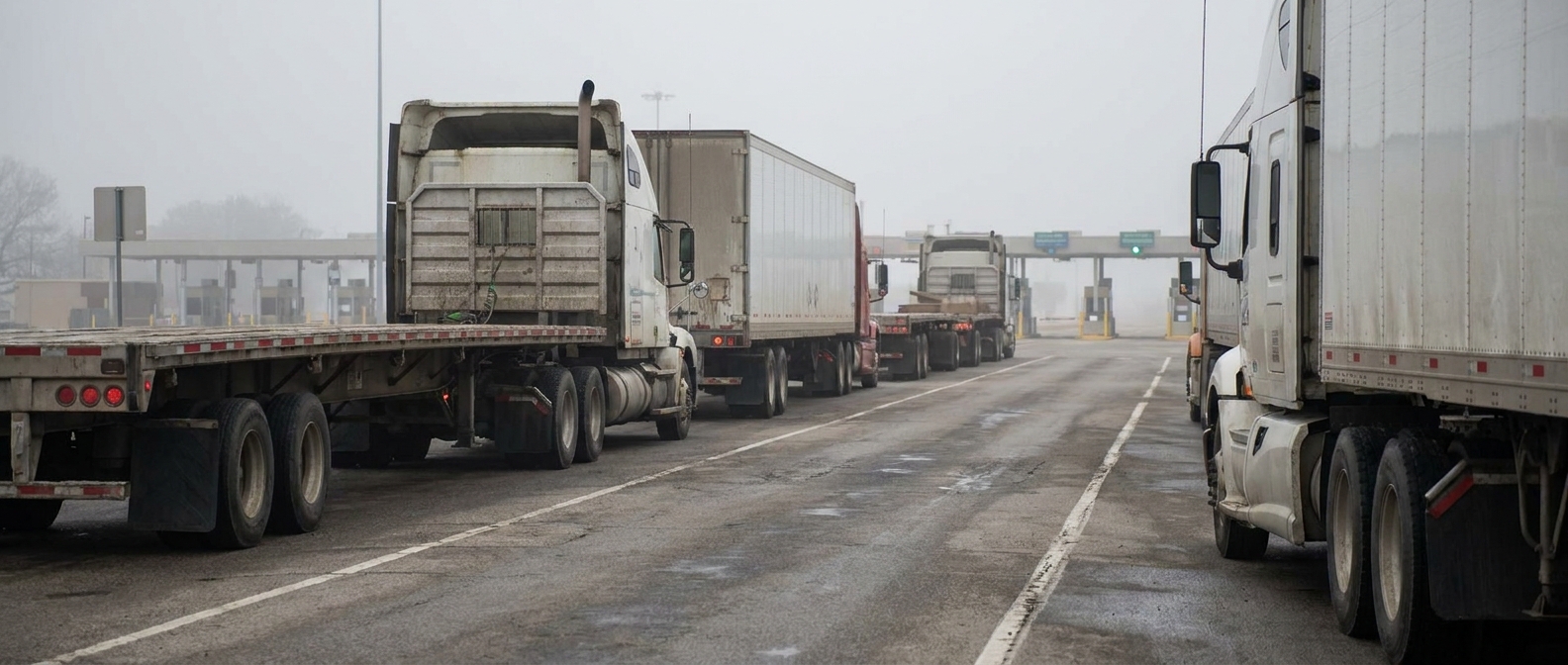
If you run freight north, something changed while you were sleeping on Monday night.
Canada's counter-tariffs took effect just after midnight Eastern on September 8, and they cover C$27.6 billion of American goods — roughly twenty billion US dollars' worth.
Three bands, not one number
This is not a single across-the-board rate. There are three:
50% — steel and aluminum, plus milk, perfume, video game consoles, golf clubs, fishing rods, jackets and t-shirts.
25% — cheese, carpets, and household appliances like stoves and air conditioners.
15% — forklifts and industrial molds.
And the logic behind which product lands in which band is worth knowing: each item carries the rate the United States put on that same product coming the other way. It is a mirror, not a menu.
Who actually pays it
Start here, because it is the part that gets said wrong on every load board.
A tariff is paid by the importer of record when the goods clear customs into Canada. It is not a charge to the carrier and it is not deducted from your rate.
What it does to you is indirect, and it is real anyway: it changes what moves.
What it changes for a truck
Two of the three bands land squarely on things trucks haul.
Steel and aluminum at 50% is the one to watch. That is structural material, and it is also what a lot of parts and equipment are made of. When the cost of a commodity jumps by half, some of those loads get delayed, resourced or cancelled while buyers on both sides rework their numbers.
Forklifts and industrial molds at 15% is a smaller rate on heavier, lower-frequency freight — the kind of load a small fleet plans a month around.
The consumer goods in the 50% band matter for a different reason: milk, clothing and consoles are high-volume, and volume is what fills trailers.
This is not the same tariff you have been reading about
Worth separating two things that get mixed together in the same sentence all week.
There is a set of United States tariffs on goods coming from Canada. And now there is a Canadian set on goods going to Canada. They are different lists, different governments collecting, and different importers paying.
The reason it matters to a carrier is direction. A duty on southbound freight and a duty on northbound freight do not affect the same lanes, the same shippers or the same equipment. When somebody tells you “the tariffs” changed something, the first question is which way the truck was pointed.
Where it reaches the shop
Steel and aluminum at 50% is not only a freight story. It is also a parts story, and that side is slower to show up.
Trailers, tanks, rims, brackets, bumpers, tool boxes and structural repair stock are all made of the two metals sitting in the top band. Nothing on a shelf changes price the day a tariff starts — what changes is the cost of the next order, and that arrives weeks later without an announcement.
So if you have a repair you already know is coming, this is a reasonable week to get it quoted rather than to wait for a slow season that might arrive with different numbers.
What to do about it this week
Nothing dramatic. Three things that cost you nothing:
Confirm the load is still moving before you run empty toward it. The first week of a tariff is when cancellations happen, and they happen at the shipper, not at the border.
Ask who the importer of record is on cross-border freight you take. Not because you owe the duty — you do not — but because a load whose duty situation is unresolved is a load that can sit.
Do not repost a rate change as fact. The rate that applies is set by the product's classification at the border, not by what a broker guessed on the phone.
The part nobody can tell you yet
Whether this holds, escalates or gets negotiated away is not a fact, it is a forecast, and anyone selling you one this week is guessing.
What is a fact is the date, the three rates and the list. Canada also put out a C$7.5 billion support package for businesses and workers hit by the US side of this, which tells you how long they expect it to last.
Plan the next two weeks around loads you have confirmed, not around loads you have been promised.
And whatever the freight does, the truck still has to be ready to take it. We do heavy-duty inspection and repair in Houston, Dallas and Monterrey: thetrucksavers.com.