Volvo-Waabi Freight Still Has an Observer on Board
Volvo-Waabi freight includes an observer. Confirm the operating role and receiving plan before booking a load.
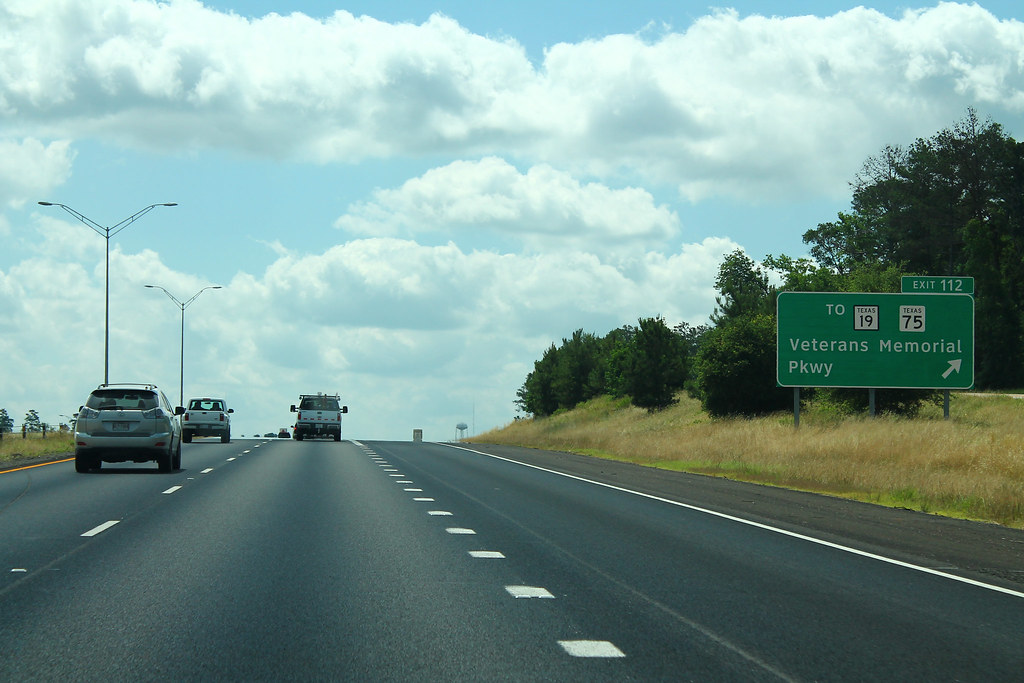
Archive corridor photo, May 2014: formulanone / Wikimedia Commons, CC BY-SA 2.0. Flickr JPEG rendition; not Volvo, Waabi or Warp equipment or the announced operation.

Volvo and Waabi's Dallas–Houston freight announcement includes an observer in the driver's seat. That detail matters when a dispatcher or shipper reads the word autonomous and starts planning a load. The October 5 announcement describes customer operations for Warp; it does not tell a prospective customer to assume that the cab is empty. Check the operating arrangement offered for your particular shipment before building a receiving plan around the headline.
Read the announcement with its date attached
Volvo Autonomous Solutions identifies the equipment as a Volvo VNL Autonomous powered by the Waabi Driver. Its announcement describes freight movements to third-party facilities on the Dallas–Houston corridor. Waabi's corresponding release identifies Warp's network as serving both less-than-truckload and full-truckload freight. Those are the reported facts behind this guide, reviewed October 24. This is an explanation of an October 5 announcement, not a claim that a new service launched today.
The observer's presence is a stated feature of the operation described. Neither the technology's name nor a general description of autonomous trucking establishes every duty performed by that person. Ask the provider to explain the current arrangement in writing instead of assigning the observer responsibilities that the announcement never specifies.
Separate the road movement from the dock work
A dispatch plan needs more detail than two city names. The practical question is where responsibility passes from the transportation provider to the shipper or receiver. A statement about reaching a third-party facility does not supply that facility's gate instructions, appointment process or unloading arrangement. Those details must come from the parties handling the load.
For a proposed shipment, write down the pickup address and the receiving address, then ask who handles each step inside the property. Confirm who checks in, who supplies the dock reference and who communicates a change. These are TSN's planning questions, not descriptions of services that Warp, Volvo or Waabi has promised to every customer.
Give the receiving team a usable handoff
Before accepting a slot, send the receiving team a short confirmation that it can actually use. A broad message saying that an autonomous truck is coming leaves basic operational questions unanswered. Ask the provider and facility to agree on the relevant contacts and instructions, using the shipment reference that both parties recognize.
- Confirm the appointment, local reference time and contact for a revised arrival.
- Confirm access instructions and the person authorized to resolve a gate question.
- Identify the loading or unloading arrangement agreed for this specific load.
- Record which document or system confirms that the handoff is complete.
Keep this confirmation with the load record. If a detail changes, update the parties that act on it. The purpose is a clear handoff, not an extra document that nobody reads.
Ask about exceptions before they happen
A useful service discussion includes what happens when the receiving appointment changes or the specified dock is unavailable. Ask for the operational contact and the communication route the provider wants the customer to use. Do not treat an observer's physical presence as proof that the person can approve a new stop, a changed appointment or additional work.
Make the question concrete: if the named receiving contact cannot accept the load, who tells dispatch what happens next? A written answer can expose an assumption while there is still time to resolve it. It is more useful than deciding, from a short announcement, that every familiar driver-to-dock interaction will transfer unchanged.
Compare the service being offered, not the label
When considering a quote, compare equivalent responsibilities. List the requested movement, the agreed handling, the appointment obligations and the communication process. Ask the provider to identify anything outside the proposed scope. This guide does not establish a rate, a guaranteed transit time, available capacity or an eligibility decision for any shipment.
The same discipline helps an owner-operator discussing a connection with a freight network. Establish the work your own truck and driver would perform and the point where another party takes over. An announcement about one corridor cannot answer a separate commercial proposal without those details.
The useful takeaway for dispatch
Keep three items together: the dated announcement, the provider's current description of the operation, and the agreement for your load. The first explains the news; the other two support an actual dispatch decision. Reconfirm them if the service arrangement changes. Autonomous is a technology description, while a workable shipment still needs named responsibilities and a clear receiving plan.
For more operator-focused reporting, read the latest Truck Savers News coverage.
Original sources: Volvo Autonomous Solutions, October 5, 2026; Waabi, October 5, 2026.