USMCA Is Not Renewed. Nothing Changed at the Gate
The USMCA was not renewed on July 1, 2026, but the agreement stays in force. What that means for cross-border lanes.
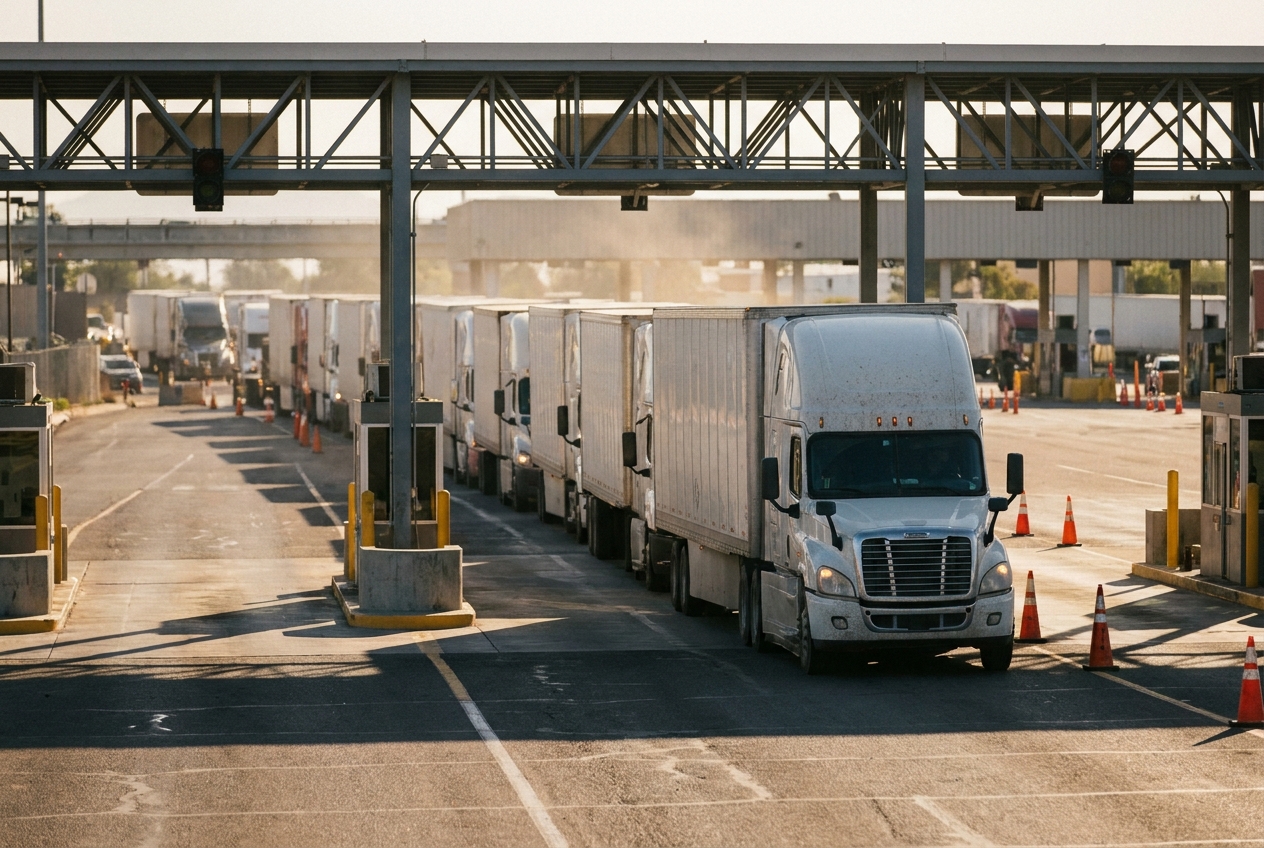
The USMCA was not renewed on July 1, 2026. That is the United States Trade Representative's own wording, not somebody's reading of it. The second half of the same statement is the part that matters to anyone with a load crossing this week: the agreement stays in force.
Those two sentences sound like they cancel each other out. Telling those two sentences apart is worth money to any carrier running Laredo, El Paso, Otay Mesa or Pharr. One of them describes what changed on paper. The other describes what changes at the gate, which so far is nothing.
What the statement actually says
On July 1, 2026, the Free Trade Commission of the three countries met to carry out the joint review the agreement itself requires. The result, in the Trade Representative's words: the United States did not agree to renew the USMCA in its current form, and as a result the USMCA is not renewed.
The same statement adds that the agreement remains in force pending resolution of the issues raised, or until its termination, and commits the United States to keep engaging with Mexico and Canada over what it calls the agreement's shortcomings and the trade deficits with both countries. A third round of bilateral talks with Mexico was set for the week of July 20.
Why the paperwork did not move
Because not renewed is not the same as terminated. The certification of origin your customs broker files, the duty treatment on a qualifying load, the documents the driver hands over at the plaza: all of it works today the way it worked in June.
Anyone who told you in July that the treaty had fallen and rates were about to jump was reading a headline, not the statement. Nothing in that announcement changed a single line of what happens when your truck reaches the booth.
What did change is the clock
The agreement was written with a 16-year life. It expires on July 1, 2036 unless the three governments confirm an extension, and the review held this year was the checkpoint where that extension could have been locked in for another 16 years.
It was not. So the treaty now moves to the fallback its own text sets out: a joint review every July 1, year after year, until the three either agree or the term simply runs out in 2036. Separately, any of the three can walk away at any time with six months' written notice.
In practice that means the calendar just acquired a recurring date. Every July 1 from here on is a day when the framework under your cross-border lanes gets reopened, and that is a very different planning environment from a treaty nobody had to think about.
What this actually means for a small carrier
The risk in front of an owner-operator is not that a rule changes overnight. It is that volume moves before any rule does.
Rules of origin decide whether a shipper's product qualifies for preferential treatment. If a manufacturer concludes its product may stop qualifying, it does not wait for a signed document: it re-sources, it shifts production, it changes where the parts come from. Lanes dry up or appear months before anything is official, and the carrier is the last to be told.
Three things are worth doing with that in mind. Be careful signing dedicated cross-border commitments at a fixed rate that run past a July 1 without a clause that lets you reopen price. Ask the shipper, not the broker, whether the freight qualifies today and whether that is expected to hold. Do not reprice anything on a rumor: the only thing that has actually happened is a review that did not confirm an extension.
The part that is under your control
Border work punishes equipment in a specific way. Hours sitting in line, stop-and-go across the plaza, then a long run with a full trailer. That combination finds worn suspension bushings, a steering box with play and an alignment that was already off, and it finds them far from your own shop.
Going through the truck before a border run costs a morning. Discovering the same problem in a queue costs the load. A suspension, steering and alignment check is what The Truck Savers™ does without an appointment, and for the hours the engine would otherwise idle in that line there is Go Green APU.
Trade policy is out of your hands. The condition of the truck that has to sit in that line is not. Prevention before repair — the irons never lie.
Original source
The quoted language and the July 20 negotiating round come straight from the office that issued them: Office of the United States Trade Representative, statement on the USMCA joint review.