Used Ford pickup: verify the hitch-assist feature
A feature name is not proof of equipment. Check the exact truck and request a demonstration before paying for hitch assistance.
A used pickup advertisement can contain an impressive list of towing features without answering the question that matters to a buyer: what is actually installed and working on this truck? If hitch assistance is part of the asking-price conversation, treat it as an item to verify on the specific vehicle. A model name, a photograph of a screen or an old launch announcement is a starting point for questions, not the final answer.
What Ford announced, and what it does not prove
In its 2023 announcement, Ford described Pro Trailer Hitch Assist as a system that aligns a hitch ball with a conventional trailer coupler using cameras and radar while controlling steering, speed and braking. The driver holds a button and monitors the process. Ford listed availability on F-150, F-150 Lightning and Super Duty, with functionality varying by model. That announcement does not establish the equipment on an individual used truck offered today.
The distinction is particularly useful when comparing two listings. One seller may use a precise feature name; another may simply write “towing technology.” Do not decide that the two trucks are equivalent from those descriptions. Give each listing its own equipment checklist, and leave an unanswered item marked unverified rather than filling it in from a similar vehicle.
Ask for evidence tied to the actual truck
Start with the vehicle identification number and ask the seller for documentation that belongs to that vehicle. Record the year, model and advertised feature exactly as supplied. If the seller sends a brochure, establish whether it describes the individual truck or a range of possible configurations. A general brochure can explain terminology while still leaving the purchase question unresolved.
Ask which document supports the claim, who supplied it and whether you can review it before travelling. There is no need to collect somebody else's personal information for this comparison. The useful evidence concerns the truck and its equipment. If a document is incomplete or unclear, ask the seller or an authorized Ford representative to explain the missing detail.
Keep the answer in writing alongside the listing. For example, your worksheet can have three columns: advertised claim, supporting evidence and question still open. That makes it easier to compare vehicles without letting a confident sales description become an assumption in your budget.
Request a demonstration, not a promise
If the feature matters enough to influence your decision, arrange a demonstration under the conditions specified in the correct owner's manual. Ask the person demonstrating it to identify the exact feature on the vehicle. This article is not an operating procedure, and it does not replace the manual or a qualified explanation of the system's limitations.
Before the appointment, agree what will be shown and what will remain outside the demonstration. A video of another truck is not a demonstration of this one. Likewise, a seller's statement that a menu is available does not answer every question about the equipment's condition. Record what you actually observed and distinguish it from what somebody described.
If the demonstration cannot take place, keep the result as “not demonstrated.” That is more accurate than calling the system defective, and more useful than treating it as confirmed. You can then decide whether to obtain additional evidence, change the comparison or postpone the purchase decision without inventing a diagnosis.
Keep three purchase decisions separate
- Equipment: is the advertised assistance feature documented for this vehicle?
- Condition: what did the inspection and demonstration establish about the particular truck?
- Suitability: have you checked the vehicle and trailer requirements for the work you actually intend to do?
Do not let a positive answer to one question stand in for the other two. A convenience feature is not a substitute for reviewing the vehicle's specified limits, and this guide does not calculate a tow rating. Bring your intended use and the relevant vehicle information to the appropriate professional instead of choosing a number from an unrelated listing.
Make the comparison before making the trip
For an owner-operator buying a pickup for work, unresolved equipment questions belong in the same decision file as the price and inspection arrangements. Ask them early, compare the answers consistently and keep any claimed saving out of the calculation until you have evidence for it. This approach does not promise a better deal; it makes the remaining uncertainty visible.
For information about vehicle service at The Truck Savers™, use the contact page with the unit and service question you want to discuss. Confirm the available scope directly; this link does not promise Ford feature certification or system programming.
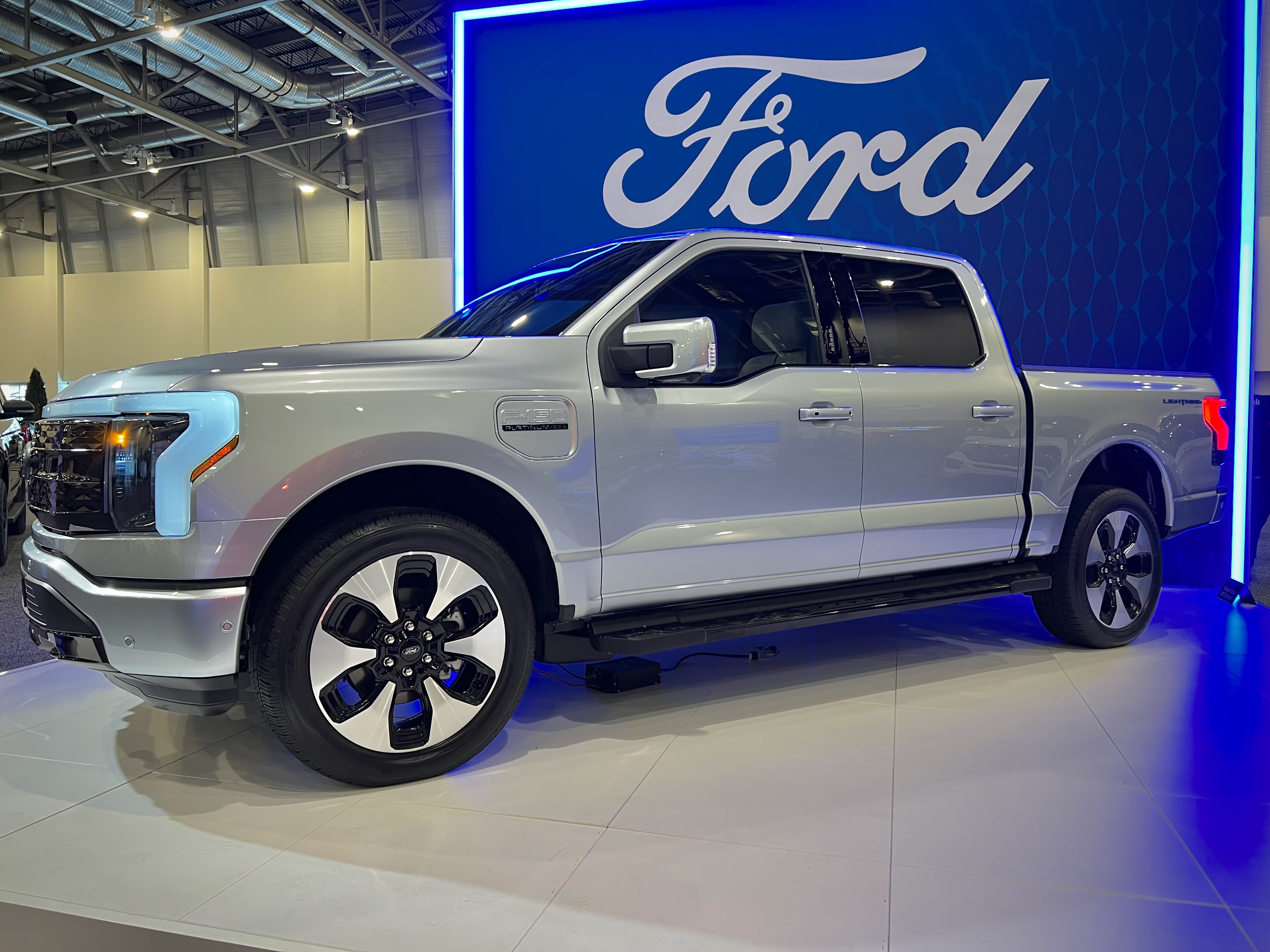
Illustrative archive photograph: Ford F-150 Lightning at the 2022 Michigan International Autoshow, photographed February 5, 2022, by WMrapids; CC0 1.0 via Wikimedia Commons. The pictured vehicle does not establish the equipment of a truck for sale.
Original source: Ford's 2023 Pro Trailer Hitch Assist announcement. Reviewed October 3, 2026. The purchase checklist is TSN editorial guidance, not a Ford inspection standard.