Union Pacific Revenue: Check Freight Quote Scope
Union Pacific revenue rose 15% in the quarter. Separate the road job, fuel treatment and quote scope before pricing a load.
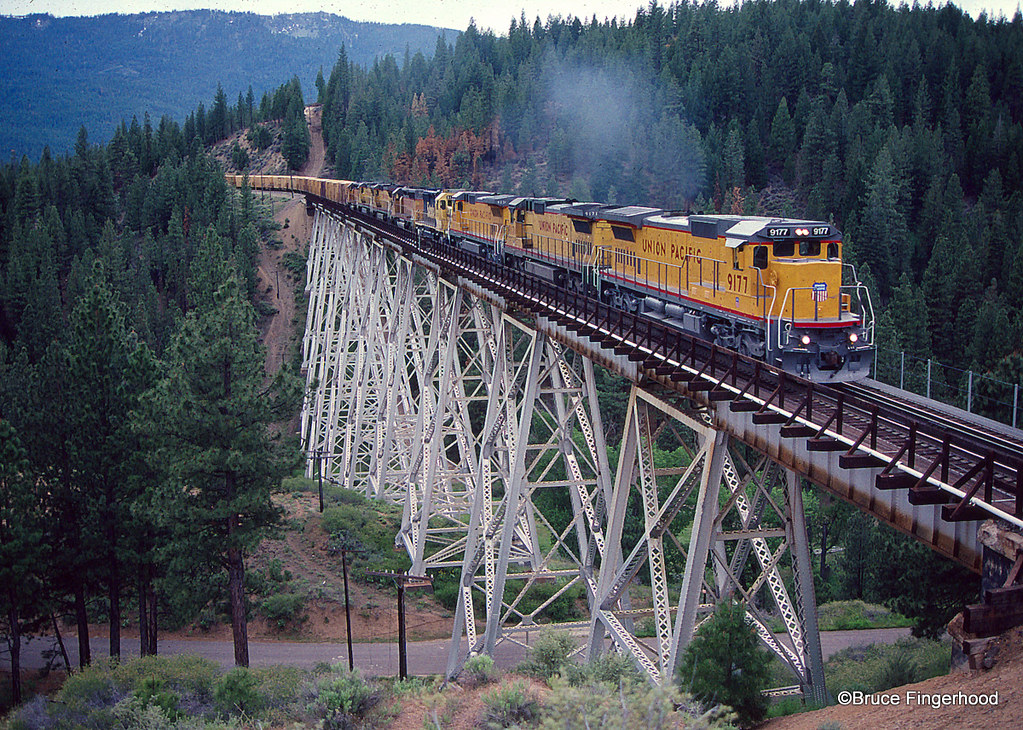
Archive photograph: Union Pacific freight at Clio trestle, May 1994, Bruce Fingerhood. Illustrative company image, not a current train or the quarter reported. Flickr resized rendition; no content alteration. Bruce Fingerhood · CC BY 2.0.

Union Pacific's third-quarter results show why a transportation revenue headline needs a second look before it enters a truck-rate conversation. The railroad reported 6% volume growth and a 15% rise in operating revenue from a year earlier. Those figures describe Union Pacific's business. They do not establish what an owner-operator should charge on a particular highway lane, or what a shipper will pay for the road portion of an intermodal move.
Separate the measures before comparing them
The October 22 release reports operating revenue of $7.2 billion and says higher fuel surcharge, volume growth, core pricing and other revenue contributed to the increase, partly offset by business mix. Freight revenue excluding fuel surcharge rose 6%. Keep those labels attached to the figures. Total operating revenue and freight revenue without fuel surcharge are different measures; treating either as a universal rate increase changes what the company actually reported.
TSN reviewed the release on October 24. It provides a current picture of a large rail operator's quarter, not a quote for a shipment. A regional truck business can use that distinction when discussing customer budgets: first identify which part of the transportation chain the headline measures, then ask for the commercial terms that actually apply to the proposed work.
Write down the road job inside the larger movement
If a customer requests trucking connected to rail service, define the road assignment before comparing the price. Record the origin, destination, equipment, requested dates and responsibility at each handoff. Ask the customer to identify terminal instructions or appointment conditions that affect the trip. These are planning questions for the particular load, not services or terms promised by Union Pacific in its earnings announcement.
A shipment can be described broadly as an intermodal move while the carrier is being asked to perform a much narrower task. Establish whether your quote covers one named road leg or several separate movements. Do not assume the customer's total transportation budget is the amount available to the truck performing that leg. Equally, do not assume the earnings release describes a competing offer for the same work.
Make competing quotes comparable
Build a simple scope table. Give each quote the same pickup and delivery assumptions, and identify which charges are included and which are conditional. If an appointment, a terminal visit or an equipment arrangement remains unresolved, ask the responsible party to confirm it. An incomplete price can look attractive because part of the assignment has not yet been described.
For illustration only, suppose a customer compares one quote for a complete movement with another for a single road leg. The second number cannot be declared cheaper until the missing work is identified and priced. This example contains no market rate and makes no claim about a particular railroad contract. It shows why a scope comparison comes before a numerical comparison.
Keep fuel treatment visible
The release expressly distinguishes freight revenue without fuel surcharge. That is a useful reminder to keep fuel treatment visible in your own quote review. Ask what the commercial offer includes, how any separate fuel item is described and which date or formula applies under that offer. Record the answer rather than importing an assumption from a company-wide earnings percentage.
The practical calculation belongs to the work under review. Use your documented trip assumptions and the actual proposal. If a customer cites the railroad's 15% revenue growth as the reason every transportation charge should change by the same amount, return to the definition: a change in total operating revenue is not a published tariff for your highway lane. Explain the scope difference without claiming that the rail and road businesses have identical costs.
Prepare a usable handoff record
- Identify the exact road movement and its equipment requirements.
- Confirm the location, appointment and responsible contact for each handoff.
- Separate quoted inclusions from charges that depend on later conditions.
- Keep the agreed fuel treatment with the current quote.
- Record unresolved terms before accepting a shipment on assumptions.
This record can stay short. Its purpose is to give dispatch and the customer the same understanding of the job. If the scope changes, update the quote discussion rather than treating an old price as approval for additional work. Clear responsibilities are more useful to the trip than a broad claim that transportation is simply getting more expensive.
Use the results as context
The quarter's figures support a discussion about activity and revenue at Union Pacific. They do not prove a truck carrier's margin, predict the next available load or establish a saving from changing modes. For an owner-operator, the useful next step is narrower: compare an actual assignment, an actual quote and the responsibilities attached to both. Keep the market context, but base the dispatch decision on the work you can verify.
Read more operator-focused Truck Savers News reporting.
Original source: Union Pacific, October 22, 2026.