Tundra Recall: Check the Camshaft Campaign by VIN
Toyota announced a new Tundra camshaft recall. Check the affected years, VIN status and dealer inspection plan.
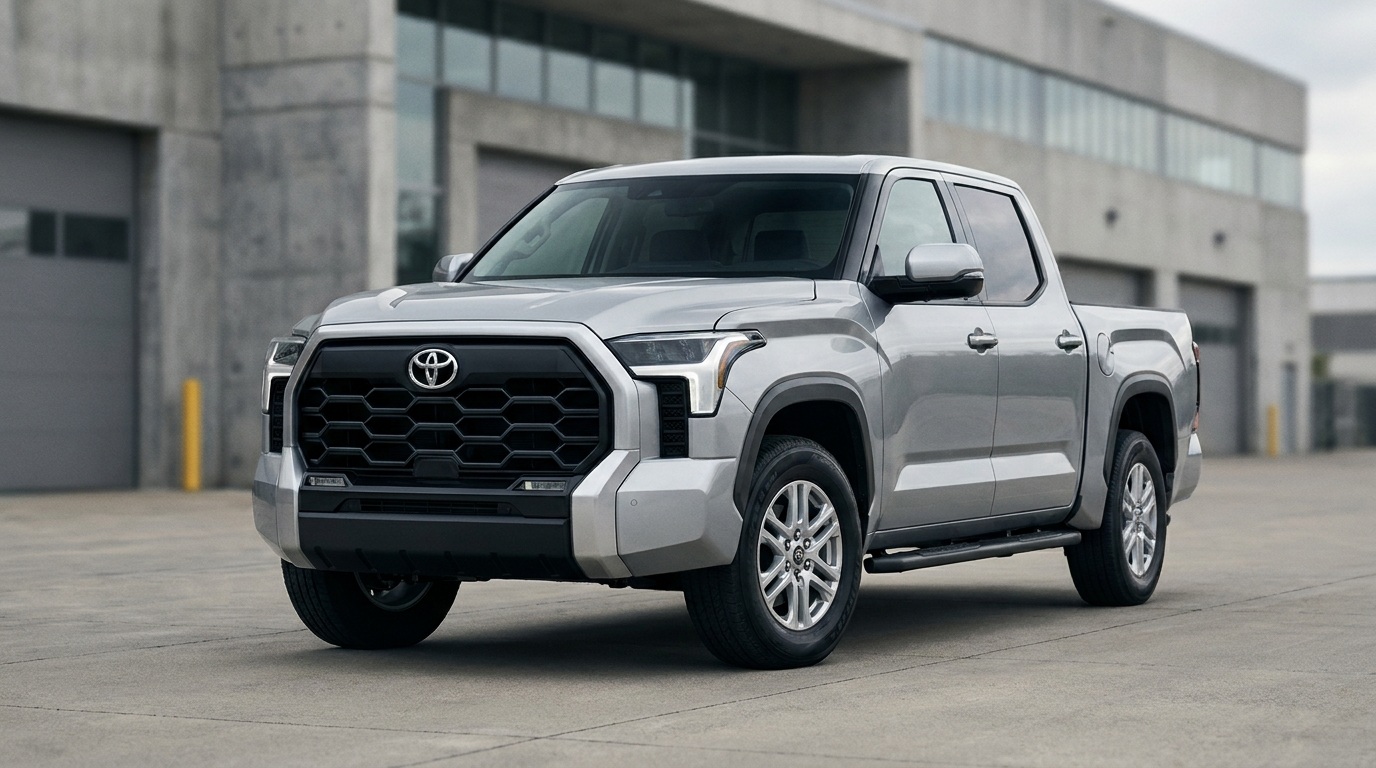
AI-generated editorial illustration; not a documentary photograph.
Toyota announced a new U.S. safety recall on November 13 covering certain non-hybrid Tundra pickups from model years 2022–2023 and 2025–2026. The campaign involves approximately 62,000 vehicles. For a business that relies on its pickup for work, the immediate task is to identify the truck by VIN and confirm its campaign status with Toyota, rather than assume that every Tundra of those years needs the same repair.
The announcement concerns an incorrectly manufactured engine camshaft. Toyota says the part could break while driving and cause a loss of motive power at higher speeds. The manufacturer identifies one supplier production lot and estimates that approximately 300 affected camshafts could have been installed within the vehicles covered by the campaign. That estimate describes suspect parts, not a published list of individual pickups.
What Toyota has announced
Dealers will inspect the camshaft to determine whether it may come from the affected lot. If it does, Toyota says the camshaft will be replaced at no cost to the customer. Known owners are to be notified by mid-January 2027. That notification target is not an appointment confirmation, a parts-delivery date for a particular dealer, or a promise about how long a particular truck will be unavailable.
The published model-year list has a gap: 2024 is not included in this November 13 announcement. Hybrids are also outside its stated scope. Do not add either group to this campaign from a broad headline about Tundra engines. Equally, exclusion from this particular announcement does not establish that a vehicle has no other open campaigns. Each VIN needs its own check.
Find the VIN before calling
NHTSA explains that a vehicle's 17-character VIN can be found near the lower left corner of the windshield, on the registration card, and sometimes on the insurance card. Use the identifier for the pickup actually assigned to the job. In a business with similar trucks, a registration folder or an informal nickname can lead someone to check the wrong unit.
Toyota's recall lookup accepts a VIN or a license plate with its issuing state. Its campaign page distinguishes safety recalls from other service campaigns and directs owners with immediate questions to a dealer. The Brand Engagement Center listed in Toyota's announcement is 1-800-331-4331. Keep the result and the date checked with the vehicle's records; this is a useful operating record, not proof that a repair has been completed.
A new announcement can precede a complete VIN list
NHTSA cautions that its lookup may not show some recently announced recalls while all affected VINs are still being identified. It also excludes already completed recall repairs from the open-recall result. A zero-open-recall result therefore answers a narrower question than whether a model has ever been recalled. If the published description appears relevant, ask Toyota about this specific November announcement and recheck as information develops.
Do not interpret a search result, this article, or an absence of symptoms as a mechanical inspection. The dealer is the point of contact for confirming campaign applicability, the inspection process, and any current operating guidance. This report does not assign a diagnosis to an individual pickup or provide a procedure for examining an engine at home.
Questions that make the service call useful
- Does this VIN belong to the November 13 camshaft campaign, and are there other open campaigns?
- Is the required inspection available at this location, and what must be arranged before booking?
- If replacement is needed, what is the current parts position and expected scheduling process?
- What written operating guidance applies while the business waits for its appointment?
- What documentation will identify the inspection result and, when required, the completed remedy?
Keep the work plan separate from the repair decision
Our practical recommendation is to give one person responsibility for following the campaign from lookup through completion. Record the dealer's answers, the next agreed action, and who must be told if a work assignment needs to change. Avoid treating a telephone inquiry as a repair booking or treating a booking as a completed recall. Those are different milestones.
For a pickup used to move tools or support a truck fleet, this small administrative distinction helps prevent a missed appointment from disappearing inside ordinary maintenance paperwork. Use Truck Savers News pickup coverage to follow related operating news. The next step for this campaign remains a VIN-specific conversation with Toyota, followed by the manufacturer's current instructions.
Original source: Toyota, November 13, 2026.