Truck Wheel Service Needs Demonstrated Training
Wheel-service training must match the job. Review people, equipment and current instructions before assigning the work.
Buying tire-service equipment does not establish that a shop's employees are ready to use it. For work covered by OSHA's rim-wheel standard, the employer also has responsibilities involving training, demonstrated ability, suitable equipment and access to the applicable instructions. A small fleet reviewing its maintenance operation should treat those as separate questions rather than assuming one purchase answers all of them.
Start with the standard's scope
Federal OSHA standard 29 CFR 1910.177 addresses servicing single-piece and multi-piece rim wheels on large vehicles, including trucks, tractors, trailers, buses and off-road machines. It excludes wheels on automobiles and on pickups and vans using automobile tires or tires designated LT. It also specifies exclusions for employers and workplaces regulated under the named longshoring, construction and agriculture standards. A shop should establish which rules govern its work before applying a generic checklist.
That distinction is important for a business with both road tractors and light-duty support vehicles. An exclusion from this particular section is not a statement that a task is harmless or that no other requirements apply. It means the applicable framework needs to be identified correctly. This article is a management review, not legal advice about a particular workplace and not instructions for mounting, inflating or removing a tire.
Training has to fit the actual wheel and task
The standard requires an employer training program covering the hazards and safe procedures for the rim wheels employees service. Employees must receive instruction in the correct procedures for the wheel type involved. The required training information includes the applicable charts or rim manuals and the standard itself. Where a worker cannot read and understand those materials, the employer must provide instruction in a form that person can understand.
Posting a chart on a wall is therefore only one part of the question. A manager should be able to explain how the assigned worker understands and applies the relevant information. TSN's practical recommendation is to review this before assigning unfamiliar work, not after discovering that different technicians have been relying on different assumptions. The review should be conducted by someone qualified to evaluate the work involved.
Attendance and ability are different evidence
OSHA also requires employees to demonstrate and maintain safe servicing ability. The standard lists tasks such as identifying and inspecting components, handling rim wheels, using the relevant protective equipment and understanding the trajectory to avoid. Employers must evaluate ability and provide additional training as necessary to maintain proficiency. A course attendance record can document an event; it does not by itself answer every question about current performance.
For an internal review, separate three fields: the instruction supplied, the tasks the employee is assigned and the evaluation of ability for those tasks. That is TSN's suggested organizing method, not a claim that OSHA mandates a specific worksheet or commercial certificate. Avoid inventing a universal expiration date for training. Use the actual standard and competent guidance to determine what the workplace needs.
Equipment and current instructions still matter
The standard distinguishes equipment requirements for single-piece and multi-piece wheels. It addresses restraining devices or barriers, air-line equipment, component condition and compatible tire and wheel sizes. It also requires current charts or rim manuals for the wheel types being serviced to be available in the service area. Training is not a substitute for the safeguards that apply to the work.
Because the correct arrangement depends on the wheel and task, this article deliberately does not give inflation pressures, positioning measurements or a step-by-step method. A reader should not attempt rim-wheel service from a news summary. The useful management action is to ensure that qualified people have the correct instructions and equipment, and that questions about suitability are resolved before assigning the job.
A short review for a small fleet
- Scope: which vehicle and wheel types does the shop actually service, and which standards apply?
- People: who is assigned each task, and how is their relevant ability evaluated?
- Information: are the applicable current instructions available and understood?
- Equipment: has a qualified person checked the suitability and condition of the required safeguards?
- Follow-up: who resolves a gap and confirms it is addressed before the affected work is assigned?
These questions can also frame a conversation with an outside service provider. They are not a remote certification of that business. Do not describe a vendor as compliant solely because it answered a questionnaire or supplied a photograph. For an owner-operator, the objective is a clearer service decision; for an employer, it is an organized review of responsibilities that cannot be reduced to owning a machine.
Prevention begins before the wheel reaches the service area. Connect the people, instructions and equipment to the actual task. For more fleet-oriented reporting, read Truck Savers News.
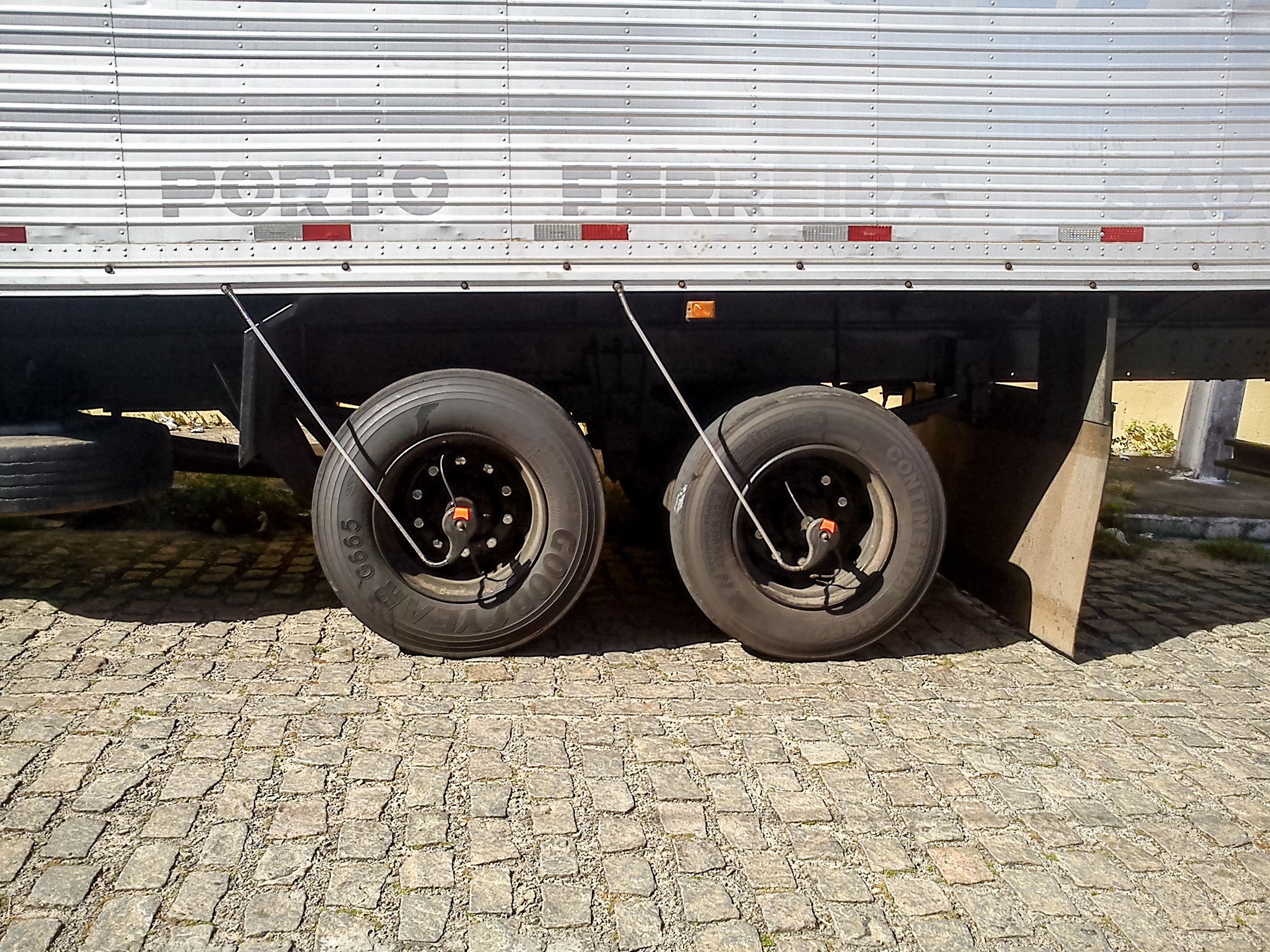
Illustrative archive: truck wheels with central inflation, Matti Blume/Wikimedia Commons, CC BY-SA 4.0. Photo unaltered; it does not demonstrate an OSHA-compliant service setup. Photo record.

Original source: OSHA, 29 CFR 1910.177, servicing rim wheels.