Truck Tire Speed: Check the Marking Before the Route
A highway speed limit does not change a tire restriction. Identify the actual truck tire and its documented application before planning the route.
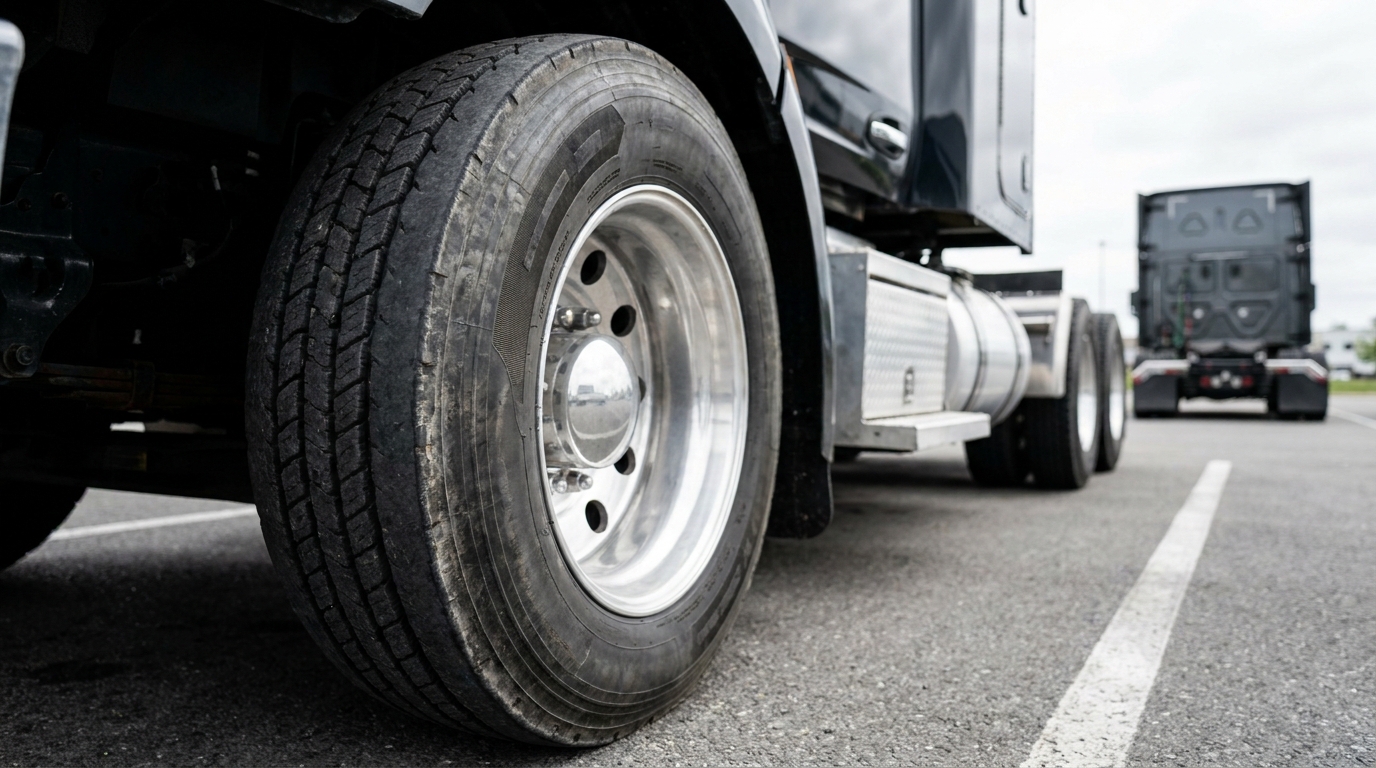
AI-generated editorial illustration of a commercial-truck tire. It is not a photograph of a particular inspection, tire model or reported event.
A highway speed limit does not change the speed restriction marked on a truck tire. The current federal tire rule, 49 CFR 393.75(f), specifically prohibits operating a vehicle above the rated limit of speed-restricted tires labeled for a maximum of 55 mph or less. For an owner-operator planning a route or considering a replacement tire, the useful first step is to identify the actual tire and its applicable specifications.
Read the restriction as an equipment fact
The provision describes a particular category of speed-restricted tire. It does not assign a 55-mph rating to every commercial truck tire. That distinction matters when a driver sees a general chart online or receives a verbal recommendation about a replacement. The relevant information must identify the product actually being considered, its marking and the manufacturer's documented application.
Imagine a hypothetical fleet comparing replacement options before a truck returns to work. A quote lists a familiar size, and the route includes highway operation. The purchasing conversation should include the proposed tire's documented speed capability, loading requirements and suitability for that use. A match in one field does not complete the whole equipment review. This example is a planning scenario, not a diagnosis or a reported customer case.
Keep speed, load and condition visible
Section 393.75 addresses several separate tire requirements. Alongside its speed-restriction provision, it covers tire defects, tread depth, loading and inflation. A driver or purchaser should therefore avoid turning a single acceptable characteristic into an all-purpose approval. The actual condition of a tire and the applicable load and operating requirements still need the responsible inspection and specification review.
Organize the discussion around those separate questions. Identify which tire is under review, what the vehicle will carry and what documentation the provider is using. Ask the qualified professional to explain any limitation that affects the planned service. This article does not calculate a tire's carrying capacity, prescribe inflation pressure or determine whether an individual tire is fit to return to use.
A historical interpretation explains the concern
In a 2002 interpretation, NHTSA addressed statements about operating tires marked with a 55-mph restriction at higher speeds for limited periods or under different loading conditions. The agency explained why such statements conflicted with treating the product as a speed-restricted tire. That letter is historical background about tire classification and testing, rather than a new announcement or an individual operating authorization.
The practical lesson is to preserve the actual restriction when discussing equipment. A driver's memory of a different product, an internet summary or a lower planned load should not silently replace the information applicable to the tire being supplied. When documents appear inconsistent, ask the responsible manufacturer or qualified provider to resolve the discrepancy before making the equipment commitment.
Build a useful replacement-tire request
Give the provider the vehicle and tire information needed to evaluate the proposed replacement. Ask for the exact product identification and the written specification supporting the intended application. Keep the quote linked to that product. If the proposed brand, model or service application changes, identify which confirmations must be revisited rather than assuming the original discussion covers the substitution.
Ask who will review the proposed tire against the vehicle's requirements and who will confirm the completed work. A description such as “highway tire” is less useful than an identifiable product with applicable documentation. Keep the supplier's answers in the maintenance record so that the next person planning a trip can understand the basis of the equipment decision.
Make the record useful for dispatch
The following is TSN's editorial communication checklist, not a mechanical inspection procedure. Record the vehicle reference, the tire product under discussion and the question requiring confirmation. Give an unresolved issue to a responsible person. Tell dispatch whether the equipment review is complete or still awaiting an answer, using the carrier's established process for operating decisions.
When a truck changes assignments, pass the relevant equipment information to the next responsible person. Keep the distinction between a planned route and an approved equipment arrangement. If the route introduces a question about the tire's permitted application, refer it for a qualified answer. The existence of a delivery appointment does not supply the missing product information.
Questions to settle before accepting a substitution
- Which exact tire product is being proposed?
- What speed capability or restriction applies to that product?
- Which manufacturer specification supports the intended service?
- Who has reviewed the vehicle's loading and equipment requirements?
- What inspection or service remains outstanding?
- Has a changed product or assignment affected an earlier confirmation?
- Who will communicate the completed decision to the driver and dispatch?
Retain the answers with their source and date. If a seller's description and a product marking appear to disagree, preserve both for the responsible reviewer. Do not turn an incomplete explanation into a new operating limit. A documented answer tied to the exact tire is more useful than a generic chart detached from the equipment on the truck.
Keep the product limit attached to the operating decision
The federal speed-restricted-tire provision gives a clear reason to check markings and specifications during purchasing and route planning. Resolve the product identification, use the applicable documentation and retain the qualified review. The goal is a handoff in which the driver understands the equipment limits and the responsible people can see whether any question remains unresolved before the truck is assigned work.
Original sources: 49 CFR 393.75, current eCFR text reviewed November 5; NHTSA's 2002 interpretation on speed-restricted tires.