Truck Tire Rotation: Check the Direction Arrow First
Truck tire rotation needs a direction check. Read the tire marking and product instructions before planning a move.
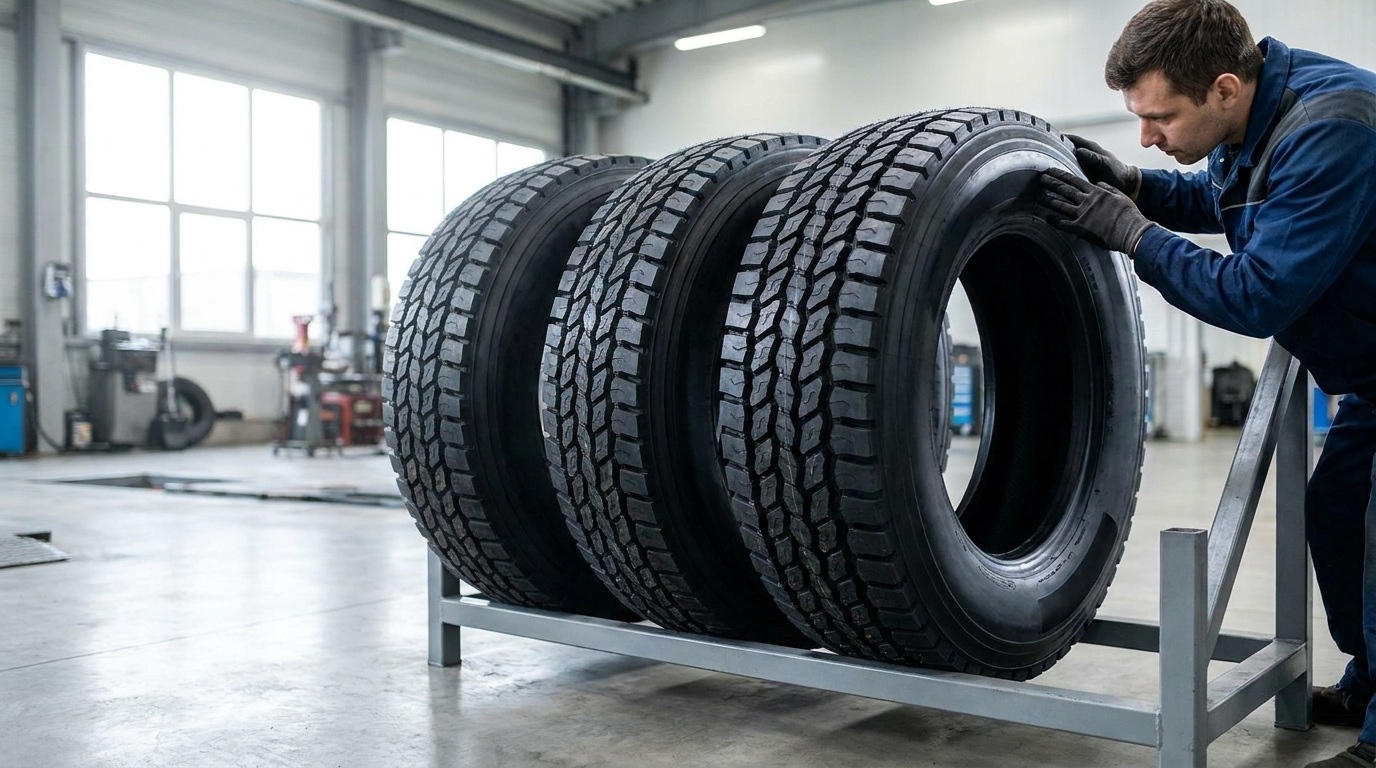
AI-generated editorial illustration; not a documentary photograph.
A tire rotation plan should start with the tire's identity and required direction, not an assumption that every complete wheel assembly can move to any position. Michelin's truck tire service manual describes arrows on directional tread designs that identify the intended rotation direction. A change in vehicle position and a change in the way a tire sits on its wheel are different operations, with different implications for the final installation.
For an owner-operator, the practical question at the service counter is simple: after the proposed work, will this particular tire still meet the instructions for its product and position? Ask the technician to identify the applicable marking and explain the plan before work begins. This article is a planning guide, not a mounting, inflation or lifting procedure.
Identify the actual product before copying a pattern
Record the brand, product name, size and present wheel position. If a fleet uses more than one tire design, do not assume the same plan applies across the whole inventory. A familiar-looking tread is not a substitute for reading the tire's identification and current manufacturer information.
A sketch can help a small fleet avoid confusion. Label the existing positions and identify each assembly in the service record. Ask the shop to document the intended destination and whether the proposal involves moving an assembly or removing and remounting a tire. The sketch organizes the conversation; it does not approve a technical procedure.
A position change is not the same as reversing on the rim
Michelin distinguishes moving a tire-and-wheel assembly between vehicle positions from removing a tire and remounting it in the opposite direction on its rim. Those are not interchangeable descriptions. A work order that says only rotate tires may leave the owner and technician imagining different operations.
For directional products, the manual explains that the tire must be mounted so the required direction is respected on the vehicle. Ask how that requirement will be maintained in the final position. Leave the physical work and equipment choice to qualified tire personnel following the applicable service instructions.
Read the wear guidance without inventing a universal rule
The manual discusses directional operation in relation to tread wear. It says operating directional tires in the opposite direction from new to half worn can lead to early irregular wear, more noise and reduced tread life. It also describes different guidance once directional tires are more than half worn.
That does not turn half worn into an owner-issued permission to move any tire anywhere. The actual product, condition, intended position and applicable instructions still need review. Ask what measurements support the recommendation and what the technician is using as the reference. Do not replace a measured assessment with a visual guess from across the parking lot.
Use the service visit to preserve a useful baseline
Before approving the plan, ask the shop to record tread measurements and relevant observations by position. A record that names only the axle may be less useful later than one that identifies each tire and its previous location. Keep any documented pressure concerns or wear observations with the same visit so the next review has context.
Moving a tire does not, by itself, establish why a wear pattern appeared. Do not let a rotation recommendation become an unsupported diagnosis of alignment, suspension or another component. If the shop identifies a separate concern, request the finding, the proposed check and the basis for any additional work. The purpose is a clear handoff, not a guessed repair.
Questions to settle before the truck returns to work
- Which exact products and current positions are included in the proposed service?
- Does any tire have a direction marking, and which current product instructions apply?
- Will the work move a complete assembly or require a different operation on the rim?
- How will the final positions preserve the applicable direction and fitment requirements?
- What measurements and observations will be saved before and after the visit?
- Who will explain any separate condition that requires further evaluation?
Keep the completed work order with the vehicle's maintenance record. If the plan changes once the shop inspects the tires, ask for the updated description before treating the original sketch as the final record. A small amount of clear identification now makes the next service discussion more specific.
Give the technician facts rather than a promised result
No mileage gain or percentage saving can be promised for a particular truck from the information in this article. Tire history, application and condition differ. The useful outcome is a documented service decision that matches the actual product and preserves its required orientation, with any separate concern clearly assigned for follow-up.
If you need help arranging an equipment inspection, contact The Truck Savers™ with the vehicle and tire information. Confirm the scope of the requested service before the visit. Preventive maintenance begins with identifying what is installed and which instructions apply, rather than borrowing a rotation pattern from a different truck.
Original source: Michelin Truck Tire Service Manual, directional tires and rotation guidance.