Truck Tire Repair: Inflation Does Not Replace Inspection
An inflated tire still needs a documented repair decision. Ask what was inspected, repaired and verified before closing the job.
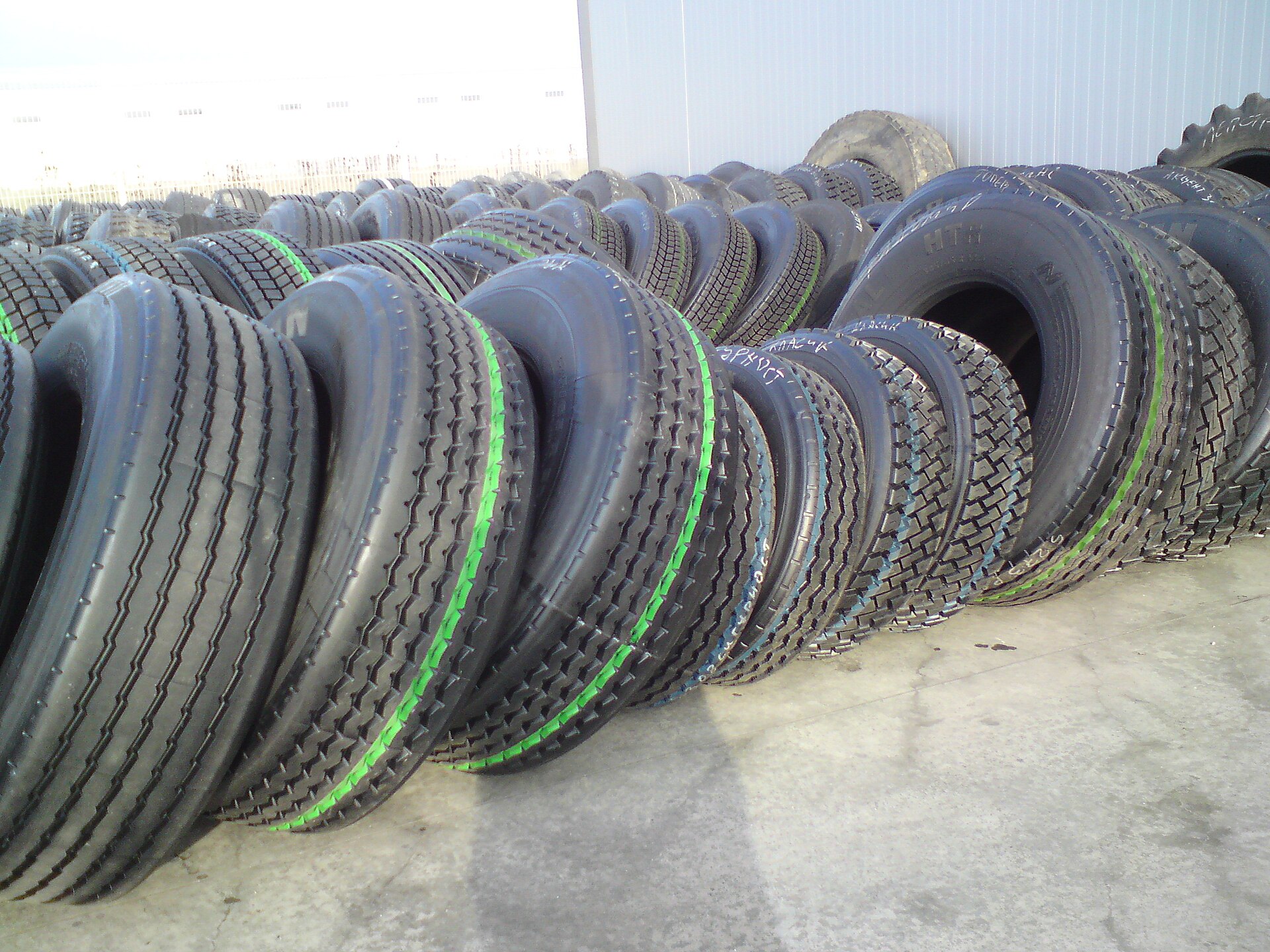
Illustrative stock of commercial tires, not a puncture or repair demonstration. Photograph: Biso; image source, CC BY 3.0. Unmodified.

A truck tire that holds air after attention is not automatically a tire whose repair has been properly evaluated. For an owner-operator, the useful question at handover is what was inspected and documented, not simply whether the tire looks inflated. The U.S. Tire Manufacturers Association’s commercial-truck manual explains why an outside view alone cannot settle that decision.
USTMA calls for removing the tire from the wheel and examining its interior and exterior. Its puncture-repair guidance distinguishes filling the injury from sealing the innerliner; a plug alone or patch alone is not the complete repair described. It also warns that damage from operation while underinflated can remain even after pressure has been restored.
Begin with the tire, position and observation
Identify the truck, the tire position and the time the condition was first observed. Record what the driver actually reported, including any known pressure-loss history. Do not guess how far or how long the tire operated in that condition. Unknown details are useful to identify as unknown because the service professional needs an accurate history rather than a reassuring story.
Imagine a hypothetical delivery truck whose driver reports a low tire before the vehicle changes hands. The next employee sees an inflated tire and assumes the event is closed. A short record connecting the observation to the service decision prevents that assumption from becoming the only handoff. This example describes an office risk, not a diagnosis of a particular tire.
Ask what the inspection established
The service question is whether the specific tire is eligible for the proposed repair under the applicable manufacturer and industry guidance. Ask the trained provider to explain the assessment and identify the work authorized. This article does not set a universal repair limit or teach demounting, inflation or repair. Those tasks require the proper training, equipment and procedures.
A photograph can help identify the tire and communicate a visible observation. It cannot substitute for the required internal assessment. If the provider has not completed that evaluation, keep the job marked pending. A customer’s need to leave at a certain hour does not supply the missing inspection or turn a proposed repair into an accepted one.
Keep the neighboring tire in the conversation
For a dual assembly, tell the service provider when one tire was substantially underinflated or flat. USTMA says both tires need professional damage inspection in that situation. Do not translate that requirement into a remote declaration that both must be replaced or that either is safe. The condition of the actual tires still needs to be established.
In a hypothetical fleet worksheet, give each tire its own identifier and assessment status. Otherwise, an invoice describing one repair can be mistaken for confirmation about the entire assembly. A clear record lets the maintenance team see which tire was repaired, which other tire was evaluated and what decision was documented for each position.
Compare proposals for the same work
Ask each provider to describe inspection, proposed repair, any additional evaluation and handover documentation. Do not compare a brief price message with a completed service scope as if they were equivalent. If the assessment changes the proposal, obtain the revised scope before approving extra work. Keep the original and revised documents together so the reason for the change remains visible.
Use a hypothetical cost comparison only with clearly identified assumptions. The least expensive initial quote may exclude an item another quote includes, but that is a question to resolve, not a conclusion about either provider. Use actual terms, receipts and availability information. This guide supplies no tire price, repair warranty or guaranteed return-to-service time.
Request a handover record you can use
The office should be able to connect the returned tire to the work performed. Ask which identifier, assessment result and service description will appear on the paperwork. If a tire was rejected, retain that decision as a rejection rather than relabeling it as a repair delayed for convenience. Do not put a non-serviceable tire into a pool simply because storage space is available.
When another driver takes over, provide the verified status and any follow-up communicated by the qualified provider. Avoid shorthand such as “fixed” when it conceals an unanswered question. The handover should make it possible to distinguish a completed documented service from a temporary administrative arrangement while the tire remains unavailable.
Questions before closing the maintenance event
- Which tire and vehicle position does the record identify?
- Was the required internal and external assessment completed?
- What repair or other disposition was authorized and documented?
- If this was a dual position, what was established about the companion tire?
- What follow-up, if any, did the service provider specify?
These questions are TSN’s administrative aid. They do not override the tire manufacturer’s restrictions or establish safe condition by paperwork alone. If the documented result is unclear, contact the provider before closing the event. Keep the person responsible for follow-up named in the file so the unresolved question does not disappear when a shift ends.
Use the event to improve the next handoff
Review whether the original driver observation reached the service professional and whether the final decision reached the receiving driver. That checks your communication process without inventing a technical cause. A maintenance record may show recurring costs or repeated visits, but those figures alone do not identify why a tire lost pressure or establish that a previous repair caused it.
For an owner-operator, retaining the assessment and invoice also separates money spent from a result actually verified. If you later compare providers, compare similar scopes and actual completed work. Do not treat an unconfirmed saving as recovered income. The practical objective is a documented tire decision that survives the next handoff without losing its limitations.
Find the right service, then confirm it directly
Use Truck Savers Finder to research commercial-tire service businesses. Confirm their capabilities directly; a listing does not certify repair training or acceptance of your tire. A properly informed service conversation begins with the tire’s identity and history and ends with the actual assessment, authorized work and verified disposition.
Original source: USTMA, Care and Service of Commercial Truck and Bus Tires, 2017, printed pages 40 and 42. Scenarios, purchasing questions and office workflow are TSN editorial guidance.