Truck Tire Date Codes Do Not Show Installation Dates
The DOT date shows when a tire was manufactured. Keep its installation date, service history and inspection result separately.
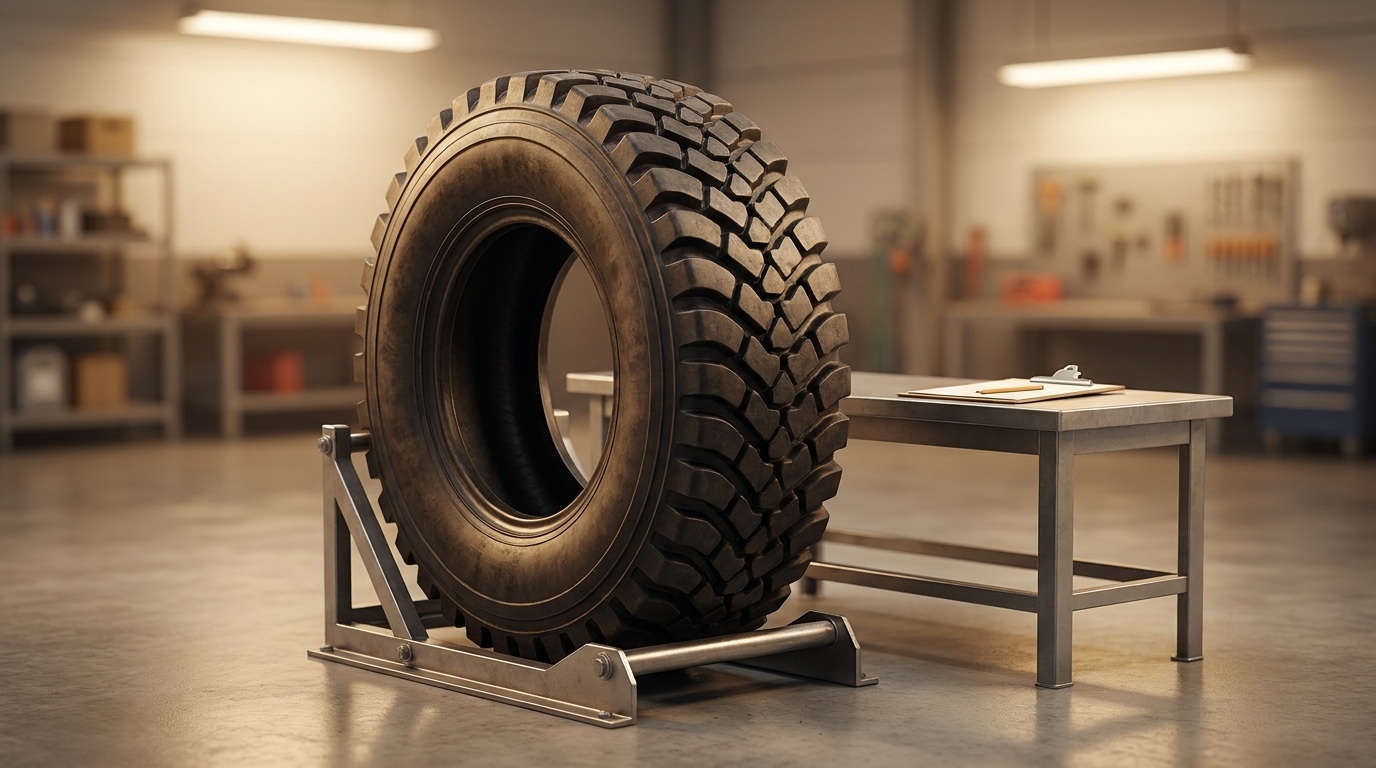
AI-generated editorial illustration; not a documentary photograph.
A tire's manufacturing date and its installation date belong in different fields. The final four digits of the modern DOT identification code indicate production week and year. They do not tell a buyer when the tire was fitted, how it was stored or what happened during its working life. For a truck owner comparing a replacement offer or reviewing a spare, separating those questions makes the service conversation more useful.
Michelin's truck tire service literature explains the code and its service-life recommendation. This is an existing maintenance reference, not a new replacement rule for every truck tire. Use guidance applicable to the particular manufacturer, product and vehicle. A calendar entry is one input to an inspection decision; it cannot replace the condition assessment or establish an individual tire's remaining working life.
Read the code, then record what it says
A code ending in 2324 means manufacture during week 23 of 2024. This is an illustrative decoding example, not the identification of a tire in this article's image. Record the complete identification when available, brand, model, size and unit or storage location. Keep a clear photograph so another person can check a transcription instead of relying on a handwritten four-digit fragment.
Do not convert a production week into an exact installation day. If a workshop invoice establishes a fitting date, preserve it as a separate fact with its own source. When buying used equipment, label missing information as unknown. A blank history is a purchasing question, not evidence that the tire has been used gently or never carried a load.
A maximum recommendation is not a guarantee
Michelin North America does not recommend operating truck or bus tires after they reach ten years from manufacture. That is the manufacturer's recommendation, not a promise that a tire can safely work until its tenth birthday. The truck manual discusses service conditions and inspection rather than predicting individual tire life from age alone. Follow applicable vehicle-maker guidance as well, and ask the tire professional which instructions govern the actual product.
In the maintenance file, separate what the identification establishes, what the available history establishes and what the professional found. Those entries can have different dates and people responsible. This prevents an old inspection from appearing to be a new assessment simply because someone updated the spreadsheet's age calculation. A current decision should identify which evidence was reviewed today and which information came from an earlier service visit.
Make the purchase request precise
Before accepting a quote, ask the seller to identify the actual tire offered, beyond size and price. Request brand, model, date code and whether the item is new, used or retreaded. These are suggested buying questions, not a claim that a particular age automatically makes unused inventory defective. If the item has not been selected, record that its identity remains to be confirmed before accepting installation.
A retread invoice and an original manufacturing code describe different events. Retain the casing and retread history the supplier provides, and ask a qualified tire professional to interpret it for the intended use. Do not assume that a later service resets the original manufacturing date. Equally, do not declare a casing unserviceable from a date-code photograph alone; application and inspection findings still matter.
Include the spare in the record
A spare can be overlooked when a worksheet lists only tires touching the road. Give it an identifiable location and keep its information with the vehicle file. Absence of an installation invoice does not establish recent manufacture. When arranging a tire review, tell the provider that the spare is in scope so its identification does not disappear between the quote and the visit.
For purchased inventory, use the same method to distinguish units stored in different places. If a tire moves from a rack to a truck, update its location without replacing its original identification. That simple administrative distinction lets the next person find the right item and its supporting documents. It does not certify storage quality or condition; those remain separate questions for the supplier and professional reviewing the tire.
A worksheet for the next service conversation
- Record complete identification, production week and year when legible.
- Add brand, model, size and truck or storage location.
- Keep documented installation and service dates separately.
- Mark unknown history instead of estimating it.
- Request assessment for the intended application.
- Save the recommendation, date and person responsible for follow-up.
These suggested fields organize a decision; they do not replace the manufacturer's instructions. If a code cannot be read safely, ask the workshop to identify it during the appointment. Do not move or dismantle equipment merely to complete a photograph. The useful result is a reliable record and a recommendation tied to the actual tire.
For workshop service options, consult The Truck Savers™ with the equipment details and question you need answered. Confirm service scope before scheduling. Prevention starts by separating what a date proves from what the history and condition still need to establish.
Original source: Michelin, Truck Tire Service Manual 2023.