Truck Tire Bead Seaters: Size, Use and Safety
Compare truck-tire bead seaters by application, capacity, controls and support—and learn why the tool never replaces safe inflation procedures.
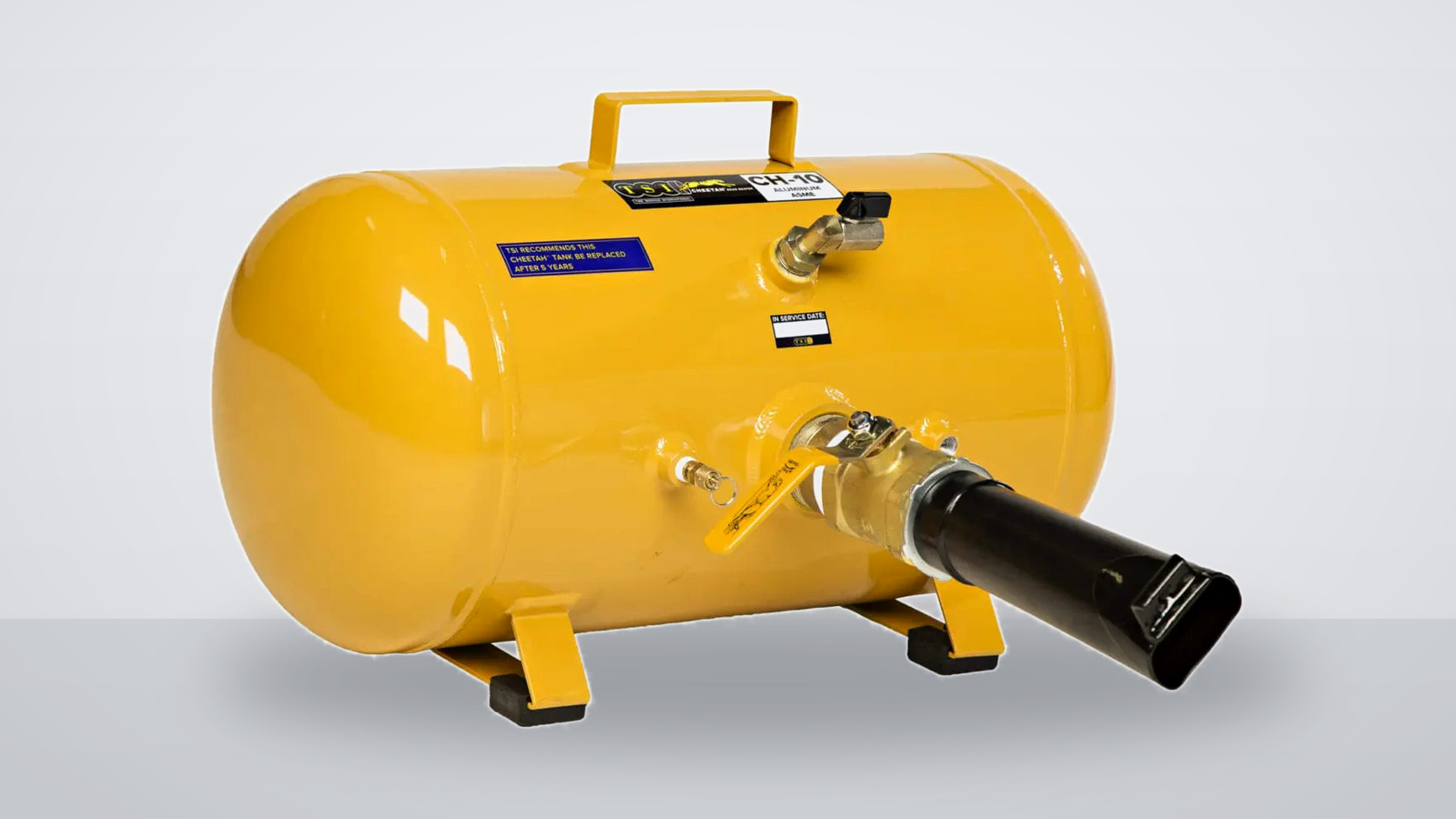
A truck-tire bead seater can turn a stubborn mounting job into a controlled first seal, but choosing the biggest tank is not a complete buying plan. The shop must match the tool to the tire and wheel work it actually performs, then keep bead seating separate from the regulated inflation procedure that follows.
By Redacción Truck Savers News
What a bead seater does—and what it does not do
A bead seater stores compressed air and releases it rapidly through a shaped nozzle. The blast enters the gap between a tubeless tire bead and the rim, pushes the bead outward and helps create the initial airtight seal needed for inflation. That is its job: helping the bead contact the rim when normal airflow escapes too quickly.
It is not a substitute for a tire cage or other restraining device when one is required. It does not replace a clip-on chuck, an inflation hose long enough to keep the technician outside the trajectory, an in-line valve, a pressure gauge or a preset regulator. It also does not make a damaged tire, mismatched rim component or improperly trained service process safe.
Tank size is only one part of the decision
Five-gallon and 10-gallon bead seaters are common examples in truck-tire catalogs, but capacity alone does not prove which tool fits a particular job. A larger tank can store more air, yet tire size, bead gap, nozzle design, discharge control and the manufacturer's approved applications determine whether that air can be used correctly.
Before buying, list the work the shop actually sees: steer and drive tires, trailer tires, wide-base tires, small tractor tires or light-truck tires. Then compare the manufacturer's application guidance, rated pressure, tank certification, valve and trigger design, gauge arrangement, safety-relief components, empty weight, handle stability, nozzle reach and replacement-parts support. Never infer compatibility from the truck brand or the tank color.
The safest purchase is not automatically the biggest or the cheapest. It is the model whose documented operating range covers the shop's real tire mix and whose controls, service parts and instructions the crew can support consistently.
Safe bead seating begins before the air blast
First identify whether the wheel is single-piece or multi-piece and obtain the current service instructions for that wheel and tire. Deflate the assembly fully before demounting or correcting components. Clean and inspect the tire, rim, valve, bead area and every component that must match. Cracks, deformation, corrosion, damaged bead material or uncertain component identity must be resolved before pressure is introduced.
Keep people out of the possible path of components and the air blast. Position the tire and tool exactly as the equipment and tire or wheel instructions specify. Secure the work area, keep the nozzle under control and never point a charged tool toward a person. If the bead does not seat as expected, stop, discharge and reassess; do not keep increasing pressure or repeat blasts without finding the reason.
For a single-piece rim wheel outside a restraining device, the tire should receive only enough pressure to move the bead onto the rim ledge and create the seal. The controlled inflation process still follows, with the technician outside the trajectory. Multi-piece wheels demand additional matching, restraining and inspection procedures; a bead-seating tank does not cancel them.
What the road hero should check
- Confirm the exact tire, wheel type and approved service procedure before authorizing the job.
- Verify the technician is trained for the wheel system and has the current rim manual or chart.
- Inspect the tank, nozzle, valves, hose, gauge and safety components before use; remove damaged equipment from service.
- Check the tire bead, rim, valve and wheel components for damage, corrosion, mismatch or contamination.
- Keep every person outside the component and air-blast trajectory during seating and inflation.
- Use the bead seater only for the initial seal, then move to the correct controlled inflation equipment.
- After inflation, verify the bead and wheel components are seated correctly; deflate fully before any adjustment.
How the choice affects cost and uptime
An undersized or poorly matched tool can waste technician time and encourage repeated attempts. An unnecessarily large or heavy unit can add handling difficulty without solving the shop's most common tire jobs. Missing parts support, a damaged valve or an unreadable gauge can also take the tool out of service when the bay needs it.
The practical buying comparison is therefore application first, control second and capacity third. Document the tire classes, verify the manufacturer's approved use, price the required accessories and replacement parts, and decide who will inspect and maintain the tool. Do not calculate savings from a tank-size claim alone.
Truck shops comparing current bead-seating equipment can review the bead seater options in The Truck Savers store. Confirm current specifications, availability and manufacturer instructions before ordering; the article does not establish fitment for a specific tire.
When the job should go to a qualified tire shop
A driver or fleet manager can document the tire position, pressure loss and visible condition, but mounting, bead seating and inflation involve stored energy and trained service procedures. If the wheel type is uncertain, components are damaged, the bead will not seal or the tire has operated underinflated, stop the trial-and-error process. The The Truck Savers tire-service team can provide professional inspection context; service availability should be confirmed directly.
Bottom line
A bead seater is a specialized first-seal tool, not permission to skip the rest of the rim-wheel procedure. Match the model to the real tire mix, train the crew, inspect the equipment and keep the technician outside the trajectory. Preventive maintenance is always cheaper than getting stranded.
Original source
U.S. Department of Labor — 29 CFR 1910.177, Servicing multi-piece and single-piece rim wheels. Accessed July 30, 2026.