Trailer Tandem Locks: Check Pins and Release Arm
Tandem movement is not the same as an inspection result. Keep the pin and release-arm checks visible in the trailer handoff.
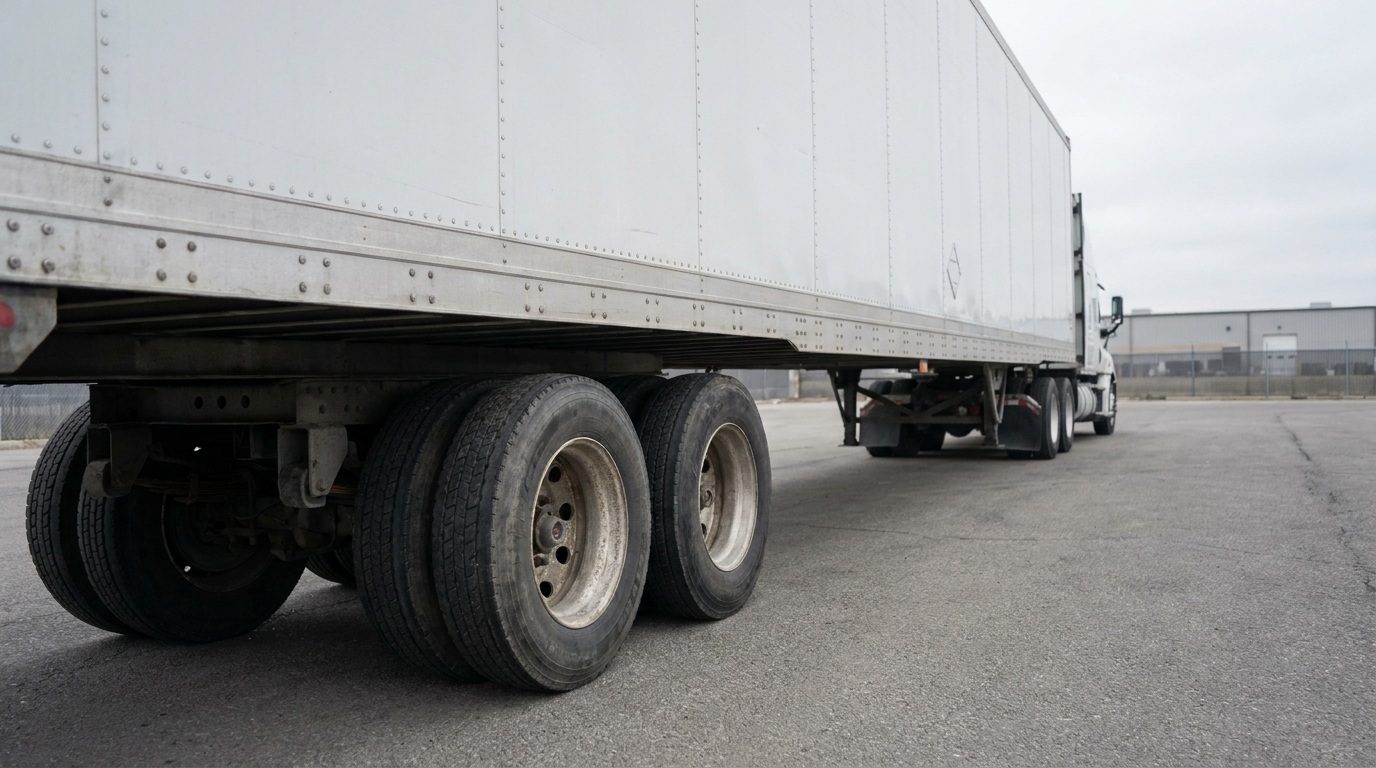
AI-generated editorial illustration; not a documentary photograph.
A trailer's tandem release arm and its locking pins belong in the inspection conversation together. The Texas DPS commercial driver manual, section 11.4.2, tells drivers of equipped trailers to confirm that the pins are locked in place and the release arm is secured. This is an existing inspection reference, not a newly announced 2026 rule. For a small fleet, the practical issue is making sure a trailer handoff records the condition checked, rather than simply saying someone moved the tandems.
Identify which equipment the note describes
Begin with the trailer number and the actual equipment. A useful observation must be tied to the unit the next driver will receive. “The trailer in the back” can become ambiguous after a yard move. Record the location and time as well as the equipment identification in the carrier's approved system. This administrative step does not determine mechanical condition; it prevents a valid observation about one trailer from being treated as information about a different trailer.
Use the names that identify the actual component. In a shift handoff, distinguish a tandem adjustment from work involving the tractor's fifth wheel or another trailer component. If a description is unclear, ask the person who inspected the equipment to clarify it. Do not infer the component from a short message or an old image. The aim is to deliver an accurate question to trained personnel, not to guess which mechanism someone intended to describe.
Record the inspection result separately from the movement
“Adjusted” describes an action. “Inspected” describes a different action, and neither word alone gives a complete result. The manual's tandem check addresses the locking pins and the release arm. A handoff should make clear whether those points were actually checked on the identified trailer. A request to reposition equipment, a completed yard task and a verified inspection should not share one undifferentiated completion box in a dispatch note.
Consider an illustrative handoff: the outgoing employee reports that a trailer was repositioned before the next assignment. The incoming driver still needs the inspection information appropriate to that equipment and the carrier's procedures. The fact that a repositioning request disappeared from a task list does not supply that information. Ask what was checked and whether anything remains unresolved. This is a communication example, not a procedure for moving tandems, operating brakes or testing a locking mechanism.
Make an unresolved observation specific
When a driver reports a concern, separate what was observed from what the driver thinks caused it. Identify the component and location, describe the observation plainly, and preserve any relevant supporting material through the approved reporting process. Avoid diagnosing a failed pin, damaged rail or control problem from a vague description. A qualified person needs the actual equipment and applicable manufacturer information to assess a problem; this article cannot establish the condition of an individual trailer.
Useful questions include whether the observation concerns the release arm, a particular locking point or another part of the assembly, and whether the inspector could confirm the expected condition. Do not turn “not confirmed” into “passed” to finish a dispatch screen. Where safety is uncertain, follow the carrier's process for holding the assignment and obtaining qualified inspection before use. The suggestion does not classify a defect, determine an enforcement outcome or replace the manufacturer's operating instructions.
Use photographs as supporting information
A clear image can help a maintenance contact understand which area the report concerns. It does not automatically show every relevant part or prove the current condition after equipment has moved. Keep the image with the trailer identification, time and report context. An isolated photograph forwarded through several conversations can lose those connections. Do not ask a driver to enter an unsafe position or manipulate equipment just to create a more persuasive picture for a messaging thread.
The illustration on this article is deliberately limited to a trailer exterior. It does not document an inspection or demonstrate that a particular lock is engaged. Apply the same distinction to images in company records: a useful picture supports an observation, while the actual inspection follows the equipment instructions and the carrier's procedures. If the view cannot answer the question, leave that limitation visible instead of treating missing visual evidence as proof that there is no issue.
Close a maintenance handoff with an actual outcome
If a concern is referred to maintenance, keep the reported issue, the assigned follow-up and the resulting inspection or service record connected. A message saying “sent to the shop” records a referral. It does not establish that work was performed or that the trailer was released for the next assignment. The person responsible for the operation should be able to find the resulting decision without reconstructing a chain of verbal assurances or unconnected screenshots.
When the trailer returns, identify what was addressed and what, if anything, remains pending. Use the carrier's authorized release process. Do not let a new driver assume that an earlier work order covers a later observation involving different equipment or a different condition. Good documentation is modest: it explains the actual result and its scope. It should never promise that completing a form alone makes a vehicle safe or eliminates the driver's inspection responsibilities.
Keep the tandem check easy to find
- Identify the trailer and the relevant component correctly.
- Distinguish repositioning from inspection and its result.
- Keep the pin and release-arm observations together.
- Preserve unconfirmed items as unresolved.
- Connect any maintenance referral to its actual outcome.
- Follow the equipment instructions and the carrier's release process.
For finding a service business, start with the Truck Savers News directory and confirm trailer-service capability directly. A directory listing does not certify an inspection or a repair. Prevention means giving the next person a precise equipment record and completing the actual checks, without allowing a finished yard task to stand in for an inspection result.
Original source: Texas DPS: Commercial Driver Manual, section 11.4.2, page 11a-7.