Tire Storage: Check the Product Before Stacking
Tire storage limits depend on the product. Check the maker’s instructions before using one stacking rule for every tire.
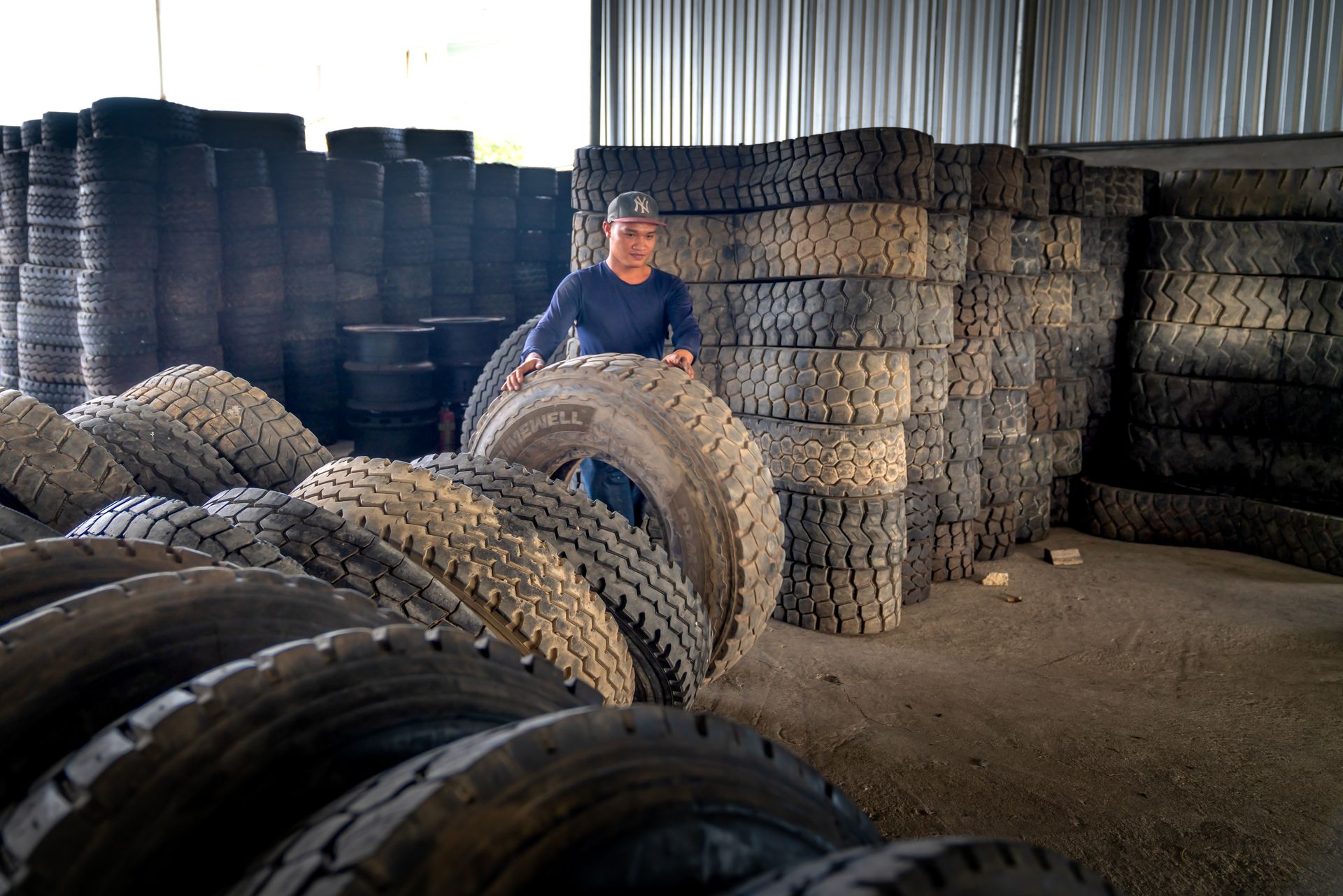
Do not copy a tire-stacking limit from one product to every tire in your inventory. Two commercial-tire manuals illustrate why the product, condition and source matter. For an owner-operator buying spare tires or a small fleet sharing a storeroom, the useful first step is to identify the stock before choosing the storage arrangement. A warehouse photograph is not a specification, and the tallest pile that fits beneath the roof is not a storage plan.
Two instructions with different scopes
Bridgestone's 2023 Truck Tire Data Book, page 80, sets a five-foot vertical stacking maximum. It also calls for dry indoor storage, separation from sunlight, heat, ozone sources and petroleum products, and an interior check for moisture and foreign material before mounting.
Michelin's 2023 Truck Tire Service Manual, page 60, treats X One tires specifically: new ones must not be stacked above three meters, with up to six depending on size; more than five used or damaged X One tires presents a concern. That product-specific guidance is not a universal truck-tire allowance.
The practical conclusion is about scope: a number without its product label and condition is incomplete information. Neither example establishes what your rack can carry, which handling equipment you need, or whether an individual used casing is fit for service. Have the supplier confirm the applicable instructions for the actual stock. This article compares the cited manuals; it does not replace current product instructions or design a warehouse installation.
Make the stock list useful before buying more
Here is a suggested administrative workflow, rather than an additional manufacturer requirement. Give each inventory group a clear description: brand, product line, size, quantity and whether it is new, used or awaiting assessment. Add the supplier, purchase reference and where the group is stored. A description such as “six spare tires” leaves too many questions for the person who must find a replacement while a truck is waiting.
Keep the instruction reference alongside that record. Write down the document title, page, product covered and date you checked it with the supplier. If someone sends a revised instruction, retain the earlier reference as history and identify the current one clearly. This prevents a printout for one tire family from becoming an unexplained rule for the entire building after staff or inventory changes.
Separate available stock from unresolved stock
A tire physically present in the shop and a tire confirmed ready for its intended use are different inventory entries. Consider using three administrative labels: identified stock, assessment pending, and allocated to a particular job. These are planning labels, not technical certifications. Whoever performs the inspection and mounting still needs to make the relevant service decision.
For example, suppose a fleet counts eight tires but two are waiting for a supplier's assessment and two are already allocated to another truck. Reporting eight as freely available would hide those commitments. The example is hypothetical and does not establish a replacement quantity or safety judgment. Its purpose is to make the purchasing conversation more precise: what is on hand, what remains unresolved, and what is already promised?
A receiving and handoff checklist
- Match the delivered product and quantity to the purchase record.
- Record the storage location and the applicable instruction reference.
- Ask the supplier to resolve any uncertainty about mixed products or condition.
- Record who will assess a questionable tire; do not erase the open question when moving it.
- Before allocating stock, confirm the intended job with the service provider.
- After the job, update the inventory so another dispatcher does not reserve the same tire.
A shared sheet can be sufficient for a small operation. It should distinguish an observation, a question and a confirmed answer. “Asked supplier” is not the same as “supplier confirmed.” Attach the response to the relevant stock group instead of keeping the answer only in a message that the next person cannot find.
Review the arrangement when the inventory changes
Adding a different tire family is a reason to revisit the reference, even when the storage room has not changed. So is discovering that stock previously described as new was actually a used casing. Do not fill a missing specification with a convenient number from another manual. Resolve the product question before turning a storage suggestion into a shop instruction.
The preventive takeaway is to pair every storage decision with the correct product guidance and a clear inventory record. For more operator-focused maintenance planning, read Truck Savers News. The checklist above is an editorial planning aid, not a mounting procedure.
Illustrative archive photo: Quang Nguyen Vinh / Pexels. The pictured storage arrangement is not presented as an approved example.
Original source
Bridgestone Truck Tire Data Book 2023, p. 80; Michelin Truck Tire Service Manual 2023, p. 60.