Three Tire Plants Closed, One Started Making Truck Tires
American truck tire capacity did not grow, it moved. Hankook is now building truck and bus radials in Tennessee at 30% of capacity, while three American tire plants have shut since 2025. What changes first is lead time, not price.
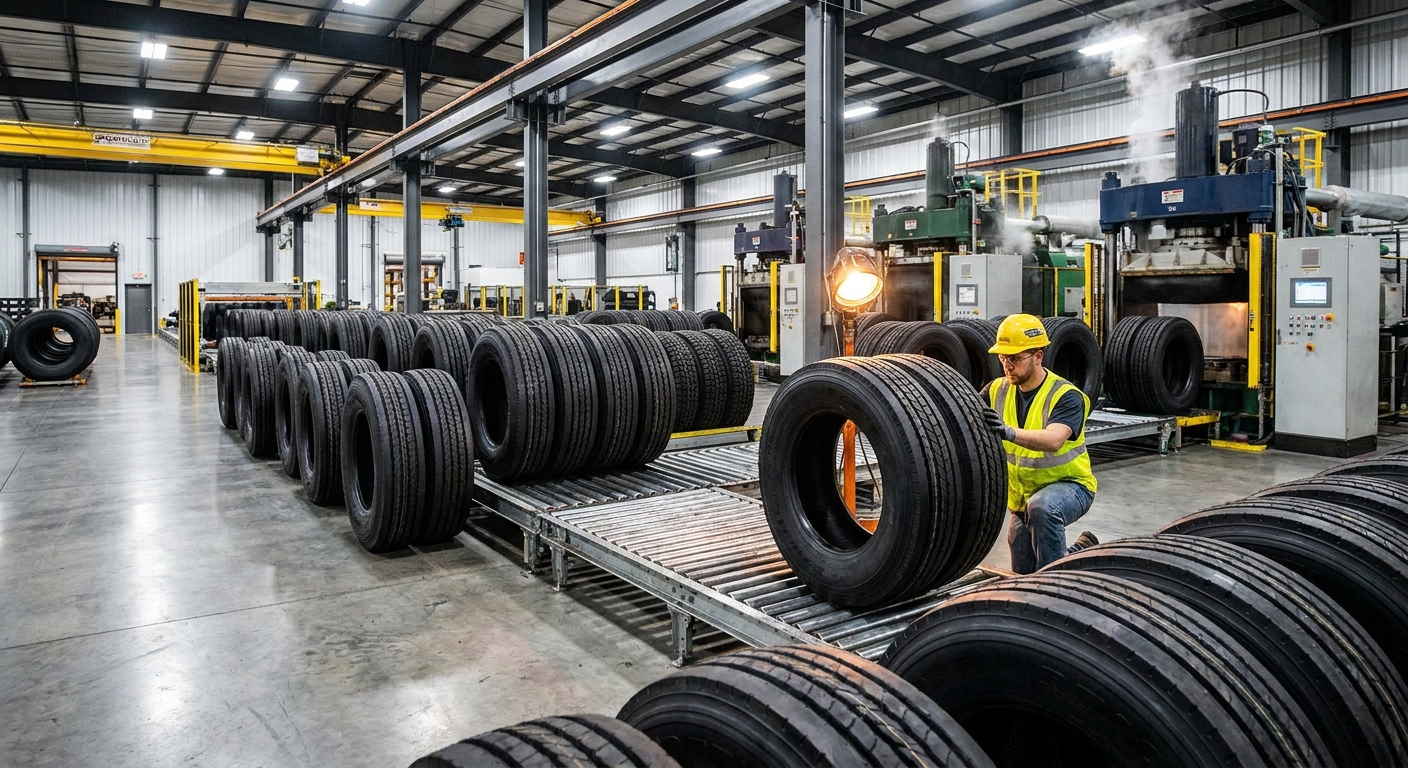
Three American tire plants have closed since the start of 2025, and one just started making truck tires for the first time. Both things are true at once, and together they say more about your next set of drives than any price list will.
Hankook's plant in Clarksville, Tennessee is now building truck and bus radials in the United States, something the company had never done here. Production started in May and is running at 30% of capacity, with full output targeted for the end of 2027. Check what is on your truck now, because the label on your next casing is likely to change.
The numbers
- 1 million truck and bus radials a year when the line reaches capacity
- 85% to 90% of the Hankook truck tires sold in the U.S. will come out of Clarksville by the end of 2027 — until now they came from South Korea
- $1.6 billion invested in the site overall, which also doubled its passenger and light-truck capacity to 10 million tires
- 2,600 employees when the expansion is finished, up from the 900 the plant opened with in 2017
- Four tread patterns in production today, with four more due in September
The company's North America president said the ramp-up is following the usual 18 to 24 month curve, and that the investment was well underway before the 2025 tariffs. He was direct about it: tariffs are not something they factor in. That is worth repeating, because the easy story is that trade policy built this plant, and the man running it says otherwise.
For the record, the tariff picture he is not factoring in: 25% on materials coming from South Korea, a 12.5% Section 301 duty, and 50% on steel and aluminum.
The other half of the story is the closures
While this line was going up, three plants went dark:
- Bridgestone, La Vergne, Tennessee — July 2025, commercial tires
- Yokohama, Salem, Virginia — March 2026, passenger and light-truck
- Yokohama, Spartanburg, South Carolina — February 2025, agricultural radials
La Vergne is the one that matters most to a fleet, because it made commercial tires and it is 50 miles from Clarksville. Hankook went after a good share of that plant's former management to staff its own line. Domestic truck-tire capacity did not simply grow. It moved.
What a fleet should take from it
Do not expect a price break. Nobody quoted one, and a plant at 30% of capacity is not in a position to give one. What changes sooner is availability and lead time, and that is the part that strands trucks.
Two practical consequences:
- Ask your dealer where the casing was made, not just what it costs. Through 2027 the same part number may arrive from Korea or from Tennessee depending on the week. Domestic stock usually means a shorter wait when you need two on a Friday.
- Watch the new tread patterns. Four now and four more in September means the lineup you speced last year may not be the lineup on the shelf next year. Matching duals across an axle matters more than brand loyalty.
And the half nobody bills you for
Here is the thing that gets lost every time tire supply is in the news. Supply is one half of the tire bill. What the truck does to the tire is the other half, and that half is entirely yours.
A drive axle a hair out of alignment will scrub a new set down early no matter whose name is on the sidewall. So will 10 psi of chronic underinflation, a dragging brake, a worn shock that lets the tire hop, or a wheel end with the wrong preload. None of those show up as a line item. They show up as a set of tires you replaced 30,000 miles before you should have, and on the invoice it just says tires.
The checks that pay for themselves, none of which require a shop appointment:
- Pressure with a gauge, cold, weekly. Not a thump. A gauge.
- Look at the wear pattern, not the tread depth. Feathering, one-sided wear and cupping each name a different mechanical cause.
- Match dual diameters. A half-inch difference makes the bigger tire carry the load and the smaller one drag.
- Get the steer alignment checked after any hard hit — a curb, a pothole, a piece of a bridge joint. Waiting until the wear shows means the tires already paid for it.
New capacity in Tennessee is good news for anyone who buys tires. It does not change the arithmetic that the cheapest tire is the one you did not have to replace early.
Alignment, suspension and tire coverage live at thetrucksavers.com, and the equipment beat continues here at Truck Savers News. Want it before your dealer tells you it is on backorder? Get the weekly TSN newsletter.
Original source
Figures and quotes come from an on-site report: Transport Topics, "Hankook ramps up U.S. truck tire production in Tennessee," August 21, 2026.