The Scale Ticket Is a Legal Position, Not a Receipt
A public scale ticket puts your axle weights on record before the state does.
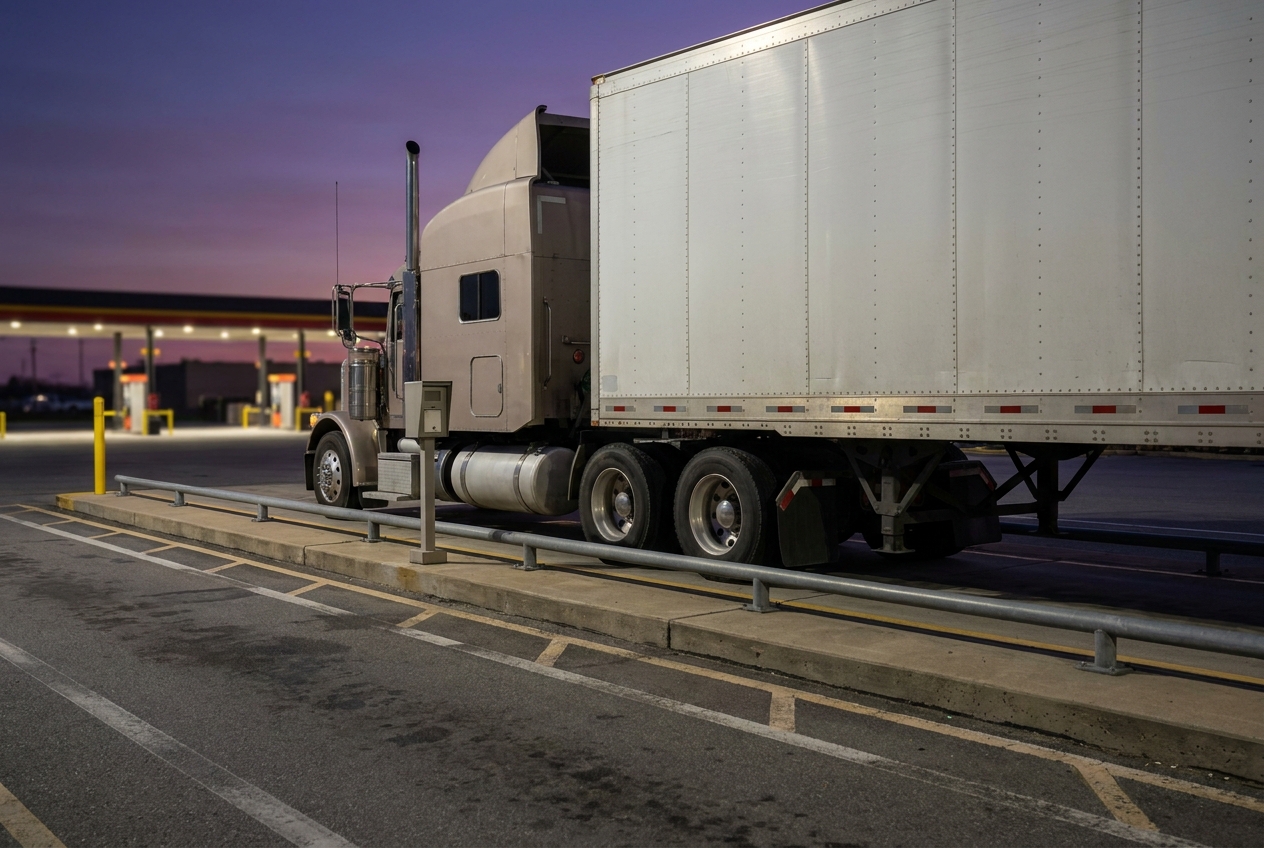
Most drivers treat the scale ticket as a receipt. It is closer to a signed statement, and it is the only piece of paper that argues on your behalf after you are already down the road.
The public scale at the truck stop is not there to tell you a number. It is there to put that number on record before the state puts its own number on record, and the difference between those two moments is the whole game.
What the guarantee actually says
CAT Scale publishes it in plain language on its own site: if you get an overweight fine from the state after their scale showed you legal, they will immediately check their scale. If their scale is wrong, they reimburse the fine. If their scale is correct, a representative of the company appears in court with the driver as a witness.
Read that last part again, because it is the part nobody quotes. The promise is not only money. It is that somebody else walks into the courtroom holding the calibration records, and you stop being one driver's word against a state scale.
The word that carries the weight
The same page adds a line that is easy to skim past: they guarantee axle weights to be accurate as well as the gross weight.
That matters more than the gross, because that is how you get written up. A truck can sit comfortably under the legal gross and still be over on the drives because the trailer tandems are in the wrong hole. Gross tells you whether you loaded too much. Axle weights tell you whether you distributed it wrong, and only one of those is fixable in the next four minutes.
The re-weigh almost nobody uses
Here is the practical part. A re-weigh costs $5.25. The re-weigh exists precisely so you can slide the tandems and check your work instead of guessing.
It has four conditions, all of them easy and all of them easy to blow:
- It has to be the same vehicle.
- You have to present the original ticket, with its number recorded.
- It has to be the same scale, not another location of the same company.
- It has to be within 24 hours of the full-priced ticket.
The one that costs people money is the second. The first ticket goes in the door pocket or in the trash, the driver slides the tandems, pulls back on the platform and pays full price again for what should have been a few dollars.
When to weigh, and in what order
The order is what makes the ticket useful, and it is worth being boring about it.
Weigh loaded and fueled, the way the truck will actually roll, not half fueled with the plan of topping off later. Weigh before you get on the interstate that has the state scale on it, not after you have already passed it. And weigh with the tractor and trailer straight on the platform, because a rig sitting crooked puts weight where it does not belong and gives you a number you will act on for the rest of the trip.
If the ticket comes back legal, keep it where you can reach it from the seat. If it comes back over, that is the four minutes you bought: slide, re-weigh, roll.
What it does not do
This is not insurance and it should not be sold to you as insurance. The guarantee covers one situation: their scale said you were legal and the state said you were not. If you weighed heavy, saw it, and rolled anyway, there is nothing here for you.
It also does not weigh what you cannot see. Fuel burns off, and a load that shifts in the box moves weight between axles without changing the gross by a pound.
The part that is actually yours
If your axle weights keep landing somewhere different from where the math says they should, stop blaming the scale. Worn suspension, a sagging air bag or a bent hanger changes how a trailer sits and therefore how it loads its own axles, and that shows up as a weight problem long before anybody calls it a suspension problem.
That is a shop question, and The Truck Savers™ looks at it without an appointment and at no cost. To find a scale, a wash or a parking spot on the route you are actually running, the Truck Savers News directory is built for it.
Weigh before the state does. Prevention before repair — the irons never lie.
Original source
Guarantee wording and re-weigh conditions come from the scale operator's own published terms: CAT Scale, Our Guarantee.