The Form Has a 15-Day Clock After the Repair
The repair is not the last step on a roadside inspection form. The signature has a 15-day clock, and the copy stays a year.
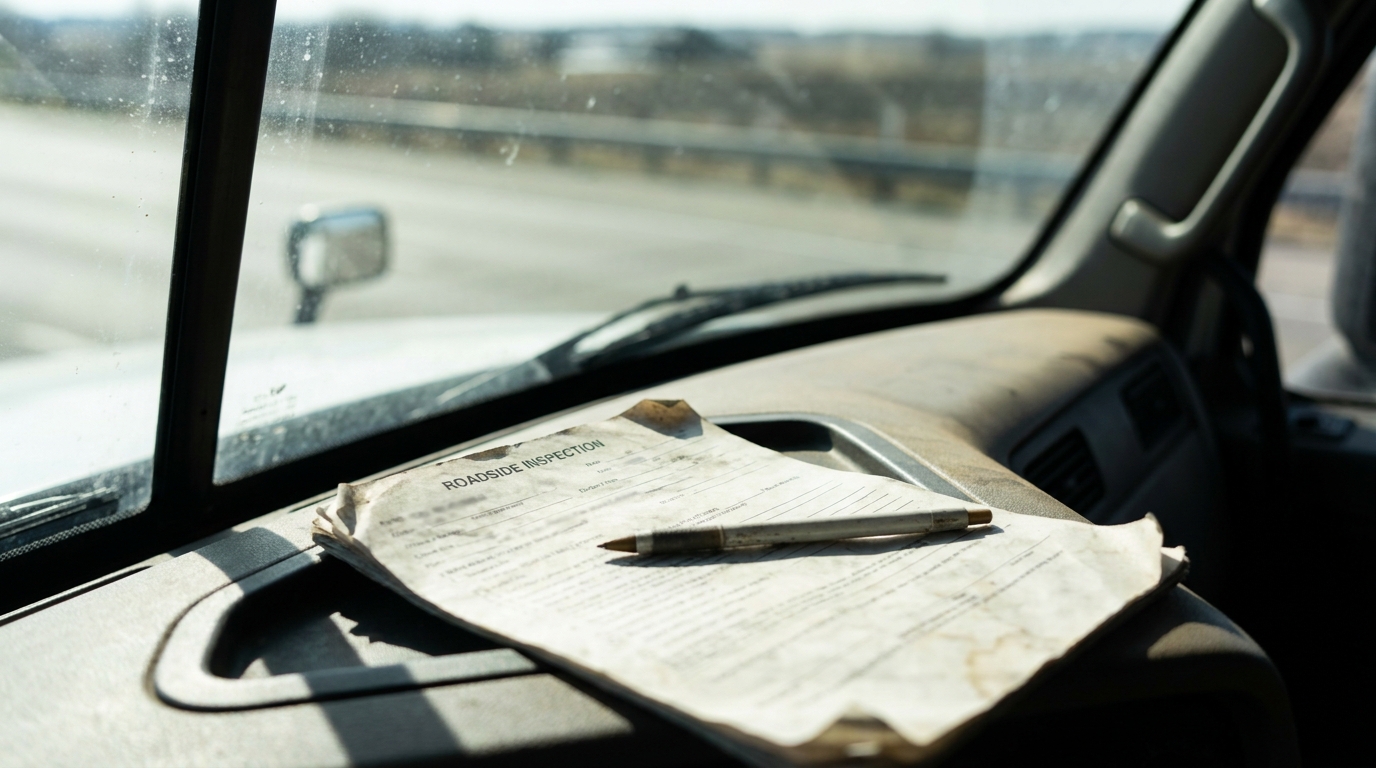
The inspector hands you the paper, you fix what he wrote down, and the job feels finished. It is not. The rule that governs that piece of paper keeps running for a full year after you drive away.
49 CFR 396.9 is the section that creates the roadside inspection report, and most of it is not about the inspection at all. It is about what happens to the form afterward.
The paper has a route of its own
Paragraph (b) names it: the Driver Vehicle Examination Report is the form used to record the results.
Paragraph (d)(1) says where it goes. The driver who receives an inspection report delivers a copy to the motor carrier and to the intermodal equipment provider on arrival at the next terminal or facility. And if the driver is not scheduled to reach one of those within 24 hours, the report must be mailed, faxed or otherwise transmitted immediately.
That second half is the one that gets skipped by the owner-operator running long. Nobody is waiting at a terminal, so the paper stays folded above the visor until the trip is over. The rule does not allow that gap.
Fifteen days to sign, not to fix
Here is the part almost nobody reads. Paragraph (d)(3) gives the carrier 15 days from the date of the inspection to do two separate things.
First, certify that every violation noted has been corrected, by completing the portion of the form titled Signature of Carrier/Intermodal Equipment Provider Official, Title, and Date Signed.
Read that literally: the clock runs on the signature, not on the repair. You can have the truck fixed the same afternoon and still be out of compliance sixteen days later because nobody signed the form.
Second, if the issuing State agency asks for it, return the completed form to the address printed on it.
Twelve months, whether anyone asks or not
The same paragraph closes with the requirement that survives everything else: in all instances, retain a copy for 12 months from the date of the inspection, at the carrier's principal place of business or where the vehicle is housed.
In all instances. The state may never ask for the form. The violations may have been minor. The truck may have been sold. The copy still has to exist for a year, in a place you can produce it from.
This is paperwork that already generated itself. It costs nothing to keep and it is thrown away constantly, because the moment the repair is done the form stops looking important.
Out of service means the truck does not move
Paragraph (c) is the other half of the section, and it is stricter than most people assume.
Authorized personnel mark a vehicle out of service when its mechanical condition or its loading would likely cause a serious failure on the road. Once that sticker is on, no carrier may require or permit anyone to operate the unit until every repair required by the out-of-service notice is satisfactorily completed.
And the section defines its own verb: operate includes towing the vehicle. The only exception written into the text is a tow by means of a crane or hoist. Hooking your own tractor to an out-of-service trailer and dragging it home is operating it.
There is one more line worth knowing: an emergency towing vehicle paired with an out-of-service vehicle may not run unless the combination meets the rest of the requirements, except for the conditions already noted on the report.
Paragraph (c)(3) closes the loop: nobody removes the Out-of-Service Vehicle sticker before the repairs are done. Not the driver, not the shop, not the owner.
What to do with the next form you get
Photograph it at the scale. Before it goes above the visor, before it gets wet, before it gets lost.
Send it the same day if you are not reaching a terminal. The 24-hour clock in (d)(1) does not care that you run solo.
Sign the certification as soon as the repair is done, and put the date on it. The signature is the deliverable, and it has a 15-day clock.
Check whether the form asks you to return it. Some states do, and the address is printed on the paper itself.
File the copy where you can find it in eleven months. Twelve is the requirement; the last month is when somebody usually asks.
The cheapest compliance you will ever do
Every other requirement in Part 396 costs money: parts, labor, downtime. This one costs a signature, a date and a folder. It is the one that gets missed anyway, because the truck is already fixed and the paper feels like it belongs to yesterday.
We repair what the inspector writes down, and we give you the documentation to certify it, in Houston, Dallas and Monterrey: thetrucksavers.com.
Original source: Electronic Code of Federal Regulations, 49 CFR 396.9, inspection of motor vehicles in operation