The CDL Line: 26,001 Pounds Combined
The CDL line is 26,001 pounds combined, and only when the trailer is over 10,000. 49 CFR 383.5 needs both weights, and counts rating or real weight, whichever is greater.
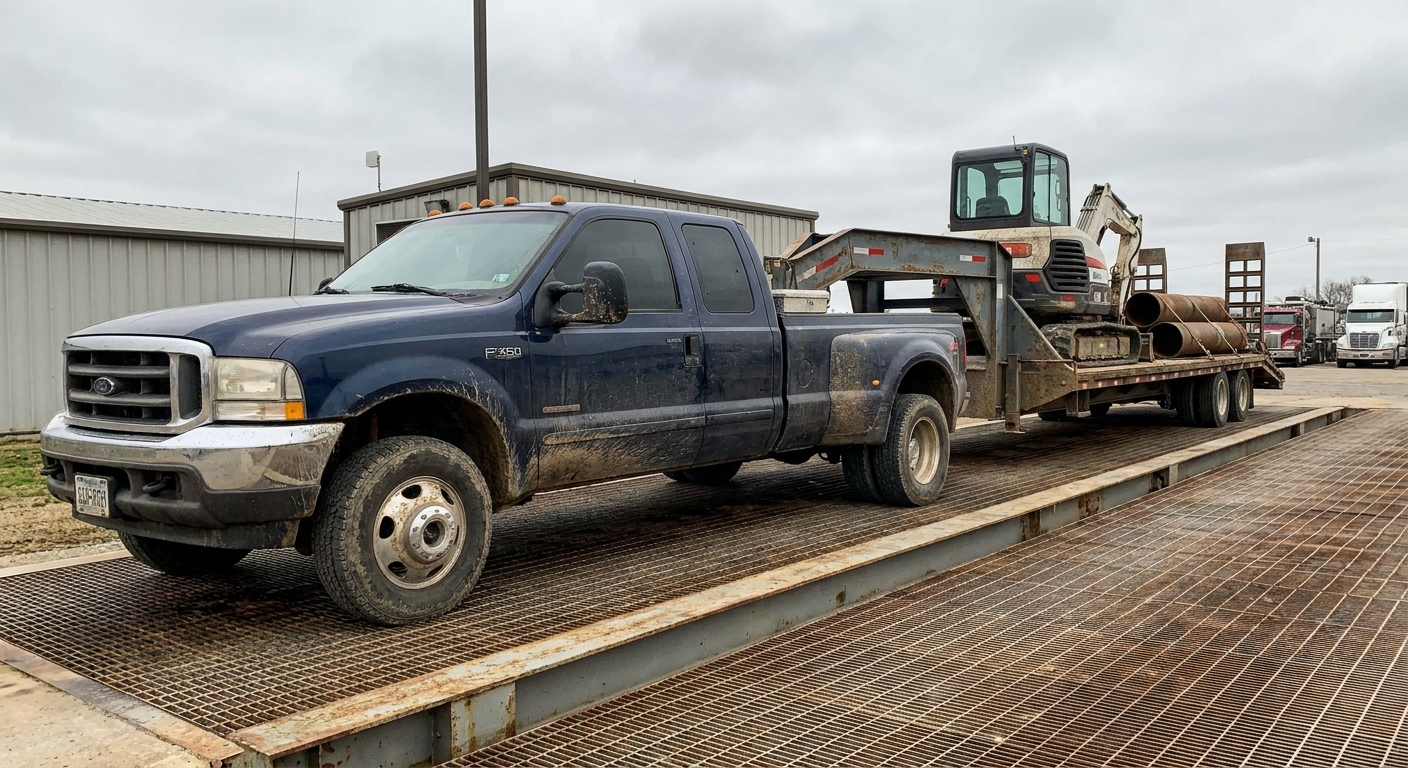
It comes up every week: I run a three-quarter-ton or one-ton pickup, I hook up a trailer, and somebody tells me I now need a commercial license. The federal rule does have a number, and it is two conditions at once, not one.
The exact number
The definition lives in 49 CFR 383.5, which sets out what counts as a commercial motor vehicle for licensing. For a combination — your pickup plus whatever it pulls — that is Group A, and it takes two things together:
- A gross combination weight rating or gross combination weight of 26,001 pounds or more, and
- a towed unit with a gross vehicle weight rating or gross vehicle weight of more than 10,000 pounds.
Both. If the combination clears 26,001 but the trailer is 10,000 or under, it does not land in Group A. And if the trailer is enormous but the combination never reaches 26,001, it does not either.
The part almost nobody reads: "whichever is greater"
The rule does not say rating alone. It says gross combination weight rating or gross combination weight, whichever is greater, and the same for the towed unit.
In yard terms: the manufacturer's sticker does not protect you if you are running heavier than the sticker. If your combination is rated at 25,900 pounds and you roll out loaded at 27,000, the number that governs is the one on the scale. Plenty of people do the math on paper and then drive the iron.
The other two groups, briefly
The same 383.5 defines Group B, a heavy straight vehicle at 26,001 pounds or more; and Group C, which meets neither of the first two but either carries 16 or more passengers including the driver or hauls hazardous materials.
That last one catches people: size stops mattering once what you are carrying is hazardous material in the quantities the rule defines.
What to check before you hook up
- Find the manufacturer's label on the pickup's door frame and on the trailer. The ratings live there, not in the sales brochure.
- Add it up with the trailer loaded, not empty. The load is what moves the number.
- Weigh it once. One pass over a public scale tells you in five minutes which side of 26,001 you are actually on.
- If you run close to the line, treat yourself as already over it. One heavier day crosses you without any warning.
- And note: this is the federal definition for licensing. Your state can set its own requirements, and commercial use carries obligations beyond the license itself.
The preventive close
The trouble with this rule is not understanding it. It is that almost nobody weighs. People add it up from memory, round down, and pull onto the highway on a total they never checked. Iron never lies, and neither does the scale.
If you tow regularly, that unit's suspension and alignment work differently than an empty pickup's: The Truck Savers checks it in Houston, Dallas and Monterrey.
Original source: 49 CFR 383.5 — Definitions (eCFR)