Super Duty Tailgate Step: Stow Before Departure
Stow the Super Duty tailgate step before departure. Use the correct manual and make the final handoff check explicit.
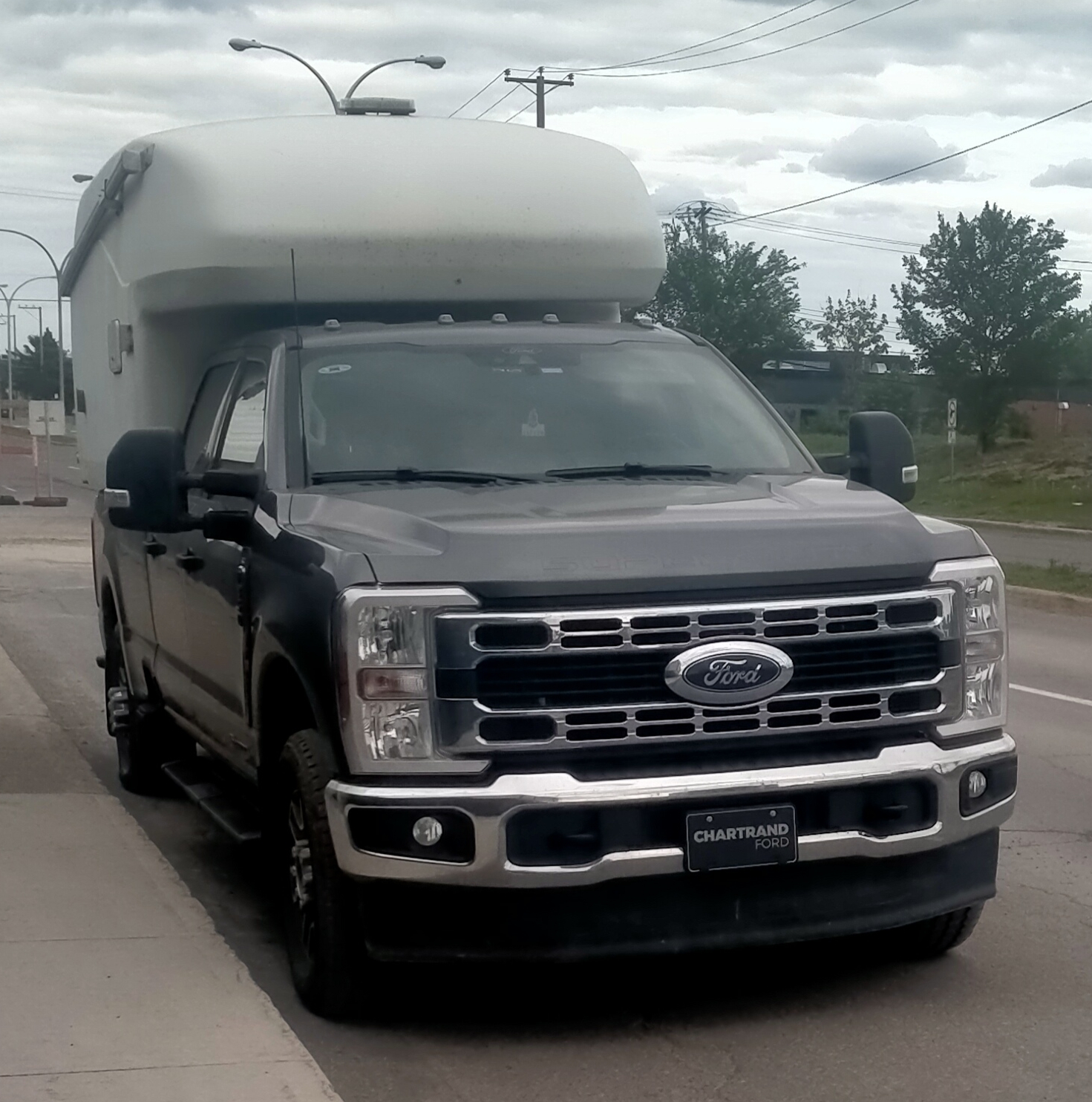
The load is out of the bed, but the pickup is not ready to leave just because the unloading job is finished. On an equipped 2025 Ford Super Duty, the tailgate step and its grab handle need to be stowed before the vehicle moves. A work crew sharing the same truck should make that final check an explicit part of the handoff, rather than assume the person who unloaded it also completed the closing sequence.
Start with the actual truck and equipment
This guide concerns the tailgate-step stowing section of Ford's 2025 Super Duty owner's manual. It does not establish that every Super Duty has that feature or that another model uses the same mechanism. Before using an instruction, confirm the vehicle and its installed equipment. A fleet inventory entry that says only “Ford pickup” is insufficient for choosing the applicable manual.
The practical editorial checklist below connects Ford's instruction to a loading-area handoff. It does not add a repair procedure, weight rating or compatibility claim. Keep the manufacturer's full directions available to the person operating the feature. If the equipment differs from the documented arrangement, resolve that difference with the appropriate manual or qualified service support instead of improvising from the photograph.
The closing sequence Ford documents
Ford describes lowering the handle with its yellow button, releasing it with the yellow lever at its base, rotating it horizontally and pushing it into the tailgate. The step is then rotated horizontally and pushed into the tailgate until secure. The manual says to close and fully latch the tailgate before moving, and not to drive with the step or grab handle open. Consult the original illustrated instructions for the exact sequence.
Those are several separate conditions. “Tailgate up” does not communicate whether the step and handle were stowed, while “unloading complete” describes the cargo task rather than the equipment. Use language that matches what someone actually observed. Do not convert a familiar motion or a quick glance into a claim that all the required conditions were checked.
Give the last check to a named person
At a job site, one person may unload, another may gather tools and a third may drive the pickup away. A useful arrangement is to identify who completes the equipment check before the keys change hands. This is a suggested work practice, not an additional Ford requirement. Its purpose is to remove a gap in communication when several people take part in the same task.
A short handoff can identify the unit, the person making the observation and any unresolved issue. For example, a hypothetical crew note could say: “Unit 12: unloading finished; step and handle stowed; tailgate closed and latched; checked by the departing driver.” Use such a statement only after the described observations occur. A prefilled form should never imply completion before the check.
Separate an unfinished task from a defect
If the next driver finds the feature still open, that is an observation about its current position. It does not, by itself, diagnose a failed latch or damaged mechanism. Record the condition plainly and refer to the applicable directions. Avoid turning a handoff note into a technical conclusion that no one has established, especially when the truck passes between shifts.
If the equipment does not operate as described, this article supplies no method for forcing, modifying or repairing it. Keep the question visible and seek appropriate service guidance for the actual vehicle. The relevant decision is whether the documented closing conditions have been met before departure; a general web article cannot inspect the mechanism or certify the truck for a trip.
Teach the feature before the busy stop
For a driver new to that pickup, arrange a review of the correct manual and equipment during a suitable stopped moment. Explain which vehicle the instructions belong to and where the original material is stored. A screenshot passed around without its model-year context can become a misleading shortcut when the same group operates different pickups.
Keep training and trip records separate. Showing a driver the feature once does not document its position after today's unloading. Likewise, a photograph of a similar Super Duty does not prove the equipment fitted to this unit. The article's image identifies an illustrative model-year vehicle, not the condition or options of a reader's truck.
Use a small, specific departure checklist
- Identify the actual vehicle and its applicable manual.
- Follow the documented stowing sequence for the installed feature.
- Confirm the step and handle are stowed.
- Check that the tailgate is closed and fully latched.
- Assign the final observation to the person accepting the vehicle.
- Keep any unresolved condition visible in the handoff.
The useful takeaway is a clear end to the loading task. Put the manufacturer's closing instruction beside the vehicle handoff, so finishing with the cargo does not become the only fact the departing driver receives.
Illustrative archive photograph: 2023–2025 Ford F-250 Super Duty, Pointe-Claire, May 27, 2026; installed tailgate-step equipment is not asserted. Bull-Doser, Public domain. Image record. Reproduced without additional changes.

Read more practical fleet and vehicle coverage.