Super Duty 2025: Check the 400W Outlet Limits
The Super Duty outlet has limits beyond its watt rating. Check the installed system and the device before promising power.
Check the outlet before assigning the job
A 2025 Ford Super Duty with the 400-watt AC outlet needs an equipment check before a driver promises to power something at a work site. A familiar plug shape does not establish compatibility. The useful question is which electrical system this particular truck has, what the device requires, and what Ford allows that system to supply. This guide concerns the manual section for the 110–120V, 400W outlet, not the separately described 2kW pickup-bed system.
For an owner-operator or small fleet, this distinction belongs in dispatch planning. A vehicle can be ready for its driving assignment while its available outlet is unsuitable for a separate task. Finding that out before departure gives the team time to arrange an appropriate alternative. Finding it out after reaching the customer can leave a job waiting even though the pickup itself runs normally.
The rating belongs to a system
Ford specifies up to 400 watts in Park, with possible reduction in Drive and shared capacity when multiple outlets are used. The precautions prohibit extension cords or multiple devices connected to an outlet, and call for unplugging unused devices. Power stops with the ignition off or battery voltage below 11 volts. These are conditions of operation, not a promise of uninterrupted service.
Make a simple equipment note for the truck rather than carrying that number around as a general fleet specification. Identify the vehicle, the applicable manual section, the outlet location and the planned device. If another pickup substitutes for it, repeat the equipment check. Similar badges or bodywork do not establish that both trucks have the same electrical equipment.
A wattage label is not the whole decision
The manufacturer's limitations exclude several device types, including motor loads such as power tools and compressor refrigerators, precision measuring equipment and appliances needing an extremely stable supply. The specified outlet therefore cannot be cleared for a task solely because a device's label appears to fit its wattage rating. Read the restrictions alongside the rating, and consult the device's own instructions.
An illustrative dispatch question makes the difference clear: a customer asks a driver to bring a powered tool. The first response should be to identify the exact tool and suitable power source, rather than to assume that a pickup outlet will do. There is no need to experiment at the customer's location to answer a question the equipment documentation may already resolve.
Record what the indicator actually does
Ford describes a steady indicator as power available, an unlit indicator as no outlet power, and a flashing indicator as fault mode. Its instructions include an overload response and a reset sequence. A flashing light by itself is not a complete diagnosis. Follow the applicable manual and seek qualified assistance if the condition persists instead of treating repeated resets as a workaround.
When reporting a problem, write down the vehicle identification, device model, which outlet was used, indicator behavior and the operating conditions you observed. Separate an observation such as “indicator flashed when connected” from a conclusion such as “the truck needs an inverter.” The first gives a technician something to investigate; the second may prematurely turn an unconfirmed explanation into a purchase request.
A practical handoff checklist
Before the assignment, confirm the installed system against the truck's documentation. Read the planned device's label and instructions. Check the manufacturer's excluded device categories. Identify who is responsible for providing an alternative supply when the truck's system is unsuitable. Do not treat an unverified equipment assumption as part of the service promised to the customer.
During the handoff, state what has actually been checked. “This device is approved for this system under these conditions” requires supporting documentation; “there is an outlet in the cab” does not supply it. Keep the relevant manual section accessible to the person using the truck, particularly when vehicles move between drivers. A brief, specific note is more useful than a general assurance about available power.
After the assignment, record any unexpected behavior and remove unused devices as directed. If a service visit is needed, bring the observations and device details. This planning worksheet does not authorize wiring changes, bypasses or an accessory installation. Those require the correct vehicle information and an appropriate professional assessment.
The preventive lesson is straightforward: establish the task and electrical compatibility before departure. The number printed beside an outlet is one piece of that decision. Matching the complete instructions to the actual vehicle helps keep a small equipment assumption from becoming an avoidable interruption to the working day.
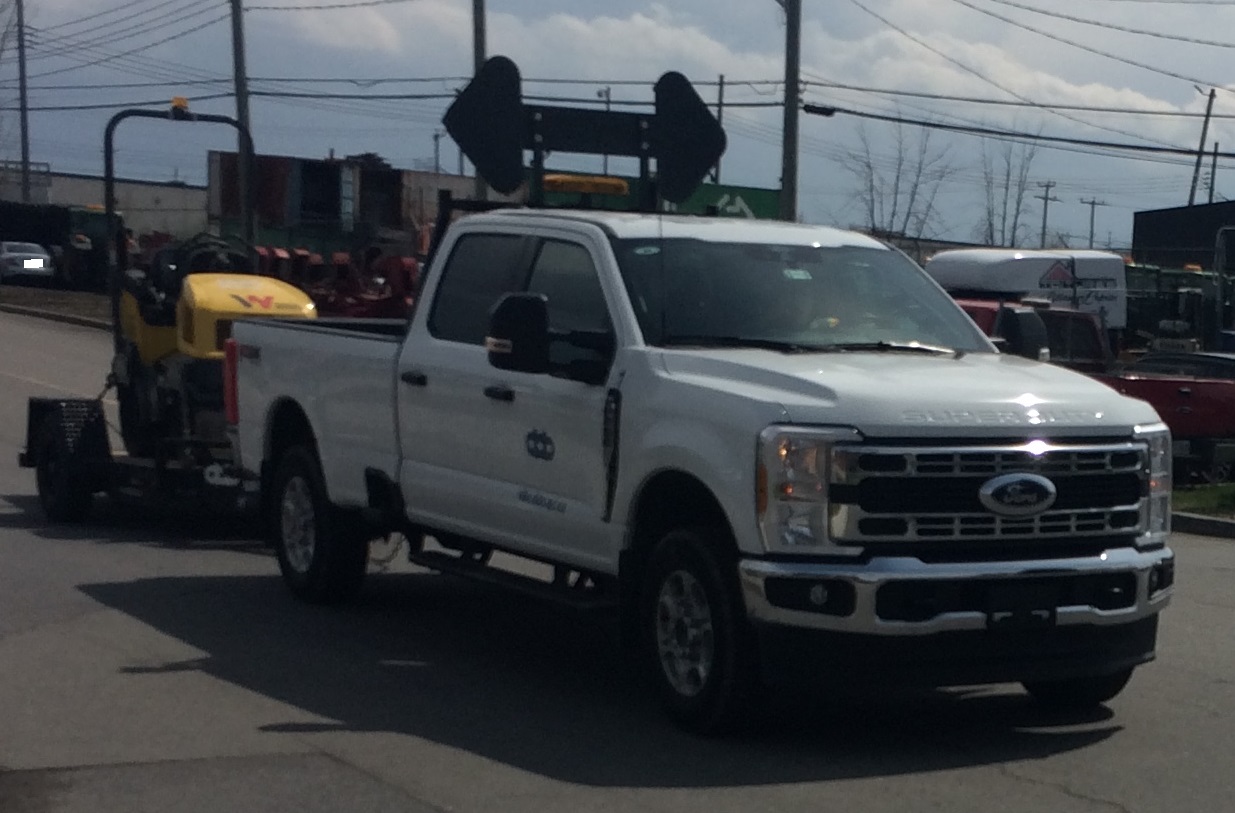
Photo: Bull-Doser, 2026-05-05. Public domain. Illustrative archive: 2023–2025-generation Ford F-250 Super Duty. Exact outlet equipment is not shown or confirmed.

Original source: Ford, 2025 Super Duty Owner’s Manual. Ford: outlet limitations; Ford: indicators.