Shop Chemicals: Match the Label to the Safety Data Sheet
Match the chemical label to its safety data sheet. Check identity, revision information and access before the job.
A shop can have a full chemical-document folder and still open the wrong file for the container in front of a worker. The first useful check is identity: does the product identifier on that container correspond to the safety data sheet being consulted? This guide, checked October 9, 2026, applies OSHA’s published Hazard Communication material to a small shop’s document workflow. It offers a practical review sequence, not a chemical-specific handling instruction or a certification that a shop meets every applicable requirement.
Start with the product identifier
OSHA’s standard connects the hazardous-chemical list, label and safety data sheet through a product identifier. Section 1 identifies the product and responsible party. Begin there rather than judging a file by its thumbnail, brand color or folder position. Two items sold by the same supplier can still require different documentation. A purchasing description such as “cleaner” should not replace the identifier on the container when deciding which file belongs to the product actually being used.
Treat product codes with care
A June 19, 2015 OSHA interpretation distinguishes the required identifier from supplemental product codes. Codes used as the identifier must match; supplemental codes can differ when the correct cross-reference remains clear and the information is not undermined. This is an explanation of the standard, not a new rule announced this month. If a number differs, determine its role with the supplier or shop’s responsible person instead of assuming either that every difference is harmless or that every difference proves the document is wrong.
Check the revision after checking identity
Section 16 provides preparation or revision information. Record it after establishing that the document belongs to the product. A recent date alone does not demonstrate that the sheet describes the container on the bench. When contacting a supplier, include the exact identifier and the document date, then ask whether that is the applicable sheet. Keep the reply with the record if it resolves an uncertainty. Do not replace product-specific information with a newer file selected only because it appeared first in search results.
Locate the sections that answer the task
OSHA’s published SDS guidance places handling and storage in Section 7, exposure controls and personal protection in Section 8, and stability and reactivity in Section 10. Those headings help locate information; they do not supply universal glove, ventilation or mixing instructions. Read the applicable product’s entries and the employer’s procedures with the responsible person. A worker should not receive an equipment recommendation inferred solely from this article, a container’s color or another product that sounds similar.
Make access a real check
OSHA requires workplace sheets to be readily accessible during each work shift. Its guidance describes paper or electronic arrangements with immediate access and a backup for power loss or another emergency. A file existing somewhere is not the same as a worker being able to retrieve it. Ask a person who uses the work area to find the applicable document through the normal access method. Record a missing permission, unavailable binder or broken shortcut as an unresolved access issue, then correct the actual obstacle.
Use a short receiving worksheet
Our suggested receiving record has five fields: container identifier, matching document, preparation or revision date, normal retrieval location and person assigned to resolve a mismatch. These are editorial workflow suggestions, not additional OSHA reporting requirements. For an illustrative delivery of two different cleaning products, create two identifiable entries rather than one generic “cleaners” shortcut. Do not invent their composition or hazard classification. The purpose is to let a worker retrieve the right document and let the responsible person see what remains unresolved.
Close the loop when a product changes
If purchasing changes the product, repeat the identity check before treating the old file as its documentation. Tell the people who use the work area where the applicable sheet can be found and how unresolved questions will be handled. Keep historical records separate from the file presented for current use so retrieval remains understandable. This article prescribes no disposal method, medical response or chemical combination. Its practical outcome is narrower: the container, document and access route can be connected without guessing.
Keep this checklist for the next vehicle or product handoff. For more operator-focused guides, browse Truck Savers News and choose the topic that matches the decision you need to make.
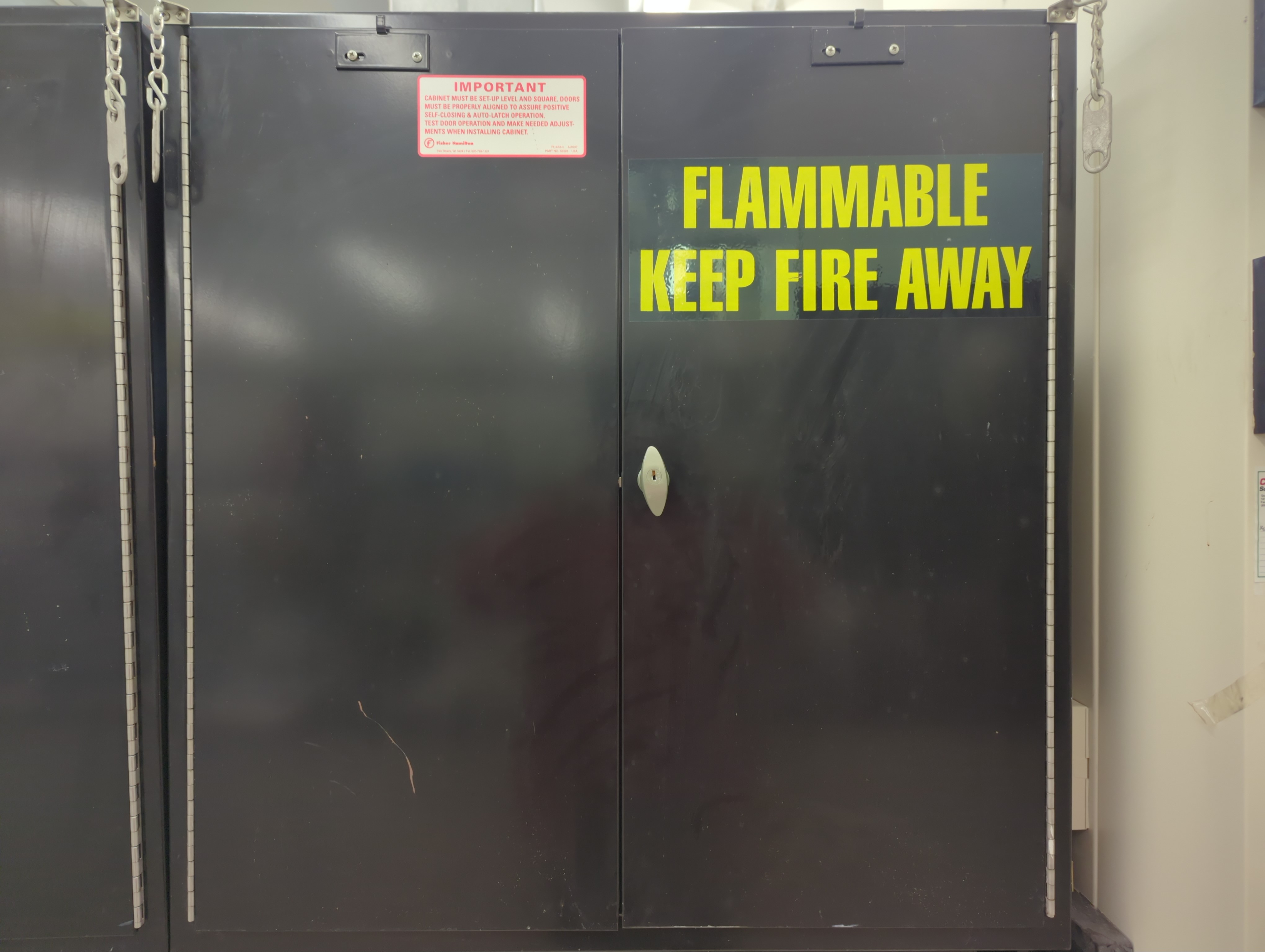
Illustrative archive photo: closed chemical storage cabinet, Reconrabbit, June 2026. CC0, unchanged; not a photograph of a Truck Savers shop or certification of its storage. Wikimedia Commons · Photo license.

Original source: OSHA, Hazard Communication standard.