Same Month, Two Counts, 1,400 Trucks Apart
Same month, same market. ACT counted 16,800 and FTR counted 18,200.
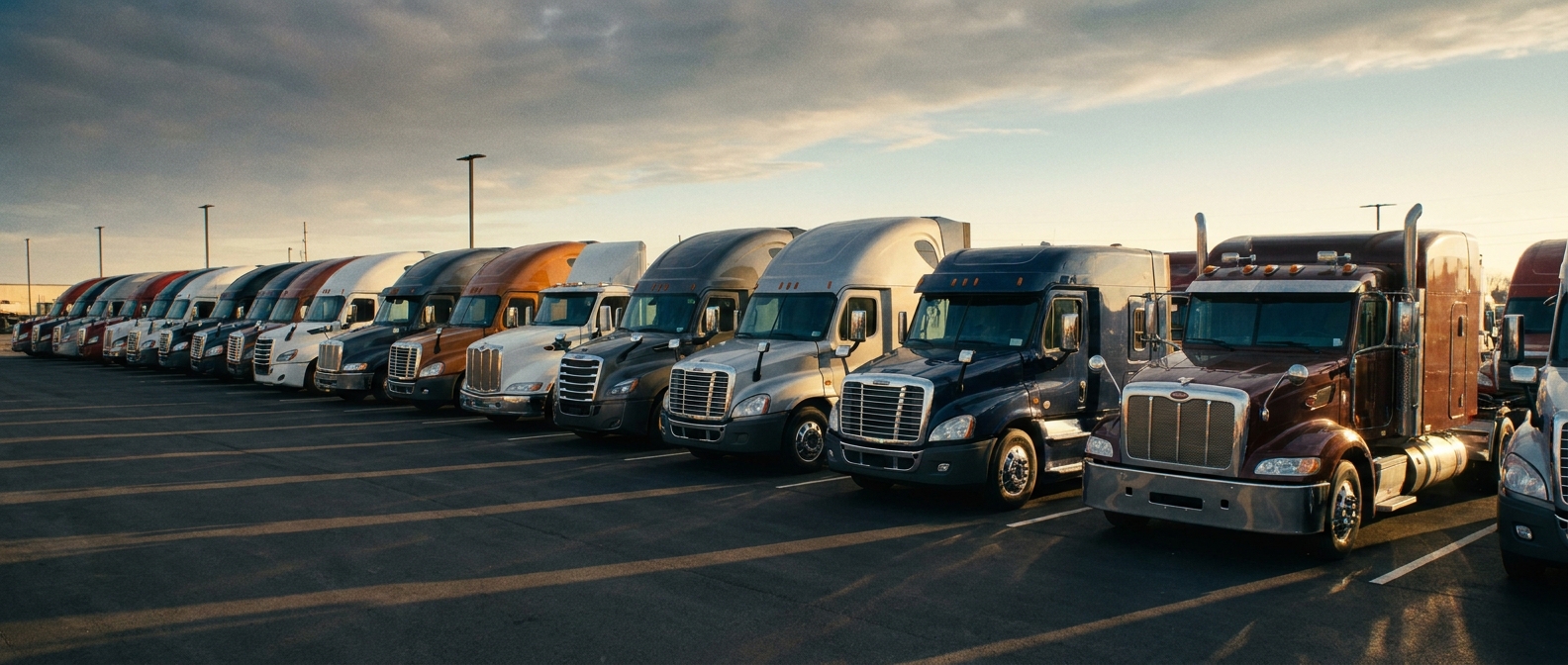
Two firms counted the same month and came out 1,400 trucks apart.
ACT Research put August Class 8 orders in North America at 16,800 units. FTR Transportation Intelligence put them at 18,200. Same month, same market, same question, and a gap the size of a good-sized fleet.
Both numbers get published as fact. Neither firm is wrong, and that is the part worth understanding before you read the next headline about the truck market.
What each one reported
- ACT Research: 16,800 units. Up 31% against a year ago, and down 25.5% from July.
- FTR: 18,200 units. Up 42% against a year ago, and down 19% from July.
FTR also reports the year to date running 111% above the same stretch of 2025.
Notice that the direction agrees on both counts. Orders rose sharply against a weak year-ago month, and they slipped against July. What differs is the size, and the size is what gets quoted.
Why the two numbers differ
Order counts are not a government tally. Each firm builds its own from what manufacturers report to it, and the firms draw the boundary in slightly different places: which OEMs are included, whether Mexico and Canada are counted the same way, how cancellations are netted out, and where the cutoff sits at month end.
None of that is a scandal. It is what an estimate is. But it means a single order number, quoted alone and without the house that produced it, is worth less than it looks.
The practical version for an owner-operator: when someone tells you orders were up 42%, ask up against what, and counted by whom.
The year-ago comparison is doing a lot of work
A 31% jump and a 42% jump both sound like a boom. They are measured against August of last year, which was soft.
That is why the sequential number matters more for reading the room. Against July, both firms show a decline — 25.5% by ACT's count, 19% by FTR's. Seasonal, and in line with build slots filling, but a decline.
Carter Vieth, an analyst at ACT Research, tied the demand to the freight side: "Demand for new equipment remains strong, supported by meaningfully improved freight rates."
What actually closed in August
August marked the end of the 2026 order season, and with it the effective end of the EPA 2027 NOx pre-buy — the stretch where buyers pulled purchases forward to get current-technology engines before the new rules land.
Model year 2027 ordering opens in September. That is the transition this whole set of numbers sits on top of.
Dan Moyer, senior analyst at FTR, put the next problem plainly: "The main issue now is incremental cost. OEM strategies are diverging as some have decided to offer both EPA 2027-compliant engines and current-technology engines."
Read that carefully, because it is the sentence with money in it. Manufacturers are not all doing the same thing. Some will offer both engine families side by side, which means the spec sheet you are handed depends on which OEM you walk into.
What this means for a small fleet
- The pre-buy window is closed. If your plan was to buy ahead of the rule change, that season ended with August. Whatever you order now sits in the new conversation.
- Two engine families means two sets of parts and training. A fleet that ends up with both is running two maintenance stories in one shop, and the second one is always the expensive surprise.
- Nobody has put a number on the cost increase. Moyer says incremental cost, not how much. Anyone giving you a firm figure for a 2027 truck today is giving you an opinion.
- Build slots fill before prices settle. The sequential decline is partly slots filling up. Delivery timing is negotiable earlier in a season than later.
- The truck you already own just got more strategic. Every month you keep an existing unit healthy is a month you are not buying into a transition nobody has priced yet.
The unglamorous conclusion
Order data is a weather report, not a decision. It tells you the market is warmer than last year and cooler than last month, and that the industry is walking into an engine transition without an agreed price tag.
What you control is the condition of what is already in your yard. A truck that holds alignment, keeps its bearings cool and does not eat tires is worth more in a transition year than in a normal one, because the alternative to keeping it is more expensive and less certain than usual.
We do inspections, alignment and suspension work in Houston, Dallas and Monterrey: thetrucksavers.com.
Original source: Transport Topics, August Class 8 orders rise on soft year-ago comparisons