Road Funding: Verify Truck Access
Road repair funding is a planning signal. Check the exact road segment and current access before changing a truck route.
Federal repair funding can matter to a freight corridor without telling a dispatcher that the road is available today. A funding announcement, a project schedule and a current access notice answer different questions. For a small carrier, the useful first step is to identify whether a named location intersects an actual load, then obtain current route information before changing the dispatch plan.
What the October announcement establishes
On October 19, USDOT announced more than $1.6 billion in emergency relief for transportation infrastructure repairs across 34 states and several U.S. jurisdictions. Examples include $873 million for North Carolina, $81 million for Hawaii and $52 million for Texas. The Texas description includes bridge washouts and names FM 1431 between Lago Vista and Marble Falls. These are funding details; the release does not establish today's access for a particular truck movement.
Start with the road segment
A place name in a national announcement may be much broader than the route question in front of dispatch. Write down the road number, the affected segment described by the issuing agency and the actual origin and destination of the load. Do not turn a statewide award into a claim that every road in that state has changed condition.
For example, an office reviewing a shipment somewhere in Texas has not established a connection to the named FM 1431 location merely because the customer has a Texas address. The practical task is to compare locations, not to add a statewide delay assumption to every quote. This is an editorial workflow example, not a report of a customer's trip or a prediction of conditions on that highway.
Separate the three dates
Keep the announcement date distinct from any project milestone and the time at which route information was checked. A release can confirm that an allocation was announced without supplying a completion date. A projected completion date, where an agency separately publishes one, still needs to be distinguished from a notice describing current access.
A simple dispatch note can have three fields: funding reference, project information and current route check. Leave a field unanswered when the source does not provide the information. Writing “not established” is more useful than carrying an assumed reopening date into the next shift's plan. Do not interpret the absence of a detail in the federal release as proof of an open road or a closed road.
Use the trip's real decision points
Before changing a departure time or suggesting another route, identify which information the driver and dispatcher actually need. That can include the relevant road segment, direction of travel, delivery access and any vehicle-specific questions requiring confirmation. The funding release does not answer those questions. The responsible route information and the operator's normal review remain necessary.
In Texas, DriveTexas is a state route-information starting point to consult separately. Check the actual notices relevant to the intended movement rather than treating a link to a map as a completed route review. This article does not report live restrictions, verify a detour or approve a vehicle's access. Those conclusions need current information matched to the specific trip.
Keep a proposed detour out of the quote until reviewed
Consider a hypothetical dispatch office comparing an established lane with an alternative suggested after reading the announcement. The alternative can change mileage, purchase stops and appointment timing. Put those differences in a comparison before treating the alternative as the new plan. A proposed route that has not been checked should remain a proposal, clearly labeled for the person making the dispatch decision.
Keep cost estimates and route authorization separate. A spreadsheet can show what an assumed extra distance would cost without proving that the route is suitable. Likewise, a project receiving federal funds does not establish a saving on the next load. This distinction protects the decision from an attractive but unsupported conclusion about travel time or operating cost.
A handoff another shift can understand
- Identify the actual load and the road segment being reviewed.
- Record the federal announcement as a funding reference.
- Keep any separately verified project schedule with its source.
- Date the current access check and retain the relevant notice.
- Label route alternatives and their cost assumptions as proposals.
- Pass unresolved access questions to the responsible dispatcher.
The point is not to create paperwork for every infrastructure headline. It is to prevent one kind of information from silently replacing another. A carrier can recognize the importance of repair investment while keeping an immediate truck decision grounded in current, relevant evidence. The announcement is a reason to investigate a location, not a substitute for completing that investigation.
Explore more route and operations reporting from Truck Savers News.
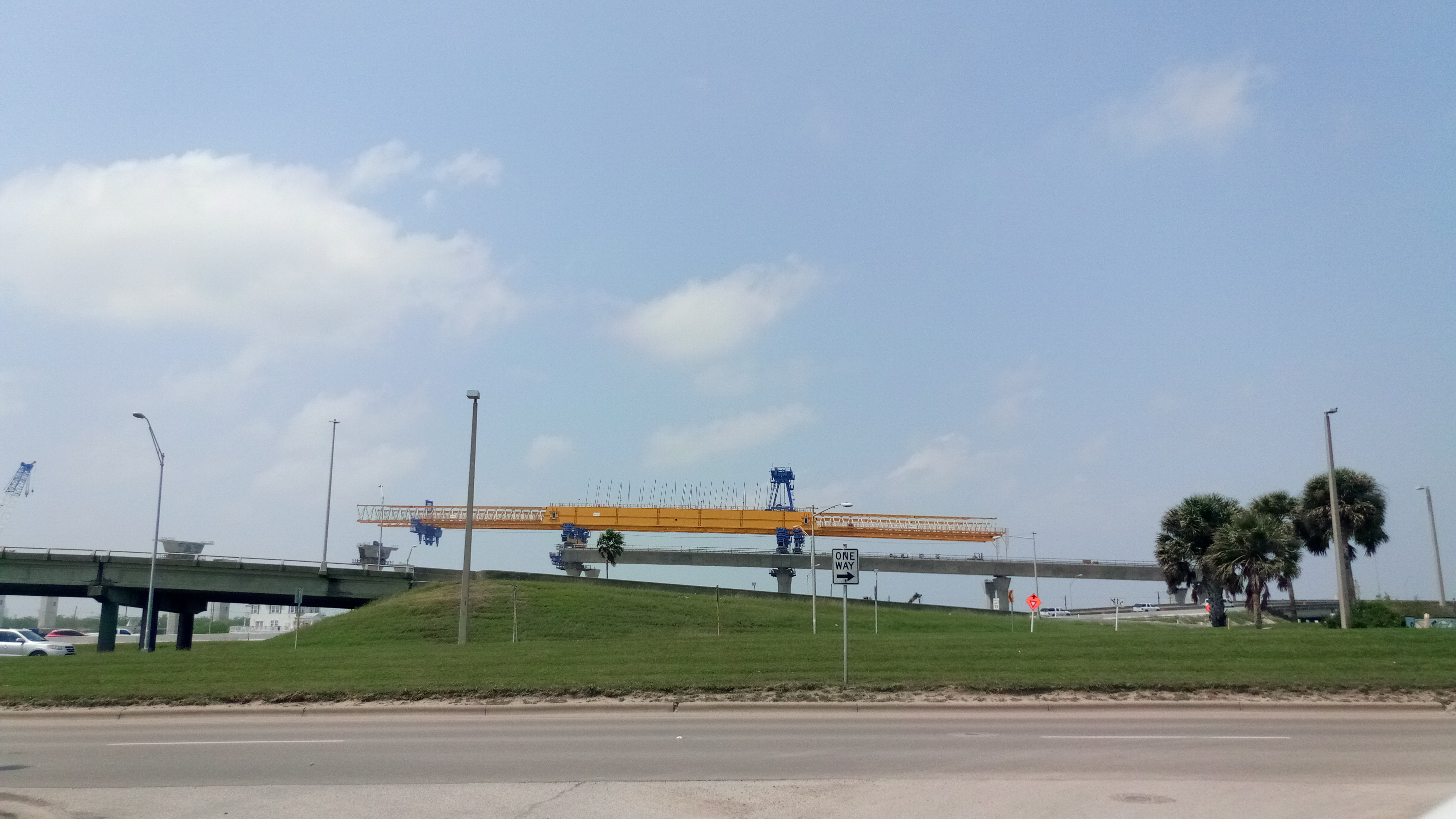
Photo credit: Illustrative archive photograph: New Harbor Bridge construction in Corpus Christi, Texas, April 6, 2019, SCTraveller, CC BY-SA 4.0, via Wikimedia Commons. Unmodified reproduction. This is a different project and does not depict the newly announced repairs or current access. Wikimedia Commons · CC BY-SA 4.0.

Original source
U.S. Department of Transportation, emergency relief announcement, October 19, 2026..