Pennsylvania Can Fine an Unlicensed CDL School $25,000
Training without a state license can now cost a school $25,000. The federal rule says where CDL training must come from.
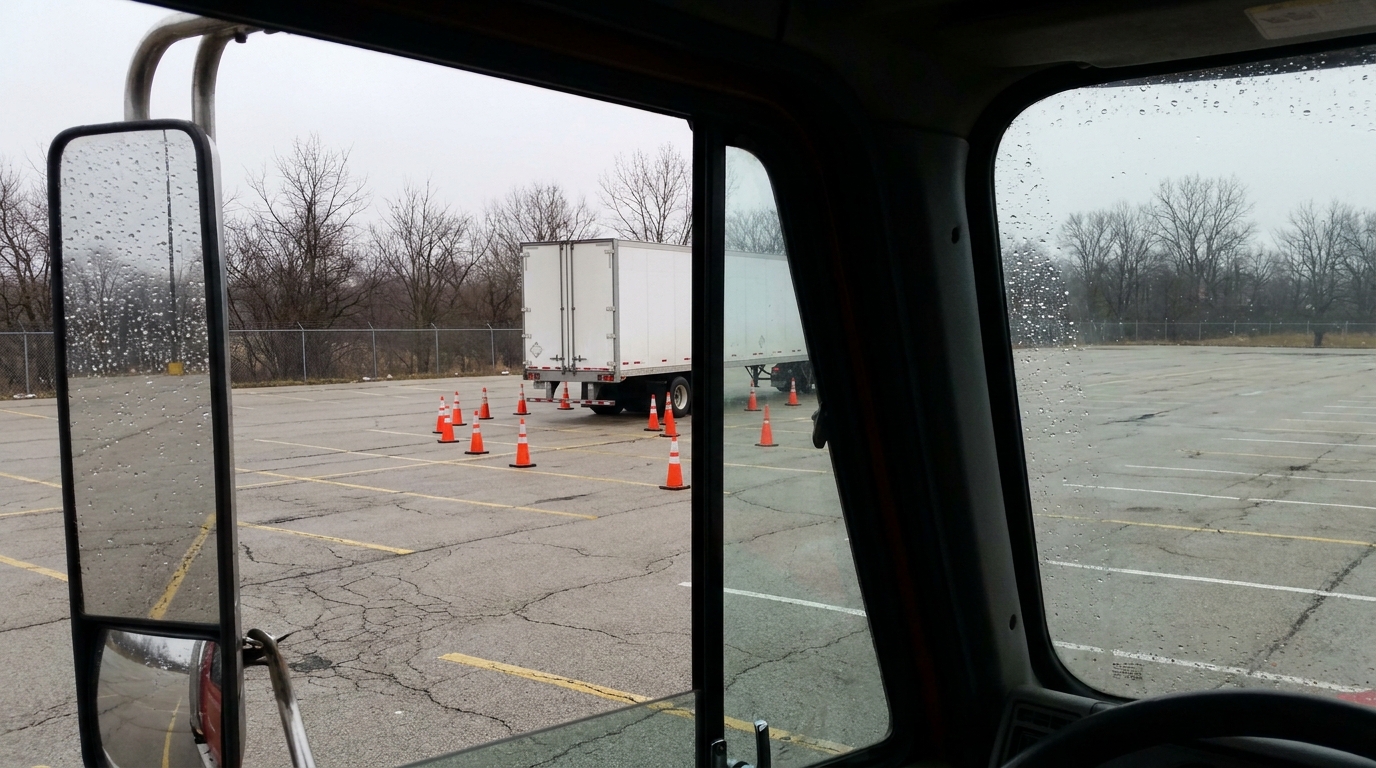
Pennsylvania can now fine a driving school up to $25,000 for giving entry-level CDL training without a state license. The fine lands on the school — but the driver is the one left holding a CDL and no skills.
Senate Bill 1294 was approved by the governor on July 20, 2026, and it took effect immediately. It amends Section 15 of the Private Licensed Schools Act, the 1986 law that governs private schools in the state.
Check where your training came from before you spend a dollar on it. Below is how.
What the law actually adds
The new subsection is short. The State Board of Private Licensed Schools may, by a majority vote of its statutorily authorized membership, levy a civil penalty of up to $25,000 on any person who provides entry-level driver training without being properly licensed under the act.
Two limits are written into the same sentence, and they matter:
- The penalty may only be assessed once per violation. It is not a running meter.
- Before collection, the person gets a hearing under the procedure in Title 2 of the Pennsylvania Consolidated Statutes.
The bill passed the House 201-1 and was sponsored by Senator Judy Ward with eight co-sponsors.
The part that is federal, and applies to you anywhere
The law does not invent its own definition of training. It points at 49 CFR Part 380, Subpart F — the federal entry-level driver training rule, in force since February 7, 2022.
And that federal rule defines the term in a way every CDL applicant should know by heart: entry-level driver training means training received from an entity listed on FMCSA's Training Provider Registry, before:
- taking the CDL skills test for a Class A or Class B CDL for the first time;
- taking the skills test to upgrade to a Class A or Class B; or
- taking the skills test for a passenger or school bus endorsement for the first time, or the knowledge test for a hazardous materials endorsement for the first time.
So the registry is not paperwork. Training from a provider that is not on it is not entry-level driver training at all, no matter what the certificate says or how much you paid.
Why a state fine matters to a driver
Read the two rules together and the picture is clear. The federal side says where training must come from. Pennsylvania just added a state penalty for schools that operate outside its own licensing on top of that.
What neither rule does is give the student his money back. A school that takes cash, runs a few laps around a lot and hands over a certificate leaves the driver with the weakest possible position: a license earned on training that did not prepare him, and a shop full of things he was never shown.
That is the part that shows up later, in a yard, with a truck he cannot inspect and a load he cannot secure.
What to verify before you pay
- Look the school up on the Training Provider Registry first. Not the website, not the flyer — the registry. If it is not listed, the training does not count federally.
- Ask for the state license, in Pennsylvania or wherever you are. Federal listing and state licensing are two different things, and this law exists because a school can skip the second.
- Ask how many hours are behind the wheel, on a range and on public roads. A course that is heavy on simulator and light on road time is legal to complain about before you sign, not after.
- Get the curriculum in writing. Subpart F sets minimum content for theory and behind-the-wheel training. A school that will not show you its curriculum is telling you something.
- Keep your proof. The training certificate and the provider's registry number are the two documents that matter if anything is questioned later.
The preventive read
Every rule in this story exists because somebody got a CDL without learning the job. The penalty is aimed at the school, but the cost of bad training is paid by the driver — over years, in the things he never learned to check.
Just starting out, or hiring somebody who is? The Truck Savers™ inspects trucks bumper to bumper in Houston and Dallas, and a walk-around with somebody who knows what to look for teaches more than a lap around a cone.
This is general information, not legal advice. Licensing requirements vary by state; confirm yours with the agency that regulates private schools where you live.
Original source: Pennsylvania General Assembly, Senate Bill 1294 of the 2025-2026 session