PACCAR Recalls Seat Harnesses on Six 2027 Models
A missing piece of heat shrink can short a seat harness. PACCAR is recalling six truck models.
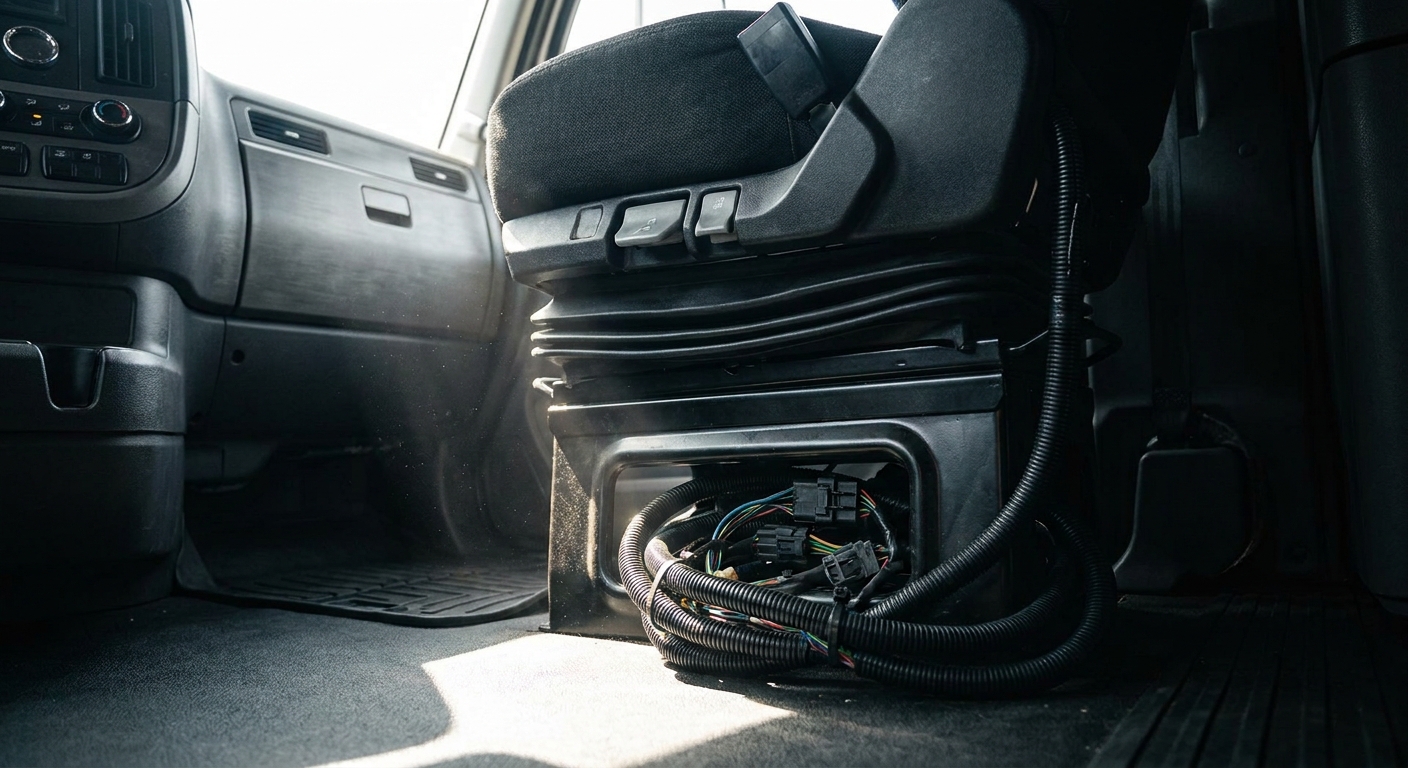
A missing piece of heat shrink is enough to start a fire under your seat. That is the whole defect in PACCAR's newest recall, and it covers six different models coming off the line right now.
The campaign number is 26V544000, filed with federal safety regulators on August 21. It reaches certain 2027 Peterbilt 567, 579 and 589 tractors, and certain 2027 Kenworth T680, T880 and W990 tractors.
What is actually wrong
These trucks came with ventilated seats. The harness that feeds that ventilation system runs underneath the seat pedestal, and on the affected units that harness may be missing its heat shrink.
Heat shrink is the sleeve that goes over a splice and seals it. Without it, the joint sits exposed in a place that vibrates every mile you drive. The manufacturer's own filing says the result is a short circuit, and that a short circuit raises the risk of a fire.
Nobody is describing something that already happened to a driver. This is the version of a recall you want: the defect was caught, the paperwork went in, and the fix is available before the failure finds you.
Three details most people skip
The federal record carries three flags that change what you should do, and almost nobody reads them:
- Park It: no. Regulators are not telling you to stop driving the truck.
- Park Outside: no. You are not being told to keep it out of the shop or away from a building, which is the flag that shows up on the serious fire campaigns.
- Over-the-air update: no. This one is hardware. No software patch is coming to your dash overnight. Somebody has to physically put hands on the harness.
Those three lines are the difference between a campaign you schedule around your loads and one that grounds your unit today. This one you schedule.
The dates that matter
Owner notification letters are expected to go out on October 20, 2026. That is the date PACCAR gave the government, and it is worth writing down for one reason: it is almost two months from now.
The repair does not wait for the letter. The remedy is already defined, the dealer replaces the harnesses, and it is free of charge. A letter is a notice, not a permission slip. If your unit is on the list you can call today.
PACCAR's internal number for this campaign is 25PACE. Give that to whoever answers. Peterbilt customer service is at 1-940-591-4220 and Kenworth is at 1-425-828-5888.
How to know if it is yours
Model year and badge are not enough. The filing says certain units, which means the affected population was built inside a specific window, and the only thing that answers the question is your VIN.
- Run the VIN, not the model. Federal recall lookup takes the seventeen digits and gives you every open campaign on that exact truck.
- Check every unit, not the newest one. Six models are named across two brands. A mixed fleet can have this on a Peterbilt and a Kenworth at the same time.
- Ask about the others while you are there. An open recall rarely travels alone, and the trip to the dealer is the expensive part, not the labor.
- Get the campaign closed in writing. A repair that is not recorded against the VIN is a repair you will be asked to prove later.
What this says about ventilated seats
A ventilated seat is a comfort item, and comfort items get wired into trucks the same way everything else does: with a harness, a splice, and a sleeve over the splice. The fan does not care that it is a luxury. The wire behind it behaves exactly like the wire behind your headlights.
That is the quiet lesson here. Every accessory you add is another harness living under vibration, and the failure point is almost never the accessory. It is the joint.
The preventive read
Wiring is the system that gives the least warning. A bearing gets loud, a tire shows its wear, an air leak hisses at you in the yard. A splice with no sleeve on it does nothing at all until the day it does everything at once.
The habit worth keeping is simple: when something in the cab gets pulled apart for any reason, look at what runs underneath it before it goes back together. Conduit that has moved, a connector hanging loose, tape where a sleeve should be. Those are readable, and they are readable months before they matter.
At The Truck Savers the free inspection is where that reading happens on the rest of your unit, because a truck tells you what is coming if somebody looks. Los fierros nunca mienten.
Original source: NHTSA — Recall 26V544000.