PACCAR Parts Revenue Does Not Set Your Repair Quote
PACCAR Parts reported record revenue, but its quarterly result does not establish your local stock or repair price. Compare the actual quote.
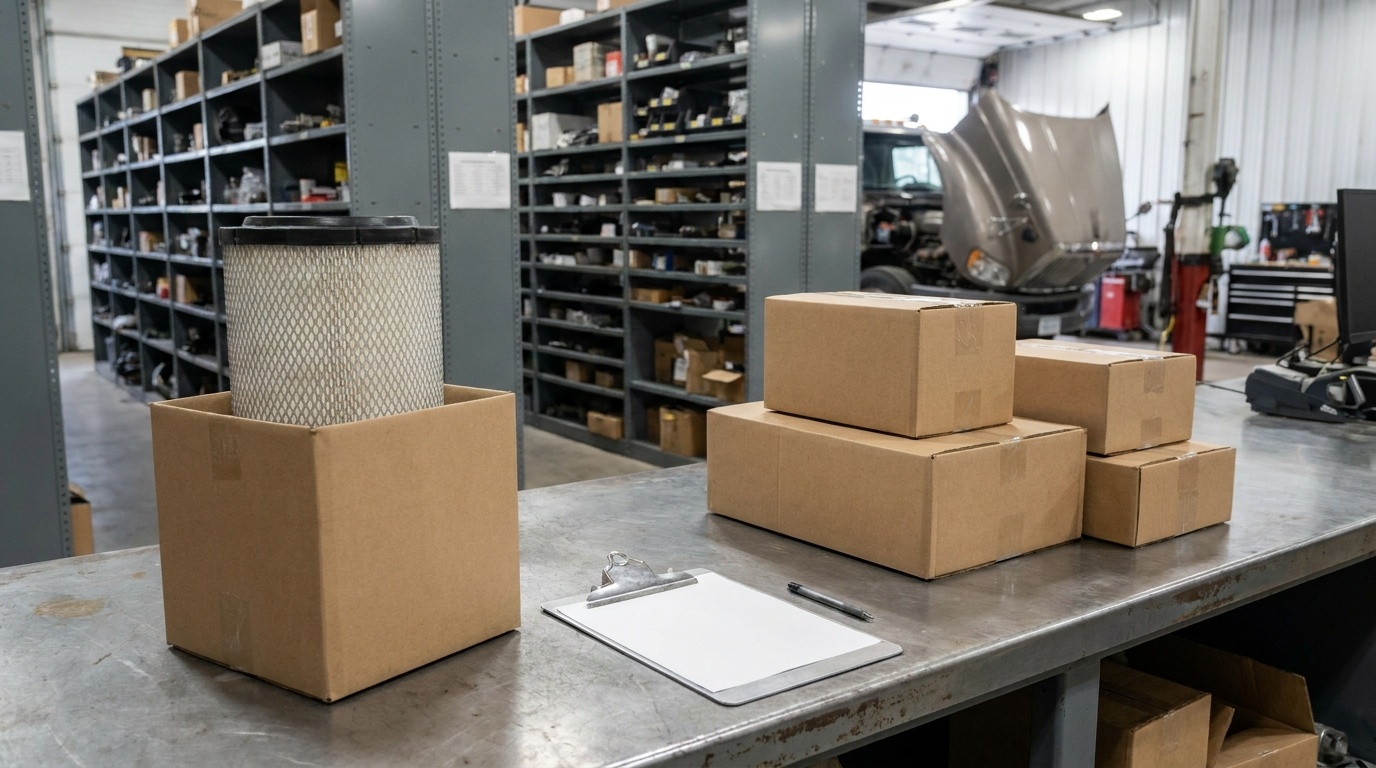
AI-generated editorial illustration of an unbranded parts counter. It does not depict a PACCAR facility, an actual product catalog or confirmed inventory.
PACCAR Parts reported record third-quarter revenue of $1.78 billion in its October 27, 2026 earnings release. That is a company-wide business result, not a price index for the replacement part your truck needs. For an owner-operator, the useful next step is a documented parts quote that separates identification, availability, delivery and the complete repair scope.
The manufacturer also reported third-quarter parts pretax income of $404.4 million, compared with $410.0 million a year earlier. Revenue and profit are different measures. Neither figure establishes what a particular dealer has on the shelf, what your invoice will be or how quickly a truck can return to work. TSN checked the release on November 4.
Begin with the actual unit and the actual job
Before comparing offers, build a short identification sheet for the repair. Record the truck identification requested by the service provider, the component being investigated and the work the technician has actually confirmed. Ask the provider what additional information is required to identify the correct part. A familiar brand name or a photograph of a similar component does not resolve that question.
Keep uncertainty visible. If the diagnosis remains open, label the request as preliminary rather than converting a possible cause into a final shopping list. This distinction can keep a price comparison from becoming an accidental authorization to buy a component nobody has confirmed the truck needs. The checklist below is TSN editorial purchasing guidance, not a mechanical diagnosis or a manufacturer service procedure.
Compare matching descriptions before comparing totals
Place the supplier's written part description beside the description on each competing offer. Ask whether the offers refer to the same specification and application. If a seller proposes an alternative, request the basis for its suitability and have the responsible service provider confirm it. Do not infer interchangeability from a similar appearance, a shorter delivery time or a lower advertised amount.
Use separate columns for confirmed information and questions still awaiting an answer. Record who supplied each answer and when. That gives another person a way to review the decision without reconstructing a phone conversation. Keep the original quote attached to the comparison; a handwritten total without its exclusions is a weak record of what was actually offered.
Distinguish a listing from a delivery commitment
Ask the seller to state the availability status of the exact item. A product appearing in a catalog is different from an item allocated to your order. Request the proposed shipping or collection arrangement and identify which dates are estimates. If an answer depends on another warehouse or supplier, keep that dependency in the record rather than presenting it to dispatch as a certainty.
Before promising the truck for a load, ask the repair provider how the parts timetable affects its own work schedule. A delivery estimate alone does not establish a completed repair. Keep the supplier's commitment, the shop's proposed appointment and your operating plan as separate entries so a change in one can be discussed without silently changing the others.
Read the complete scope of the quote
Request an itemized offer. Check whether the quoted amount covers only the component or also includes associated items and the work you expect. Ask the provider to identify freight, taxes, deposits, possible core requirements and other charges that apply to that particular offer. These are questions to resolve, not a claim that every transaction includes each charge.
Record the seller's stated return conditions, quote validity and process for addressing a wrong or unsuitable item. If a warranty is offered, save the actual terms and ask who handles a claim. Avoid substituting a general brand reputation for the written terms of the order. A corporate earnings announcement cannot answer these transaction-specific questions for you.
A practical comparison before authorization
- Confirm the unit and the job with the responsible service provider.
- Match the written part description and application across offers.
- Identify substitutions and obtain the basis for accepting them.
- Separate stock status from estimated shipping and repair dates.
- Compare itemized scope, exclusions and applicable charges.
- Save the actual return and warranty conditions.
- Record the person authorized to approve a purchase or change.
For a small fleet, assign one person to consolidate the answers. Otherwise, dispatch may have one date, the driver another and the shop an unconfirmed request. A single comparison sheet does not guarantee a faster repair, but it makes conflicting assumptions visible before they become promises to a customer.
After the order, retain the accepted version and compare it with the final invoice. Record any authorized changes and the explanation provided. That history can make the next purchasing conversation more precise without pretending one repair establishes a universal price for other trucks or other jobs.
The useful lesson from the quarterly result is to keep the scale of the evidence clear: company revenue describes the supplier's business; your documented quote describes the purchase you are evaluating. Confirm the latter before committing the truck, the money or the next load.
Original source: PACCAR third-quarter 2026 earnings release.