One Oval, Two Different Ends, 240 Laps
Logano took the pole at Gateway. One end of the oval banks 11 degrees and the other 9, over 240 laps.
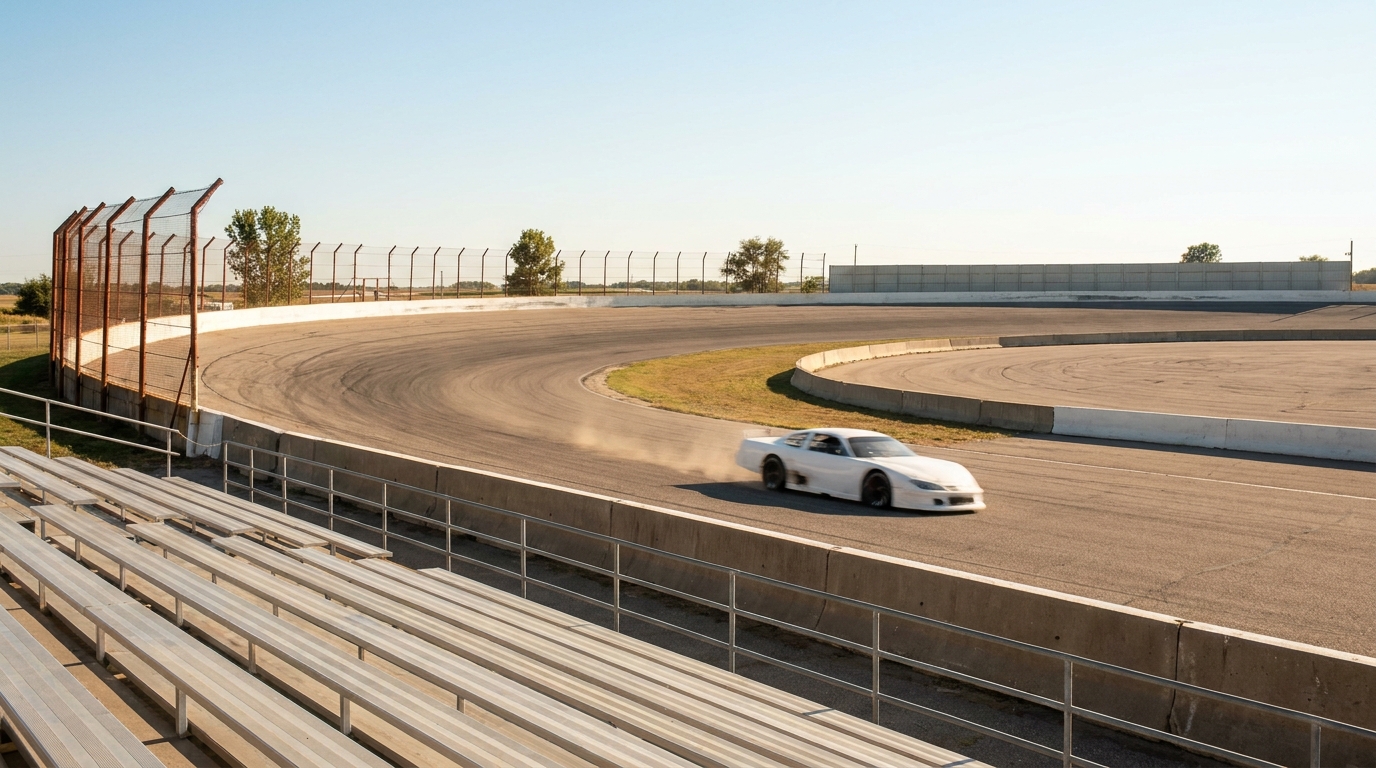
Joey Logano leads the field to green today at World Wide Technology Raceway, and the lap that put him there was not close. He ran 32.817 seconds at 137.124 mph, the only driver in the 36-car field to get under 33 seconds. Kyle Larson qualified second at 33.093 seconds and 135.980 mph. Ryan Blaney was third at 33.113 and 135.898.
It is the 35th Cup pole of Logano's career and his first at this track. He arrives ninth in the Chase standings with 2,063 points, level on points with Chase Elliott and 72 behind leader Denny Hamlin. Today is race 28 of the season and the second of the Chase.
One oval, two different ends
Gateway is 1.25 miles of asphalt and it is not a circle. The shape is closer to an egg. Turns one and two are banked 11 degrees through a tighter radius. Turns three and four are banked 9 degrees through a long, flat, sweeping arc. The straights carry 3 degrees.
Two degrees sounds like nothing written down. On the track it changes how the car is loaded. The steeper end lets a car lean on the banking and carry speed through the corner. The flat end does not. There the car has to slow more, turn for longer, and put the work on the right-side tires instead of on the angle of the pavement. NASCAR also moved this race to the short track package for 2026, which takes downforce away and hands even more of the job to mechanical grip.
So the field runs 240 laps and 300 miles, in stages of 45, 95 and 100, and every lap asks the car for two different things. That is the part worth borrowing.
Your truck runs an uneven oval too
A race team accepts uneven load because it lasts one afternoon. A truck lives with it for years, and nobody puts it on a schedule.
Think about the route you run most. If it is a loop that takes the same ramps in the same direction, the right side carries more of the cornering load than the left on every trip. Crowned roads add to it. Pavement is built to drain toward the shoulder, so the right side of the truck sits lower and works harder all day even in a straight line. The freight in the trailer is rarely centered either.
The truck does not say any of this in words. It says it in wear. Feathering on one steer and not the other. A right-side drive tire that loses its shoulder faster than its mate. Brakes that come apart with different lining left on each side. A tractor that tracks straight on one road and pulls on another.
What to check when the load always lands on one side
Measure both sides, not one. Tread depth on the left steer and on the right steer, written down, not eyeballed. If one is losing a 32nd faster than the other every month, that is a number, and a number gets fixed.
Check pressure cold and at the same hour every time. Heat on one side of the truck raises the pressure on that side, so an afternoon check flatters whichever tire just worked hardest.
Look at alignment when the wear is uneven side to side, not only when the truck pulls. A tractor can track perfectly straight and still scrub, because toe and camber can argue each other into a straight line while both tires pay for the argument.
Rotate on evidence, not on the calendar. Rotating hides the pattern that was about to tell you something. If the tires move before anyone writes down what each corner looked like, the only diagnosis you had is gone.
The race, and what to watch
Green flag is 3 p.m. ET on USA Network, with MRN on the radio. Watch what the leaders do at each end of the track. They will look planted through one and busy through the other, and the ones who manage the flat end without burning the right side off the car will still be there at lap 240.
It is the same job you have. The road only loads one side, and the win goes to whoever notices before the tire does.
Bring the truck in and we will measure both sides for you at The Truck Savers.