Oakville Built 350 Super Duty Trucks. None Are for Sale
Oakville built 350 Super Duty trucks in August. None reach a dealer: full production slipped to 2027.
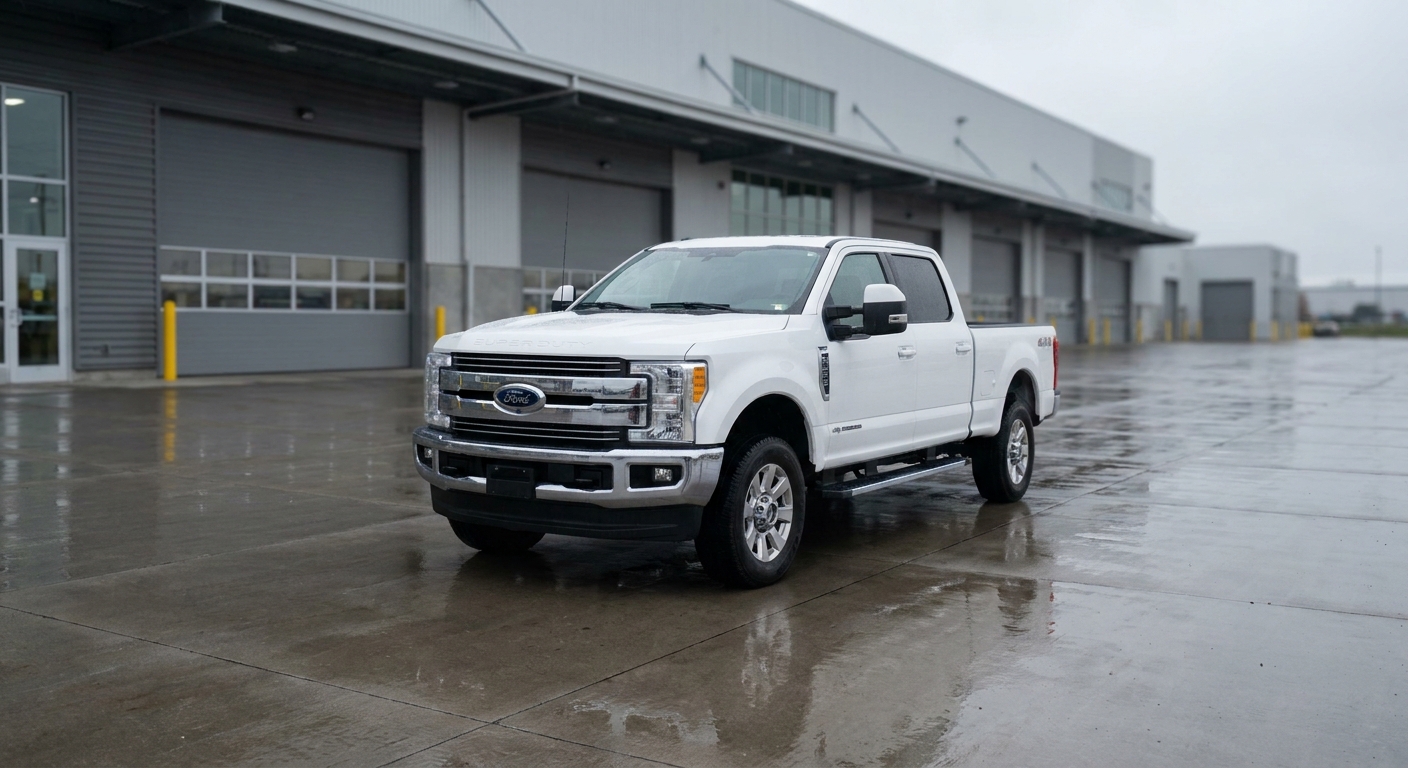
Oakville built 350 Super Duty trucks in August. You cannot buy a single one of them. They are pre-production units, and the difference between that number and a truck on a dealer lot is the whole story for anyone waiting on a work pickup right now.
Ford's Oakville Assembly plant in Ontario is being turned into the third factory that builds the Super Duty. The ramp has been steady and public: six units in April, 37 in May, 51 in June, 159 in July, and 350 in August. Doubling month over month reads like good news. It is good news for Ford. It is not yet inventory.
Pre-production is a rehearsal, not a run
A pre-production unit exists to prove the line, not to be sold. The plant is checking fit, torque, weld quality, paint, software and the thousand small things that only show up when a real truck moves down a real line. Those units get measured, torn down, corrected and, in most cases, never titled to a customer.
So when you read that a plant "doubled production," ask the only question that matters to your business: doubled toward what date? For Oakville, full-scale Super Duty production had been slated for the third quarter of this year. It has since been pushed back, most likely to the beginning of 2027, according to Jason Del Buono, Ford Council Vice Chairperson for Unifor 707, the local union chapter at the plant.
That slip is the operative fact. Everything else is a ramp curve.
What it means if you are waiting on a Super Duty
If you ordered a Super Duty and you are watching production headlines to guess your delivery date, Oakville is not your truck. Your unit is coming from the plants that were already building them. Oakville adds capacity later, and capacity that arrives in 2027 does not shorten a wait in 2026.
The practical move is the unglamorous one. Get your order status in writing from the dealer, with the build week if they have it, and stop treating national production news as a signal about your specific VIN. Fleet buyers who plan around a headline instead of an order confirmation end up renting a truck for three months at a rate that eats the discount they negotiated.
The second practical move is to plan for the truck you already own to last longer than you assumed. A delivery date that moves by two quarters turns "we will replace it soon" into another winter of service on a unit you were mentally done with. That changes what you should be spending on it. Deferring a set of brakes or a suspension inspection on a truck you thought was leaving makes sense; deferring them on a truck that now has to run through 2027 does not.
Why the ramp has been slow in the first place
Ford has been pushing hard on Super Duty output, partly to recover from a series of fires at its chief aluminum supplier last year. That is worth remembering the next time someone tells you a supply chain is fully healed. A single supplier event can shape production numbers for a model line more than a year later, and the recovery shows up as a slow climb, not a switch being flipped.
Oakville is a large bet. Ford has invested billions retooling it, and the plant is expected to reach an annual capacity of up to 100,000 units. Some of those trucks will be exported to and sold in the United States, not only in Canada. For an American buyer that is the meaningful part: this is not a Canada-only line, it is additional North American supply for a truck that has been hard to get.
Gas and diesel first, "multienergy" later
The Super Duty pickups built at Oakville will start as gas and diesel models. Ford has said it plans to use the retooled, fully flexible plant to build "multienergy" versions when the next-generation Super Duty arrives later this decade, which may include extended-range electric variants.
For an owner-operator or a small fleet, that is a shopping note for the future and nothing more today. The truck you can order right now is the same gas or diesel Super Duty it has been. Nothing about the Oakville news changes a spec, a tow rating or a maintenance interval on the unit in your driveway.
The checklist while you wait
- Ask for the build week, not the news. A dealer order confirmation beats any production headline as a predictor of your delivery.
- Re-plan maintenance for the truck you have. If replacement slid two quarters, the deferred work is no longer deferred.
- Check the front end before winter. A pickup carrying a plow, a service body or a gooseneck through another season needs its suspension and steering measured, not eyeballed.
- Do not sign a fleet plan against a rumored date. Full production at Oakville has already moved once.
- Watch the export note. Oakville volume is expected to reach the United States, so the added supply eventually matters to American buyers too.
A production number that doubles is a fact about a factory. A delivery date is a fact about your business. They are not the same fact, and this month they point in opposite directions.
If your current pickup has to run another year before its replacement shows up, a suspension and steering inspection is the cheapest way to find out what that year is going to cost. The Truck Savers checks over 100 points in Houston and Dallas at no charge.
Original source: Ford Authority