Nevoya Plans 25 Electric Trucks on I-10 for 2027
Nevoya plans 25 electric trucks on I-10 for 2027. Check service availability and charging access before dispatch.
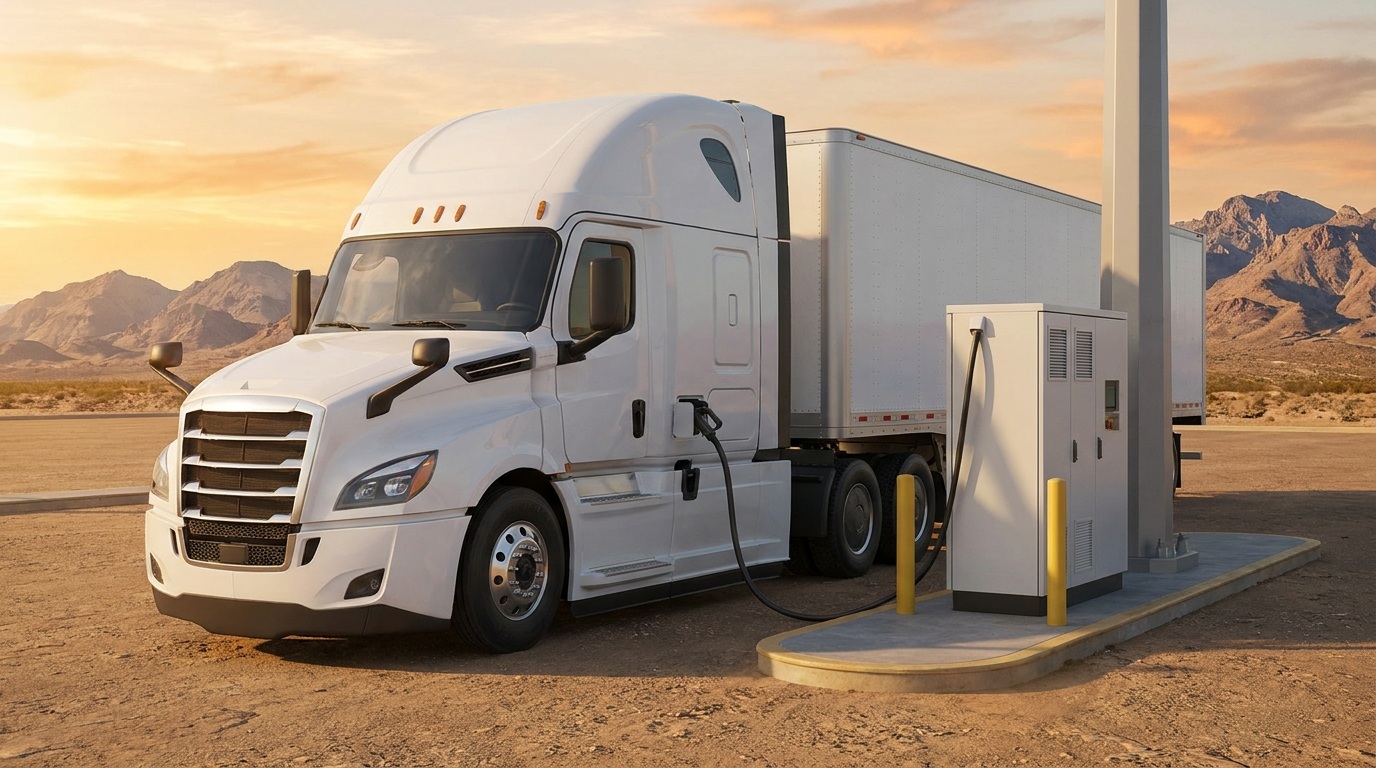
AI-generated editorial illustration; not a documentary photograph.
Nevoya announced a multiyear agreement with Meta on November 12 to support 25 battery-electric Class 8 trucks between San Bernardino, California, and Phoenix, Arizona. The important word for a carrier planning work today is expected: Nevoya anticipates operations beginning in 2027. The announcement is a development to follow, not confirmation that a new charging stop or freight service is ready for your next dispatch.
For an owner-operator, the useful question is how an announced corridor becomes a workable trip. A route on a map, an agreement with a large buyer and a functioning stop are different pieces of information. Keeping them separate helps a small business evaluate a proposal without treating a future project as an available service.
What Meta is buying
The agreement concerns environmental attribute certificates associated with electric freight service. Nevoya says Meta's purchase is not tied to transporting Meta's own goods. It also identifies expected annual activity of approximately four million freight miles and renewable-energy certificates matching the trucks' charging. These are announced arrangements and projections, not TSN measurements of vehicles operating on the lane.
That distinction matters when reading a commercial headline. An environmental purchase does not tell another carrier which loads it can book, how much a trip will cost or which equipment it should buy. Nor does a renewable-energy matching statement describe the electricity physically reaching a particular charger at a particular moment. Ask for the specific operational information relevant to your business before comparing this announcement with a service offer.
A corridor needs a usable operating plan
Nevoya expects the associated charging infrastructure to be available to other freight operators. The release does not provide a complete booking guide, tariffs or an opening schedule for individual stations. Do not insert an unverified stop into a working itinerary. A future public-access intention still needs the details that make access practical for the vehicle, driver and trailer involved.
Consider a hypothetical small fleet offered work on this lane. Its dispatcher would need the actual origin and destination, appointment requirements, loaded equipment and an agreed service plan. The fleet would also need to know what the charging provider is offering on the date of the trip. This is an editorial planning example, not a description of Nevoya's dispatch procedure or an invitation to book the announced trucks.
Questions to resolve before comparing offers
Begin with availability. Ask whether the proposal describes an operating service, a pilot, a reservation for a future period or an expression of interest. Record the date and who confirmed the answer. A general announcement cannot settle those differences. Keep any estimate clearly identified so that a later conversation does not accidentally turn it into a commitment.
Next, identify the boundaries of the offer. Does the quoted service include the transportation you need, or does it concern an environmental attribute purchased separately? Who provides the physical movement, and which obligations appear in the actual contract? These are purchasing questions, not a judgment on the arrangement announced by Nevoya. Different buyers can be paying for different things even when the same trucks appear in the story.
Finally, ask for the operating details from the people responsible for the service. Do not infer a truck's range, charging time, payload or compatibility from a picture. Do not transfer a specification from another vehicle into the proposal. A business comparison should use the equipment and conditions actually offered, with unresolved items left visibly unresolved.
Keep the cost comparison specific
A headline about a large partner does not provide the inputs for another company's budget. Ask which charges are included, which vary and how changes would be communicated. Compare equivalent work over the same period. Avoid filling missing information with a general claim that one technology must be cheaper in every application.
For example, a hypothetical worksheet can separate the transportation charge, additional agreed services and any environmental purchase. It can also list the information still missing. Such a worksheet organizes questions; it does not calculate a saving from this announcement. TSN has not received a route-specific quote, tested the planned service or independently verified the projected mileage.
A short verification list for the next conversation
- Identify whether the offer is available now or depends on a future launch.
- Distinguish physical transportation from environmental attributes.
- Obtain written confirmation of the actual service and its exclusions.
- Verify station access and vehicle requirements with the responsible provider.
- Use confirmed operating and commercial inputs when comparing alternatives.
- Retain the date, version and source of each important answer.
The project is a useful example of how long-term commitments can support an announced freight deployment. For another operator, it is a reason to investigate concrete options, not a reason to change tomorrow's route on an assumption. Keep maintenance decisions equally specific to the vehicle already doing the work. For steering, suspension and alignment concerns, The Truck Savers™ service and inspection information offers a separate starting point; it is not a charging reservation or an endorsement of this future service.
Original source: Nevoya announcement via PR Newswire, November 12, 2026.