Never Bleed Hot Truck Tires
Hot truck tires need context. A cold target and a reading after driving answer different maintenance questions.
A higher reading after driving is not a reason to bleed a truck tire down to its cold-pressure target. The important distinction is the condition of the tire when the reading is taken. Treating a warm measurement as though it were a cold one can turn an apparently tidy adjustment into the wrong maintenance decision.
USTMA's commercial truck and bus tire guide says not to reduce pressure in tires heated by driving. It also flags a different situation: a hot reading at or below the recommended cold pressure may indicate serious underinflation and needs prompt investigation by a tire professional. These are maintenance principles, not a new rule announced this week.
Choose the reference before interpreting the number
Michelin explains that the correct operating specification depends on the tire, actual load, configuration and application. A single pressure cannot be prescribed for every commercial truck. Use the relevant manufacturer load-and-inflation information and qualified technical guidance, rather than copying another vehicle's settings.
For this article, TSN proposes a practical way to organize that information: keep the approved specification separate from the readings collected during the day. Label one field “cold target” and another “observed reading.” Add a field for the conditions of the check. Those labels are an editorial recordkeeping suggestion, not a substitute for the tire manufacturer's service instructions.
A hypothetical handoff between driver and maintenance
Consider a fictional small fleet. A driver returns from a run and sends dispatch a message saying a tire is “above target.” The message contains a number but leaves out whether the vehicle has just been driven. A second person sees the message later and assumes it describes a cold check before departure. The problem begins with missing context, before anyone touches the valve.
A better handoff would identify the truck, the tire position, the time of the reading and the fact that the vehicle has just returned. It would name the reference being used and ask maintenance to evaluate the difference. The useful outcome is not an instant answer from a group chat. It is a service decision made with the relevant information in front of the person responsible.
This scenario is hypothetical. It is not a customer story, a measured fleet result or evidence that a particular truck has a defect. Its purpose is to show why a maintenance message needs more than a pressure number.
Make the record useful to the next person
A simple worksheet can contain four sections: equipment identification, the applicable specification, the observation and the follow-up. Under identification, distinguish the vehicle from the particular tire position. Under observation, write what was actually measured rather than a conclusion such as “fine” or “bad.” Under follow-up, identify who will review it and where the service result will be recorded.
Keep observations and explanations in separate columns. “Reading taken after the route” is an observation. “The tire must have too much air” is an interpretation that has not yet been established. This distinction makes the sheet easier to review and prevents a guess from becoming the accepted story as a message passes between people.
For an owner-operator, the same approach can fit in a short note. The objective is not paperwork for its own sake. It is to avoid having to reconstruct the circumstances when discussing the vehicle with a service provider later.
A service conversation, not a repair by message
Ask the provider which specification applies to the installed tires and operating load, what information is missing, and how the concern should be handled under the applicable service procedure. Do not turn this article into instructions for servicing a wheel assembly or returning a suspect tire to operation. Those decisions require the appropriate assessment and equipment.
When the work is complete, keep the provider's finding with the original observation. An invoice line and a driver's initial message answer different questions. Keeping both helps explain why a decision was made without rewriting the original report after the outcome is known.
The next check starts with a clear reference
The practical takeaway is to preserve the difference between a target, a measurement and a diagnosis. For maintenance coordination, review the services offered by The Truck Savers™. Describe the concern and the conditions of the check before choosing a service.
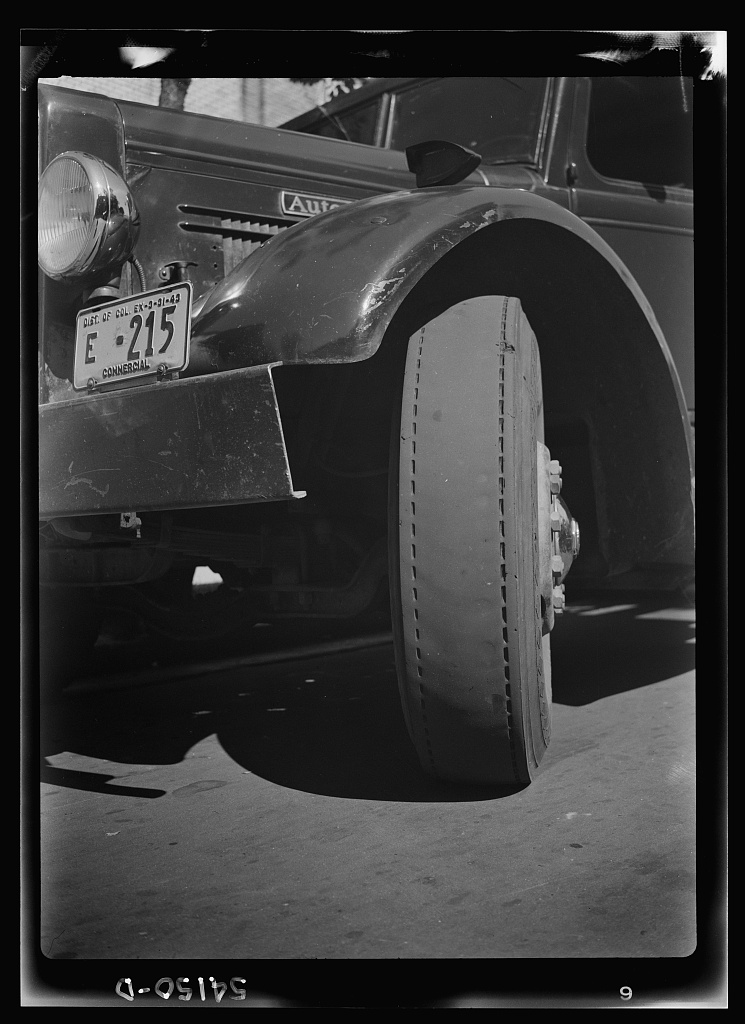
Illustrative archive photograph: commercial truck tire, Howard Liberman, October 1942. Library of Congress, FSA/OWI collection; public domain. This historical image does not demonstrate a current tire specification or service procedure.
Original sources: USTMA commercial tire care guide, page 14; Michelin commercial truck tire pressure guidance; Library of Congress photograph and rights.