NAZCA Regrooving: Verify the Market Before the Quote
NAZCA starts a service conversation, not a local booking. Verify the location, tire assessment and total visit time first.
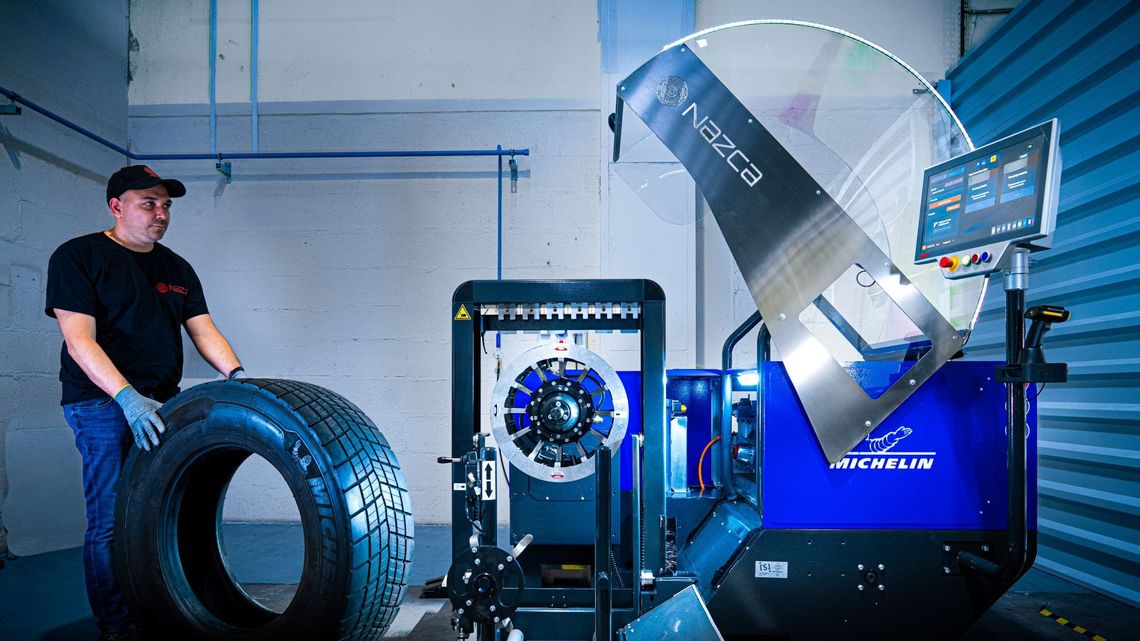
Official Michelin NAZCA press photograph, credited to Michelin, unmodified. The machine pictured is not proof of availability at a U.S. workshop.
Michelin’s NAZCA announcement is worth reading with a service-location question beside it: where can your fleet actually obtain the proposed work? The automated regrooving machine was announced on September 14,2026. Its introduction does not establish that a nearby U.S. tire business has the machine, accepts your particular tires or can quote the service for your next maintenance stop.
Michelin described approximately 20 machines in European pilot testing and a gradual rollout in different countries during 2027, subject to local conditions and regulatory frameworks. Its productivity figures are manufacturer claims about specific workshop conditions. In particular, less than three minutes of hands-on technician time should not be presented as a guaranteed complete customer turnaround time.
First identify the service being discussed
Regrooving and retreading belong to different service conversations. Ask a provider to name the work in its proposal, identify the tire application and explain the manufacturer information used when evaluating it. A broad phrase such as “extend tire life” does not tell your office which operation is included or which acceptance checks still have to occur.
Imagine a hypothetical carrier asking two workshops about a tire-life program. One discusses regrooving and the other prepares a retread proposal. The offers can contain similar words while covering different work. Before comparing totals, put the proposed operation beside each tire identification and leave any unresolved eligibility decision marked as pending.
Verify the market before making a detour
Contact the business that would perform the work. Ask whether the specific service is currently offered at that location, whether its equipment is in operation and whether it accepts the relevant tire brand, size and application. Record the response date. A manufacturer announcement can start the research, but a confirmed appointment requires information from the actual provider.
For a small operation with one truck due for service, an unnecessary detour has its own cost. Use your route and current schedule to compare the arrangements. This article does not announce a U.S. launch date, identify a participating workshop or claim that The Truck Savers™ owns NAZCA equipment. Those would require separate, current evidence.
Separate hands-on time from the whole visit
When a productivity claim uses technician minutes, ask what else is included in the quoted visit. Your office can request a plain sequence: arrival, acceptance review, proposed work, inspection and handover. The point is not to assign invented times to those stages. It is to learn which of them a supplier’s quoted time actually covers.
In a hypothetical comparison, one offer reserves a service window while another only estimates machine time after the tire is accepted. Calling both “three-minute service” would hide the difference. Keep the provider’s original wording in your notes and ask for clarification before committing the vehicle to a route that depends on the shorter interpretation.
Keep the tire’s identity attached to the offer
Use your existing tire records to identify the units being considered. Ask what identifying information the workshop requires before it can assess them and what evidence it will return afterward. Do not infer acceptance from the brand alone, from a sidewall photograph or from the general capability described for an automated machine.
A useful office record can contain tire identifier, vehicle or storage location, proposed operation, assessment status and the document supporting the final decision. These are suggested administrative fields, not Michelin’s acceptance criteria. They help prevent a price discussed for one group of tires from being applied to a different group without another provider review.
Ask how the result will be documented
Before approving work, agree which report, invoice or inspection record will be supplied and how it will identify the tires. Ask the provider to explain the result in language your maintenance team can use. A claim of automation is not a substitute for knowing what happened to the specific tire returned to your operation.
If a document is missing at handover, record that gap rather than inventing a completed check. Keep a contact responsible for resolving it. The practical benefit of a traceable record is that a different employee can follow the decision later without depending on the memory of the person who originally requested the quote.
Build your own comparison instead of copying a percentage
List the confirmed price, transport arrangement, accepted scope and expected availability for each proposal. Add only costs supported by your own records or current supplier terms. A manufacturer’s potential workshop-capacity improvement is not the same as a saving on your fleet’s invoice or a demonstrated increase in mileage for your tires.
For a clearly hypothetical evaluation, compare the total documented arrangement for the tires actually accepted, then record the outcome after service. Avoid assigning a fuel-saving percentage or extra miles that have not been established for your operation. Treat promotional figures as questions to test against applicable evidence, not as guaranteed inputs in a business budget.
Questions to take to the tire provider
- Is this service currently available at this exact location?
- Which operation and tires does the proposal cover?
- What remains subject to physical assessment?
- Does the timing describe machine work, technician time or the whole visit?
- Which document will identify the completed work and handover?
Start your search with Truck Savers Finder to research tire-service businesses, then verify capabilities directly. The directory does not certify machine ownership or tire eligibility. Keep the innovation in view while making the actual decision from a location-specific service offer, a tire-specific assessment and a documented result.
Original source: Michelin, September 14,2026 NAZCA announcement. Comparisons, scenarios and provider questions are TSN editorial analysis; manufacturer performance claims are not independent fleet results.