Montana Waiver: Check Cargo Before Dispatch
Montana waiver rules have specific conditions. Check the load, rest periods and documents before using the waiver.
Montana has extended temporary fuel-hauling flexibility to qualifying trips within the state. Executive Order 10-2026, issued September 25, adopts the federal hours-of-service waiver for gasoline and diesel transportation. For a dispatcher, the first question is whether the actual load and operation qualify. A truck that burns diesel does not qualify simply because its own fuel bill is high.
Start with the cargo and the operation
The Montana order applies to motor carriers and drivers transporting gasoline or diesel fuel in intrastate commerce. It does not extend the relief to other commodities. The federal waiver, issued September 16, covers qualifying interstate fuel transportation; Montana is applying its terms to covered operations inside its borders. Keep those two authorities separate when reviewing a trip rather than assuming one state's announcement changes every route.
Both documents identify December 16, 2026, as the current end date, subject to earlier termination, rescission or extension. That makes the permission temporary. A dispatch plan prepared now should include a later check of the official documents before relying on the same arrangement in another month. This article reflects the documents checked September 29; it is a planning summary, not a substitute for their complete conditions.
The driving ceiling comes with rest conditions
The documents set a maximum of 16 hours of driving in any 24-hour period. That ceiling includes driving under another applicable exception, waiver or declaration. It cannot be increased by stacking permissions. The number is a limit within this specific relief, not a recommended shift length and not a new general rule for every truck driver.
They also require at least six consecutive hours in the sleeper berth during each 24-hour period. If a sleeper berth is unavailable, the minimum is eight consecutive hours off duty. A driver who tells the carrier that immediate rest is needed must be allowed to find a suitable, safe resting location immediately and receive at least ten consecutive hours off duty before driving again.
Returning to normal operations has its own condition. A ten-hour break is required when a driver transitions out of the waiver and total time in covered operations, or covered and normal operations combined, equals or exceeds 14 hours. Dispatch should review the whole assignment, including what follows the fuel delivery, before promising the next pickup. Reading only the larger driving number leaves out the return-to-normal requirement.
Who cannot use the relief
The driver must hold a valid commercial driver's license with the necessary endorsements and must not have lost driving privileges or be disqualified. Carriers or drivers under an out-of-service order remain ineligible until the applicable conditions are met and the issuing jurisdiction rescinds the order in writing. Carriers with a conditional safety rating are also ineligible.
Montana requires drivers using its order to possess physical or digital copies of both the federal waiver and the state order, and to present them to enforcement personnel on request. Keeping a news headline on a phone is not the same thing as carrying the actual documents. Save complete, readable copies and make sure the driver can access them during the assignment.
A practical dispatch review
- Describe the load. Confirm that the shipment is gasoline or diesel fuel and identify whether the movement is interstate or intrastate. Resolve an uncertain classification with the carrier's compliance lead.
- Check eligibility. Review the driver's credentials and endorsements, the carrier's safety rating and any applicable out-of-service restrictions before assigning relief.
- Review the full timeline. Include previous driving, required rest, the planned delivery and the return to ordinary work. Do not evaluate only the loaded outbound leg.
- Carry the documents. Keep the current official waiver and Montana order available. Check for amendments before a later trip.
- Preserve the remaining checks. Verify applicable vehicle, cargo, route and safety requirements separately. The order does not replace them.
Other requirements remain in place, including hazardous-materials rules, vehicle size and weight limits, licensing, insurance and substance-testing requirements. The documents also impose additional reporting and recordkeeping duties; the checklist above is not an exhaustive compliance list. Read both originals before using the relief.
The preventive lesson is to verify the permission before building a delivery promise around it. For practical preventive-maintenance resources, visit The Truck Savers™.
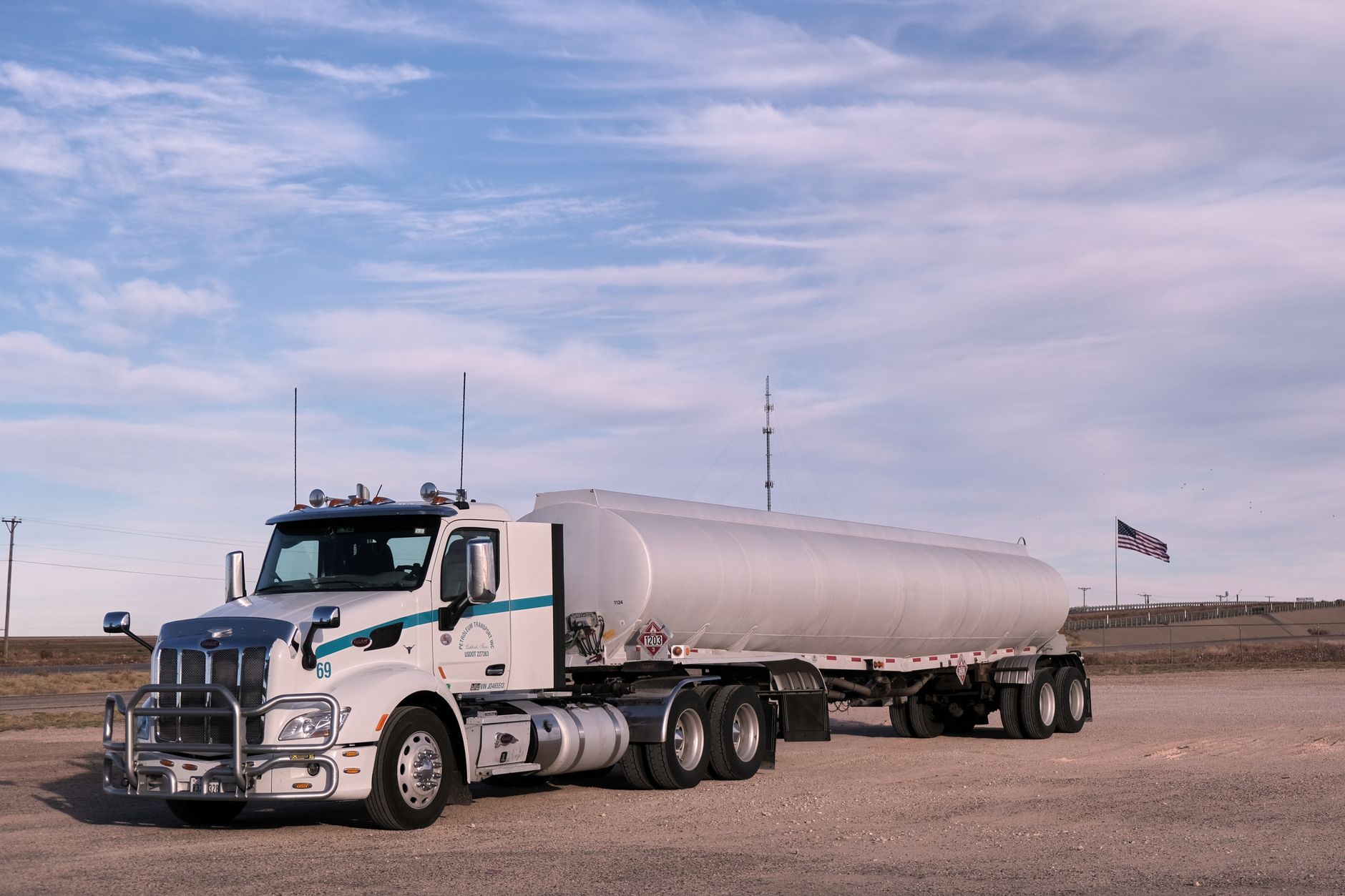
Illustrative stock photo: Alexander White / Pexels, photographed in Texas. The pictured truck is not identified as a Montana waiver participant.
Original sources
Montana Executive Order 10-2026; FMCSA fuel transportation waiver, September 16, 2026.