Mexico Built 16,389 Trucks in August, Double Last Year
Production doubled year over year. Three plants made 96.7% of it, and the Monterrey plant is not in the count yet.
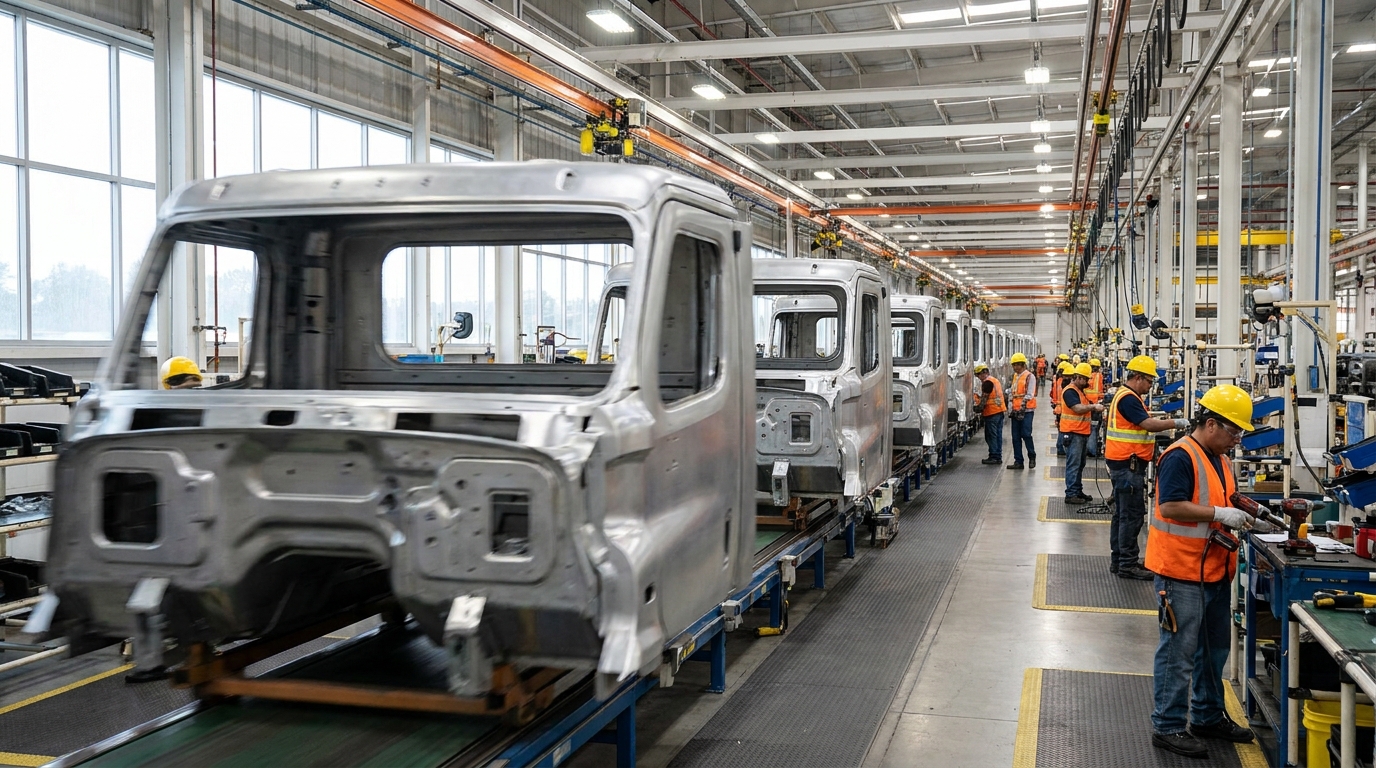
If you have been waiting on a truck, the plants finally caught up. In August they built twice as many as a year ago.
Mexico produced 16,389 commercial vehicles in August, up 100.2% year over year, according to data the national statistics institute released on September 9. Against July it was up 24.9%, from 13,117.
The number that says more than the month
One strong month is a month. This one came with something else: production for January through August reached 101,940 vehicles, against 99,311 in the same stretch last year.
That is only 2.6% higher. But it is the first month of 2026 in which the year-to-date total passed 2025. Everything before August was catching up. August is where the year turned positive.
Three plants built almost all of it
The concentration is worth seeing laid out, because it explains where your next truck and your next part actually come from:
Freightliner built 10,240 trucks at its Saltillo and Santiago Tianguistenco plants, up 133.1% from 4,393. Its exports climbed 151.4%, to 10,073.
International built 4,525 at Escobedo, up 100.8% from 2,253.
Kenworth built 1,087 at Mexicali, up 8.5% from 1,002.
Together: 15,852 of 16,389 units, or 96.7%. Three builders account for essentially all heavy-duty production in the country.
Where those trucks go
Exports totaled 14,130 vehicles in August, up 116.7% year over year. More than 90% of Mexican truck and bus exports head to the United States every month.
Put those two facts next to each other and the shape is clear: this is not a Mexican domestic build-out. It is North American capacity that happens to sit south of the border, and it moves with United States freight demand.
The plant that is not in these numbers yet
One detail matters for anyone running out of Monterrey. Volvo Group is ramping up production of Volvo- and Mack-branded trucks at its Monterrey plant, and that output has not shown up in the official figures yet.
Volvo is the last major North American truck maker to start building vehicles in Mexico, where it already builds buses. The company expects Monterrey to give it flexibility during freight peaks that its existing capacity cannot cover.
So the 16,389 is a floor, not a ceiling. The number gets bigger when Monterrey starts counting.
The United States side is moving too
Mexico is not the whole picture. Two things are happening north of the border at the same time, and both come from the same demand.
International is considering adding a second shift at its San Antonio assembly plant. A second shift is not a press release about the future — it is a decision a plant makes when the first shift cannot keep up with orders already booked.
Daimler Truck North America announced on August 6 that it plans to start building its largest United States manufacturing site by the end of 2026.
Read those two alongside a Mexican plant network that just doubled, and the message is the same from three directions: the builders are betting the freight rebound holds long enough to be worth the capacity.
That bet is theirs, not yours. What it tells an operator is narrower and more useful: for the next few years there will be more new equipment on the road than there was, and equipment coming off warranty is what fills a shop.
What this changes on your side
Production numbers feel far away from a shop floor. Two ways they land:
Parts follow assembly. When a plant doubles output, the supply chain around it thickens — more suppliers, more inventory, shorter waits on the components that plant consumes. That is good news for anyone maintaining those same brands nearby.
A newer fleet on the road is still a used fleet tomorrow. Trucks built in this wave will be in the resale market in a few years. If you buy used, the units coming out of these plants right now are what you will be shopping for.
What none of this tells you is whether it is a good time to buy. Production is capacity, not price, and the two do not move in step.
The maintenance side does not change
A newer truck buys you fewer surprises, not zero. The items that put units out of service do not care about model year: brakes, tires, lamps and alignment. A truck that came off the line last month still goes out of adjustment on the same schedule as one from 2019.
We do heavy truck inspection and repair in Houston, Dallas and Monterrey: thetrucksavers.com.
Original source: Transport Topics, Mexican Class 8 truck production accelerates further