Mexican Border-Zone Carriers Fall 4.3% Under Cabotage Push
Mexican border-zone carriers fell 4.3% as U.S. agencies tightened cabotage enforcement. See what cross-border fleets should verify before dispatch.
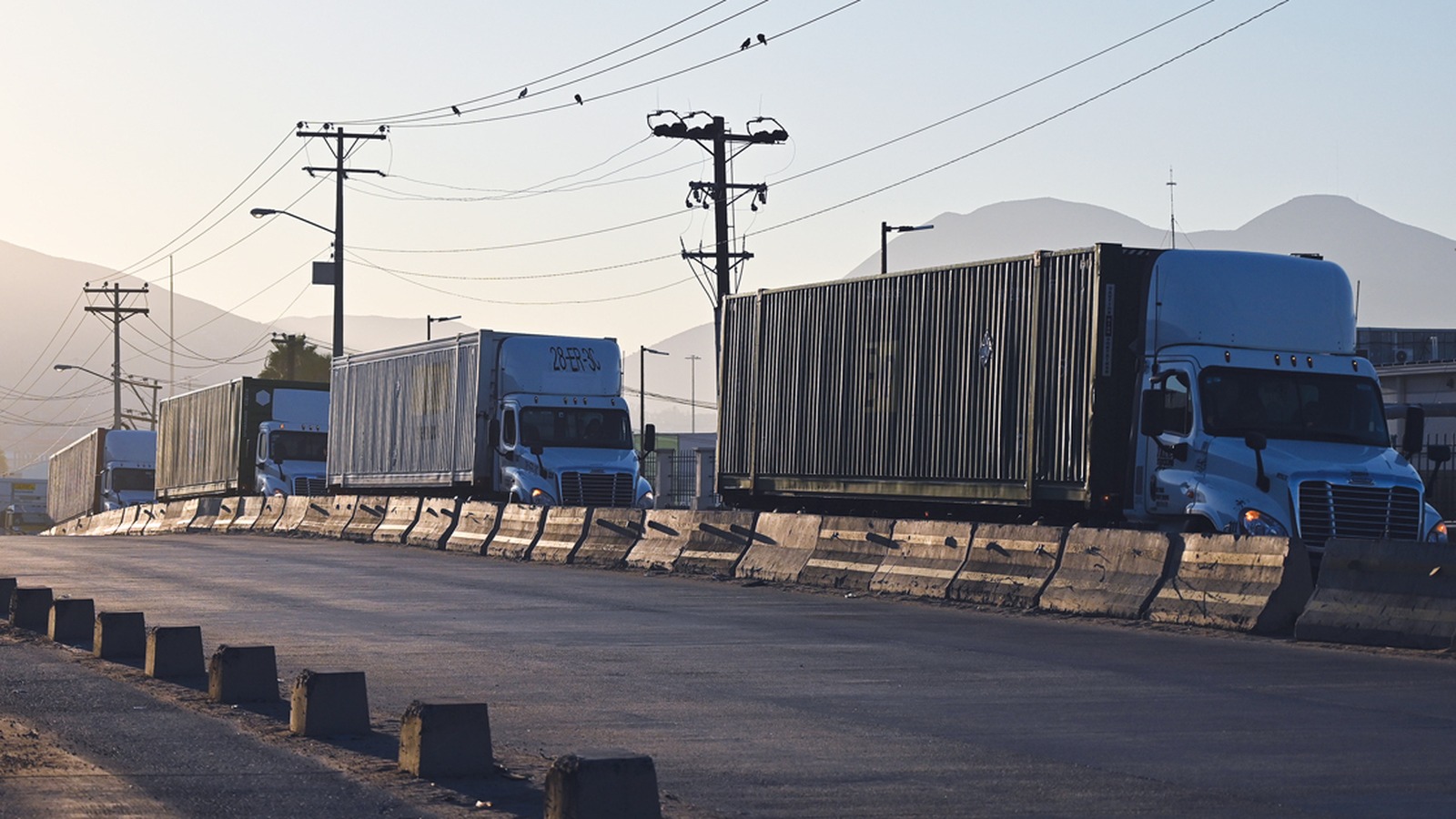
The number of Mexican-domiciled trucking companies authorized in U.S. commercial border zones has declined as federal agencies tighten enforcement of cabotage restrictions. Federal operating-authority figures listed 5,232 active carriers on May 15, 2026, compared with 5,467 on December 26, 2025—a decrease of 235 carriers, or 4.3%.
This matters to cross-border drivers, drayage operators, dispatchers, brokers and small fleets on both sides of the border. Fewer compliant border-zone carriers can make handoffs harder at busy crossings, but the change does not automatically create new long-haul freight for U.S. owner-operators. The practical issue is whether every movement, document and driver assignment fits the authority being used before the truck reaches the port of entry.
What changed in border-zone enforcement?
Transportation and border agencies are sharing more inspection information. A driver arriving from Mexico may now face additional scrutiny when prior records indicate an illegal domestic haul inside the United States. A confirmed cabotage violation can jeopardize the driver's visa and future ability to cross.
Cabotage is different from a lawful international delivery. A Mexican carrier may bring cross-border freight to an authorized destination under the proper operating authority. The problem begins when a foreign driver remains in the United States to move a separate domestic load between two U.S. points without legal authorization.
The latest count is also lower than the 5,633 carriers listed at the end of 2024. Enforcement of English-language proficiency requirements has increased at the same time. Those are related compliance pressures, but they are not the same rule: one concerns the legality of the freight movement, while the other concerns a commercial driver's ability to communicate and understand road signs and official instructions.
Who is affected right now?
Mexican border-zone carriers and their drivers face the most direct exposure. U.S. carriers, customs brokers, warehouses and shippers can also feel the effect if a planned handoff loses an authorized driver or if a trailer misses its crossing appointment. Small fleets are especially vulnerable because one rejected movement can create detention, empty miles, rescheduling and customer-service problems.
There is no new blanket ban on Mexican carriers, and the report did not announce a universal start date for a new cabotage rule. Cabotage restrictions already existed; the current development is stronger information sharing and enforcement. Border authorities also have not published a complete national total of drivers denied entry, so fleets should not plan around unverified estimates circulating online.
How could costs, service and safety change?
The 4.3% decline does not establish a specific rate increase or a guaranteed capacity shortage. Costs depend on the crossing, appointment availability, cargo, lane and the carriers involved. The most likely near-term financial risks are missed appointments, extra yard time, detention, trailer repositioning and an emergency search for a compliant substitute.
Stronger screening can also support fair competition by separating lawful cross-border drayage from unauthorized domestic hauling. For safety and service, clear dispatch instructions matter: the driver, broker and customer should all understand where the international movement ends, who takes the next leg and which authority covers it.
What the road hero should check
- Confirm that the carrier's operating authority covers the exact cross-border and commercial-zone movement.
- Keep the bill of lading, customs documents, pickup and delivery addresses, dispatch instructions and trailer handoff record together.
- Do not accept a domestic U.S.-to-U.S. load under a cross-border assignment without qualified legal and compliance review.
- Check the driver's visa, CDL, medical card and required English-language communication readiness before dispatch.
- Review inspection history and correct open defects before approaching the port of entry.
- Inspect tires, lights, brakes, air lines, fifth wheel, mirrors and load securement so an avoidable equipment defect does not complicate the crossing.
- Build a realistic buffer for inspection, transfer and appointment changes; notify the customer before a delay becomes a missed delivery.
- Record who approved any change in destination, trailer or final-mile carrier.
What should an owner-operator or small fleet do?
Treat each border move as a chain of documented handoffs. Dispatch should be able to explain the international origin, the authorized destination, the carrier responsible for each leg and the reason for any change. If a broker asks for a move that looks like domestic cabotage, pause and obtain qualified compliance advice instead of relying on a text message or verbal assurance.
Use the decline as a planning signal, not proof that every border lane is short on trucks. Watch crossing times, rejected tenders, detention and transfer failures by location. Those operating records will show whether the enforcement change is affecting your lanes before a general market headline does.
For practical operator resources and service support on the road, visit Truck Savers.
One bad dispatch decision can cost more than one load. Verify the authority, document the handoff and fix the truck before the crossing. The road does not forgive a lack of prevention.
Original source
Cabotage enforcement cuts Mexican carriers in border zones, published July 17, 2026.