Maverick Hybrid Sales Rise: Check Your Own Work Costs
Maverick Hybrid sales rose 59.6% in the quarter. Compare the actual work and quoted costs before choosing a support pickup.
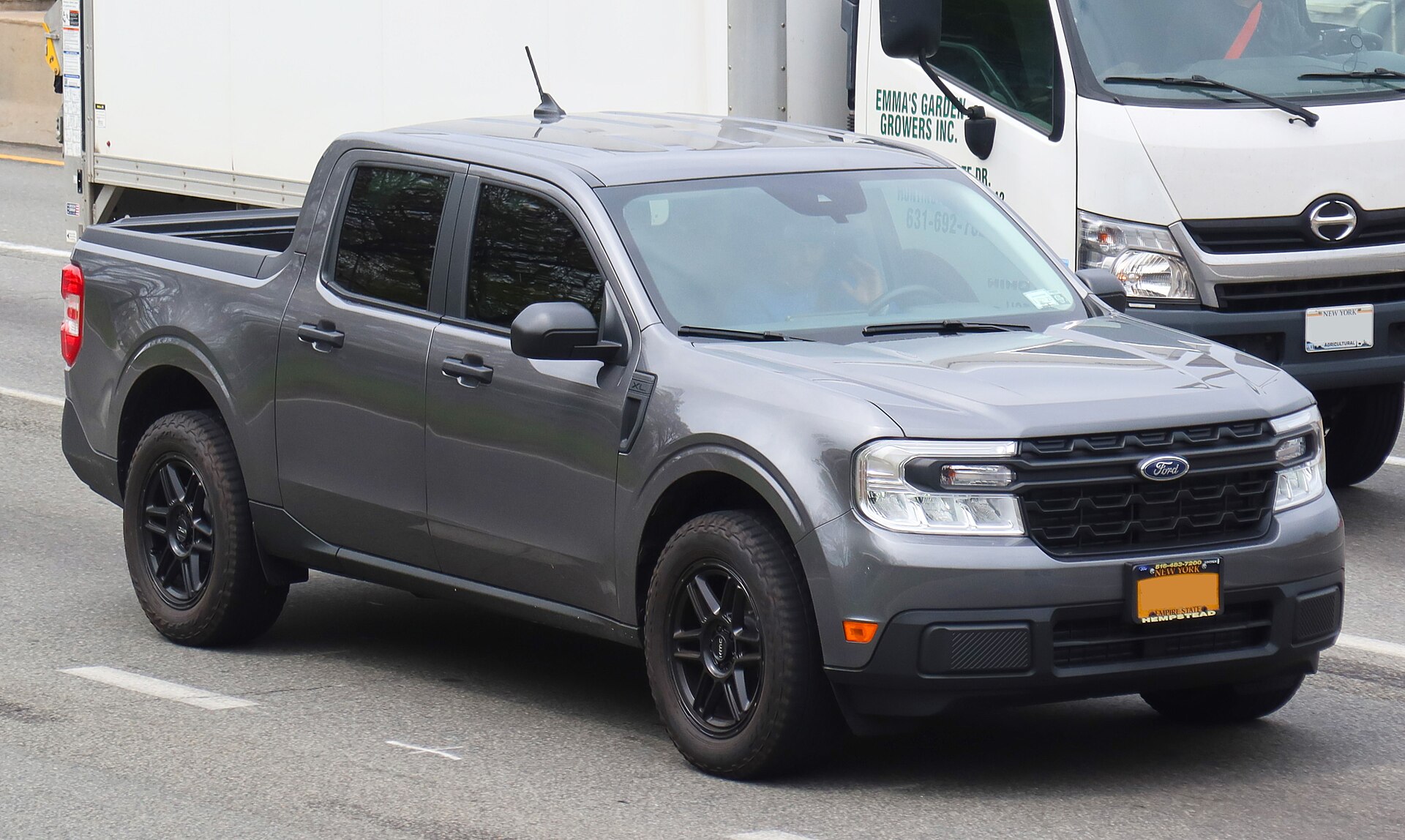
Archive photograph: 2022 Ford Maverick XL, Kevauto, May 4, 2022; illustrative model image, not a 2026 sales vehicle or proof of its powertrain. Previously resized rendition; no new content edits. Kevauto · CC BY-SA 4.0.

Ford reports that Maverick Hybrid sales reached 27,793 pickups in the third quarter of 2026, a 59.6% increase from a year earlier. That is a useful market signal for a business comparing compact support vehicles. It is not a fuel-cost calculation for a service route. Before ordering a pickup because its powertrain is popular, separate the manufacturer's sales result from the work your own vehicle must perform.
Keep the reporting period attached
The figures come from Ford's October 2 sales announcement, reviewed here on October 24. Ford also reports 74,300 Maverick Hybrid sales through September. The quarterly figure covers one three-month period; the year-to-date figure covers nine months. Neither number describes the annual operating cost of the truck parked outside your shop. This is a reading of an existing sales release, not a new vehicle launch or a new report issued today.
For a small fleet, the practical value is a better starting question: would this type of pickup fit a clearly defined support job? A sales increase can prompt that investigation. It cannot finish it. Write down the job before comparing a hybrid with another powertrain, and ask for the exact configuration being offered rather than treating every Maverick as interchangeable.
Build a work record before a shopping list
Choose a representative set of actual workdays. Record the trips your current support vehicle makes, the people it carries and the equipment it takes along. Separate scheduled parts runs from unexpected calls. Note which assignments involve a trailer, which require access to a particular site and which could be completed without hauling equipment at all. Use your own records; a generic description of city driving can hide a very different working day.
The output should be a short assignment sheet, not a collection of attractive features. For example, a hypothetical shop might need one vehicle for a morning parts pickup, two local customer visits and an afternoon supply run. That example does not establish suitability for any truck. It identifies the tasks a proposed vehicle must cover before price or powertrain becomes the deciding factor.
Check the actual unit against the assignment
Ask the seller to identify the model year, powertrain, drive configuration and factory equipment on the quoted vehicle. Match its applicable manufacturer documents to that unit. If the assignment includes towing or carrying substantial equipment, have those requirements checked against the specific ratings and the loaded combination. A broad sales release does not contain the information needed to approve a particular work load.
Keep unresolved questions visible in the comparison. Configuration confirmation required is more useful than copying a maximum from another model year's brochure. Do not assume a badge, a receiver visible in a photograph or a feature on a demonstration vehicle proves what is installed on the truck being quoted. The photograph accompanying this article is an archive Maverick, not documentation of a current sales unit.
Make the cost comparison reproducible
Use the same work assignment and ownership period for every alternative. Put the actual quoted purchase or lease terms in one column, the expected work use in another, and the evidence supporting each operating assumption beside it. Record where the estimate came from and what remains uncertain. This keeps an appealing fuel assumption from quietly substituting for the entire vehicle decision.
Here is an arithmetic illustration, not a vehicle-price or savings claim: if one alternative costs $100 more per month and a documented operating comparison saves $60 per month, the difference remains $40 per month before other costs. Over twelve months that is $480. Replace all inputs with your own verified figures. Ford's sales growth does not supply any of them, and this example predicts no result for a Maverick.
Use a checklist that survives the test drive
- Confirm the exact vehicle and the work it must perform.
- Document the applicable capacity and equipment checks.
- Compare quotes over the same period and with the same scope.
- Identify the source of every operating-cost assumption.
- Keep unanswered questions separate from confirmed facts.
The useful conclusion is conditional: investigate whether the vehicle fits the job, then evaluate the documented cost. Popularity is a reason to look more closely, not proof that a support pickup will earn its keep. A clear assignment and a comparable quote will still be useful after the quarterly headline has passed.
Read more operator-focused Truck Savers News reporting.
Original source: Ford, October 2, 2026.