Losing the Mudflaps Saves $70 a Year
A CFD study put drag at 0.38 with mudflaps and 0.37 without. On a Hilux at 62 mph that is about $70 a year.
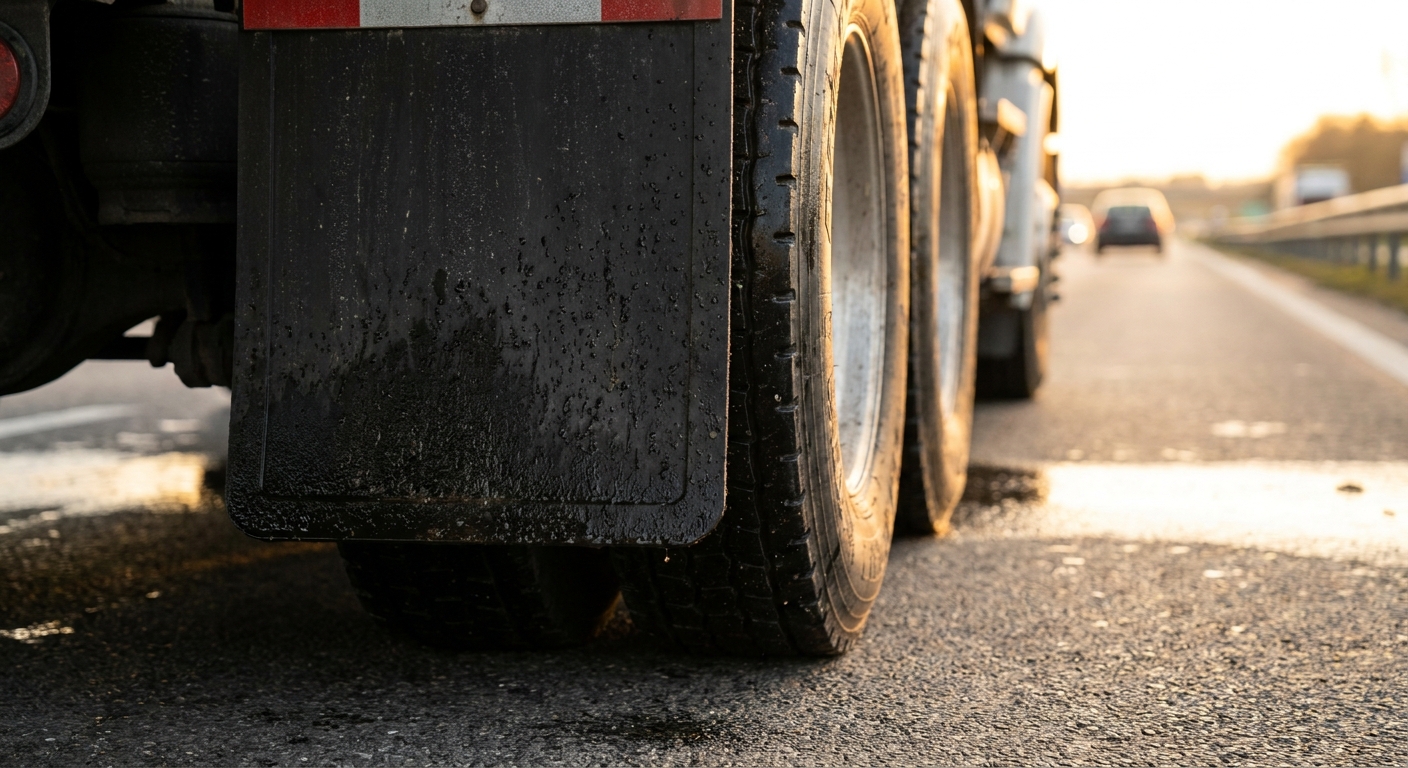
Every few months somebody in a truck stop says mud flaps are killing your fuel mileage. Now there is a number to put against it.
Premier Aerodynamics ran the comparison and published it. Drag coefficient with mud flaps: 0.38. Without them: 0.37.
What that difference is worth
At 100 kilometers per hour, roughly 62 miles per hour, that one hundredth of drag works out to about seventy dollars a year in fuel, assuming most of the driving happens at highway speed.
Seventy dollars. Not seven hundred, not seven thousand. For the whole year.
That is the number the argument has been missing, and it settles it in a direction most people do not expect: the flaps cost you something, and what they cost you is small.
Why a hundredth of drag is so hard to feel
Drag coefficient is not a number that behaves the way people expect. Going from 0.37 to 0.38 is under three percent more drag, and drag is only one of the forces slowing a vehicle down.
At town speeds it barely participates at all: rolling resistance and stop-and-go dominate. Aerodynamic drag climbs with the square of speed, which is why the study specified 100 kilometers per hour and why the estimate assumes highway driving. Change that assumption and the seventy dollars shrinks.
So the honest way to read it is conditional: seventy dollars a year if you drive mostly highway, on that vehicle, in that model.
Read the test before you use it
Three things about how this was measured matter more than the result:
It is a simulation, not a road test. The work was done in OpenFOAM, an open-source computational fluid dynamics program. Nobody strapped a fuel meter to a truck and drove it two ways.
It is not a semi. The vehicle modeled was an eighth-generation Toyota Hilux — a midsize pickup. A tractor-trailer moves a different volume of air, at a different height, with a gap behind the cab that changes everything.
Something else mattered more. The analysis says the flaps' effect was fairly small compared to the Hilux's tall ride height, which disturbed far more air around the wheels than the flaps did.
That last one is the useful part. If ride height beat mud flaps on a pickup, then on your truck the flaps are not where your fuel is going either.
Do not carry this number to a semi
Here is where an honest article has to stop.
You cannot take seventy dollars a year from a simulated Hilux and say a Class 8 truck saves the same, or ten times that, or any other figure. A heavy truck has more frontal area, more wheels, more turbulence behind the cab and a trailer that dominates the whole picture.
What transfers is not the dollar amount. What transfers is the order of magnitude of the question: mud flaps are a small aerodynamic item, and they were losing to ride height on a vehicle far smaller than yours.
What the flaps are actually for
The fuel conversation skips the reason they exist.
Mud flaps keep rocks, water and road debris from leaving your tires at speed and hitting whatever is behind you — another truck's windshield, a car, a motorcycle. That is not a comfort feature and it is not decoration.
They also keep spray off your own trailer, your lights and your plates, which matters at an inspection and matters more in the rain.
And there are rules about them. They vary by where you operate, so check the ones that apply to your lanes rather than to somebody's post. We did not open those regulations for this article and we are not going to summarize them from memory.
Where your fuel actually goes
If seventy dollars a year is what a whole aerodynamic component is worth on a pickup, it is worth asking what the bigger items are on a working truck.
Tire pressure. Alignment. Dragging brakes. A wheel that is not rolling straight. Those do not show up in a magazine test because they are maintenance, not equipment, and they cost real money every single mile.
A truck that is out of alignment is paying more than seventy dollars a year, and it is paying it in tires as well as fuel.
We do alignment, suspension and tire work in Houston, Dallas and Monterrey: thetrucksavers.com.
Original source: Do Mudflaps Tank Your Truck's MPG? — The Drive