Laredo Border Conference: Plan for October 25–28
Laredo's border conference starts October 25. Match the visit to a business question before paying for travel or registration.
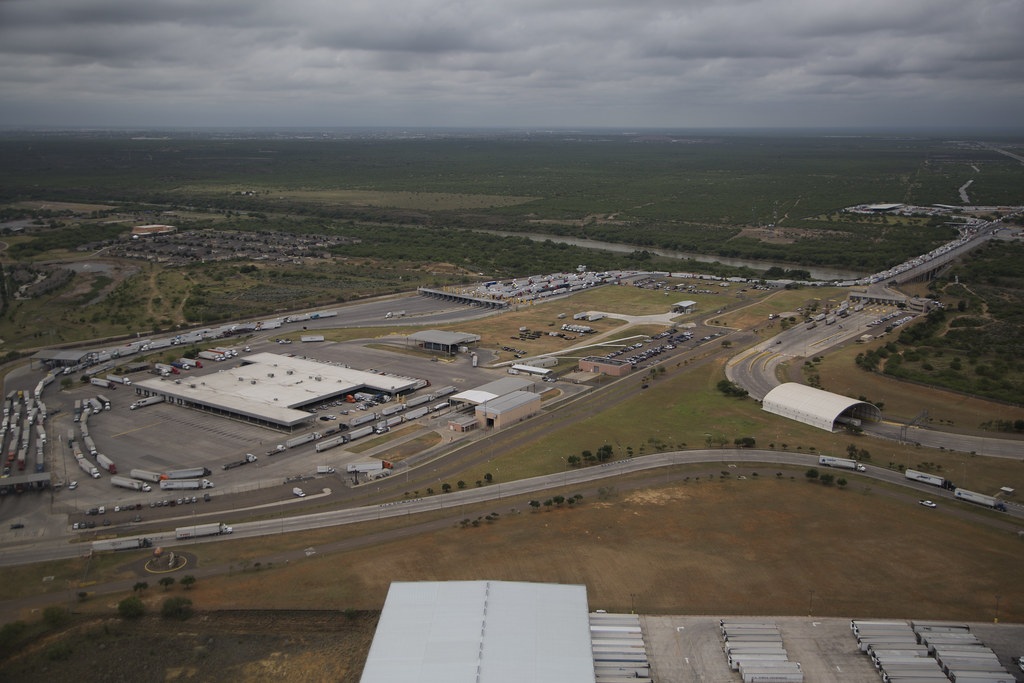
Archive photo: World Trade Crossing, April 2017, Donna Burton / U.S. Customs and Border Protection, via Wikimedia Commons, U.S. public domain. Not the conference venue or a current queue.

The Southern Border Conference, Día de los Brokers, is scheduled for October 25–28, 2026, in Laredo, hosted by the Laredo Licensed U.S. Customs Brokers Association. The organizer lists the LISD Performing Arts Complex, 2400 San Bernardo Avenue, and advertises 11 CCS/LCB continuing-education points for licensed customs brokers. For a freight business considering attendance, the first planning decision is what useful question the trip should answer.
Match the visitor to the question
A company owner, dispatcher and compliance specialist can arrive with different objectives. Decide which role fits the issue before choosing who travels. An unresolved workflow question might need the person responsible for that process; a commercial introduction might need someone authorized to discuss a proposal. Sending a driver simply because the event is in a freight city does not establish a useful purpose.
Write the intended outcome in one sentence. For example: identify the appropriate contact for reviewing our receiving-document handoff. That is more actionable than a general ambition to improve cross-border operations. It also gives the person staying behind a way to evaluate the trip without relying on the number of business cards collected or the length of the agenda.
Prepare an example without customer data
Bring a one-page outline of the process you want to discuss. Describe the steps, the unresolved question and the role that owns the next decision. Remove customer names, identification numbers, live shipment references and other sensitive details from material intended for casual discussion. A hypothetical example can explain the difficulty without circulating a customer's commercial information among unfamiliar attendees.
Consider an illustrative question: if release instructions change after dispatch, who confirms the replacement and how does the carrier know which version is current? The conference conversation could identify a suitable follow-up contact. It should not be treated as an instruction for a real load or as shipment-specific customs advice. Take the actual documentation to the responsible professionals through the proper channel afterward.
Confirm what the registration buys
Before paying, ask the organizer which registration category applies, what it includes, whether space remains and what conditions govern changes. Confirm the dates and location of the activities you intend to attend. Do not assume that a general registration includes accommodation, transport or every associated activity. Use the organizer's current written confirmation rather than a third party's recollection of a previous edition.
The education-point description addresses licensed customs brokers. A trucking business should not read it as a driver qualification, CDL training credit or a credential automatically granted to every visitor. If those points are the reason for attending, ask the organizer to confirm eligibility, attendance requirements and the documentation that the relevant participant will need to retain. Avoid promising credit before those conditions are established.
Budget the trip and the work coverage
Build an internal estimate using current quotations for registration, travel, lodging and meals, plus the cost of covering the visitor's ordinary duties. This article supplies no hotel rate or attendance-cost estimate. Compare the expected expense with a defined business purpose; a conference announcement alone cannot establish that new customers, lower operating costs or enough additional revenue will follow.
Coverage matters even for a short visit. Assign the work that would otherwise remain with the attendee, identify who can make decisions in their absence and set a contact plan. Do not turn an educational trip into an informal loading appointment. Attendance and a shipment commitment are separate arrangements, and each needs its own confirmation from the parties actually responsible.
Decide whether attendance adds something specific
Sometimes a scheduled call with an existing provider can answer the same question at lower internal cost. In other cases, meeting the appropriate roles in person may be useful. Compare those alternatives against the question you wrote down. The aim is a reasoned attendance decision, not a claim that either travel or staying home is always the better commercial choice.
Use six checks before committing: a written objective; confirmation of registration eligibility; coverage for routine work; a suitably redacted example; a target contact role; and a date to review the follow-up. Mark missing answers as open. A checklist is useful precisely because it lets the team postpone a poorly defined decision instead of disguising uncertainty as a complete plan.
After the visit, record what was answered, which contact agreed to a next step and what remains unresolved. Distinguish a conversation from a signed service agreement, a customs approval or a sale. That short review gives the business a factual outcome without inflating introductions into revenue or treating educational discussion as an instruction for its next border movement.
For other dates worth checking, browse TSN's event coverage and verify each event with its organizer before making arrangements.
Original source: Southern Border Conference organizer, checked October 23, 2026. The trip-planning questions are original TSN editorial guidance.