Kodiak Produce Pilot Keeps a Safety Driver
Kodiak starts a produce pilot. A safety driver stays aboard; compare service scope before assuming operating benefits.
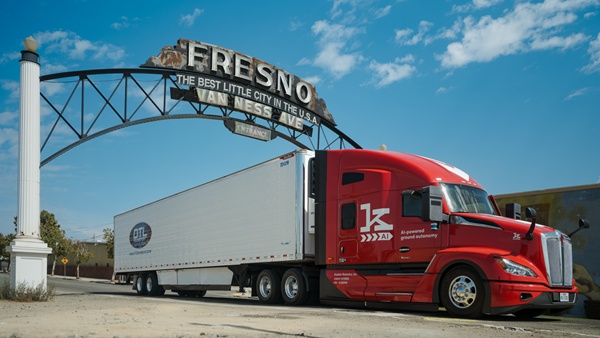
A produce shipment can use autonomous driving technology and still have a human behind the wheel. Kodiak AI says its new California pilot with DTL Transport does exactly that. Announced September 24, the project began September 22 and carries perishables between Fresno and a Los Angeles distribution center. The roughly 225-mile route primarily uses CA-99 and I-5. A safety driver remains in the cab during the initial work.
That distinction matters when reading the announcement. It describes a specific pilot, not an unrestricted driverless freight service. Kodiak says the companies will examine potential effects on transit time, shipping costs and produce shelf life. The release does not provide measured improvements for those outcomes. Treat them as questions the project may help answer, rather than results available for your next freight quote.
Turn a technology headline into an operating question
For a small carrier or shipper, the useful response is to examine the job surrounding the driving. A shipment still has a pickup appointment, cargo instructions, a delivery location and someone responsible for communicating changes. Before comparing a new service with an existing one, write down the actual assignment. Otherwise, an appealing description can hide differences in what each provider is being asked to do.
Start with one lane you already understand. Record the origin and destination, the expected appointment windows and the type of equipment requested by the customer. Separate confirmed requirements from assumptions. Do not fill an unknown temperature, weight or handling instruction with a number copied from a different load. Get the shipment's instructions from the party authorized to provide them, and preserve their date and version.
Compare equivalent service, not unlike promises
Build a short comparison sheet with three columns: existing service, proposed service and unanswered questions. Use the same load description in both service columns. If one quotation includes a particular activity and the other does not explain it, mark the gap. An incomplete answer is a reason to ask a precise question; it is not evidence that either operator is automatically cheaper or better.
For example, ask who handles a changed appointment, how a delay is communicated and which contact can make a decision outside normal office hours. These are proposed evaluation questions from TSN, not descriptions of the Kodiak-DTL agreement. The public announcement does not disclose all of that agreement's operating procedures. A reader should not infer confidential responsibilities from the presence of a particular technology on the truck.
Keep the evidence behind the comparison
A useful trial record has a planned event, the actual event and the reason for a difference when known. For your own comparison, that might mean recording the planned pickup window, the documented arrival and when the shipment was released. Use the same definitions for both services. If one record measures arrival at a gate and another measures loading completion, the resulting comparison answers the wrong question.
Keep cost categories separate as well. Identify which charges are included in the quotation and which depend on additional conditions. Avoid announcing savings from a headline rate while leaving those conditions blank. This article is not offering a pricing model for either company. It is suggesting a way to make your own comparison readable and auditable before relying on a claimed financial advantage.
A dispatch checklist before committing
- Confirm the exact lane, equipment and shipment instructions.
- Obtain the service scope and any exclusions in writing.
- Identify the operational contact and escalation route.
- Define the events used to measure service performance.
- Keep unknown costs and conditions visibly unresolved.
- Review the evidence before making a broader commitment.
Do not let the demonstration of one lane become an assumption about another. Different customer instructions, facilities or appointment windows may require different arrangements. Ask the proposed provider to confirm the assignment you actually need. Likewise, a public milestone is not a substitute for checking the documents and qualifications relevant to the service you are buying through your normal procurement process.
What an operator can do today
Take one recent completed shipment and test whether its records would support that comparison. If the file cannot show what was promised and what occurred, improve the record before attempting to score a new technology. That is a preventive operating habit you can use without changing trucks or buying a new service. Better definitions make the next conversation with a customer or provider more specific.
The practical takeaway is to separate the announcement, the service scope and the measured outcome. They are three different things. Follow Truck Savers News for operating guides. Photo supplied by Kodiak AI with its press announcement, showing Kodiak and DTL equipment in Fresno.
Original source
Kodiak AI, September 24, 2026 announcement. The comparison worksheet and checklist above are TSN's editorial guidance, not company performance claims.