Keep Diesel Anti-Gel Out of the DEF Tank
Diesel treatment is not a DEF winter additive. Keep the fluids and their handling equipment separate instead of improvising a freeze remedy.
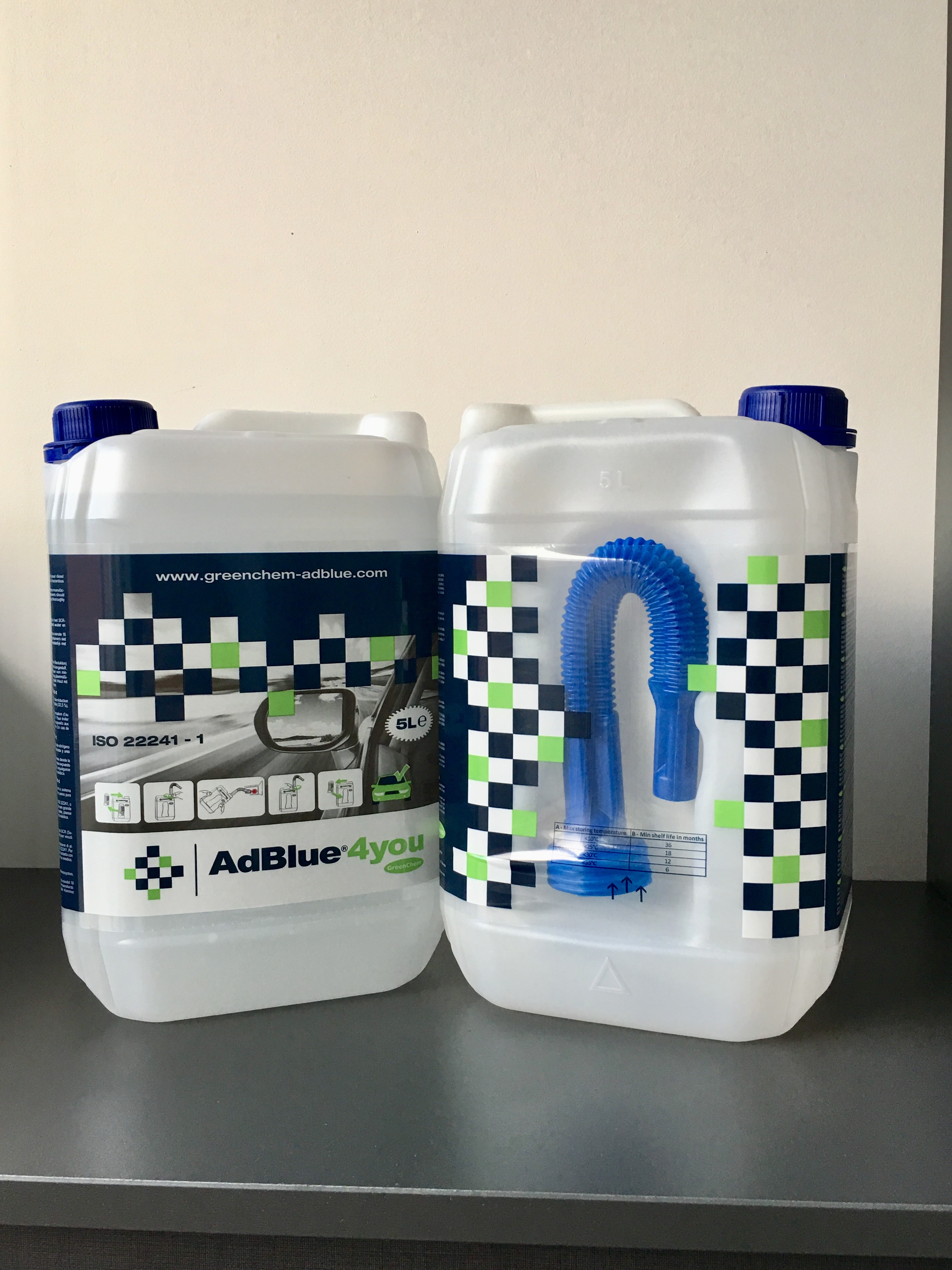
Illustrative archive photograph; not a diagnosis, endorsement or current event photograph. Greenchem adblue4you, 2019-06-03 / Wikimedia Commons, CC BY-SA 4.0. Unaltered image.

A bottle purchased for winter diesel-fuel treatment does not become a DEF additive. Keeping the two jobs separate is a practical preparation step before a cold-weather trip.
Freezing is not a reason to change the fluid
Cummins explains that DEF can freeze around 12°F, approximately −11°C, and that the SCR system described uses heat to thaw the tank and lines after startup. Its guidance explicitly says not to add anti-gelling products or freezing-point improvers to DEF because they can interfere with its function and damage SCR components.
That explanation is not a diagnosis of a warning on your truck. A fault, contamination concern or abnormal operation still needs the instructions and evaluation applicable to that equipment.
Keep the handling process clear
For a small fleet, a useful administrative check is to follow the container from purchase to the correct fill point. Avoid relying on the color of a cap or an unmarked bottle as the only identification.
- Read the product label and its intended use before it reaches the vehicle.
- Keep DEF containers and dispensing equipment identified separately from fuel and other fluids.
- Retain the product and purchase information so it can be checked if a question arises.
- Follow the vehicle manual's filling and shutdown instructions rather than adopting a timing rule from another truck.
If the wrong product may have been added
Record what product was involved, where it was put and what you know about the amount and subsequent operation. Do not turn an estimate into a confirmed quantity. Contact qualified service for the equipment before improvising dilution, additives or another corrective procedure.
The purpose of that record is to make the service conversation precise. It does not establish the repair needed, its cost or whether a particular warning was caused by contamination.
Before the next cold trip
Check the labels and the handling arrangement while there is time to correct confusion. The preventive action is keeping the correct fluid in the correct system, not inventing a winter recipe for DEF.
Original source: Cummins, 6 Answers About Diesel Exhaust Fluid, published January 4, 2016; technical explanation checked November 9, 2026.